

20 Hobbies to Try Out this Summer that are Good for Your Soul
If you’ve been craving a little more peace, presence, and meaning lately… you’re not alone.
Hi, I’m Patri — certified organic skincare formulator and health coach, completely obsessed with natural ingredients and gentle living.
I’ve always believed that wellness isn’t just about what we put on our skin or in our bodies, but also about what we give our time, energy, and heart to.
This list of hobbies is a gentle invitation. Nothing overwhelming. Nothing that needs you to “get it right.”
Just soul-nourishing ideas to help you slow down, reconnect with yourself, and maybe even fall back in love with the quiet beauty of life.
Think herbal walks, simple crafts, mindful moments, and a few creative ideas to get your hands messy in the best way.
Pick one. Try it for a few weeks. Let it surprise you.
1. Herbal foraging walks
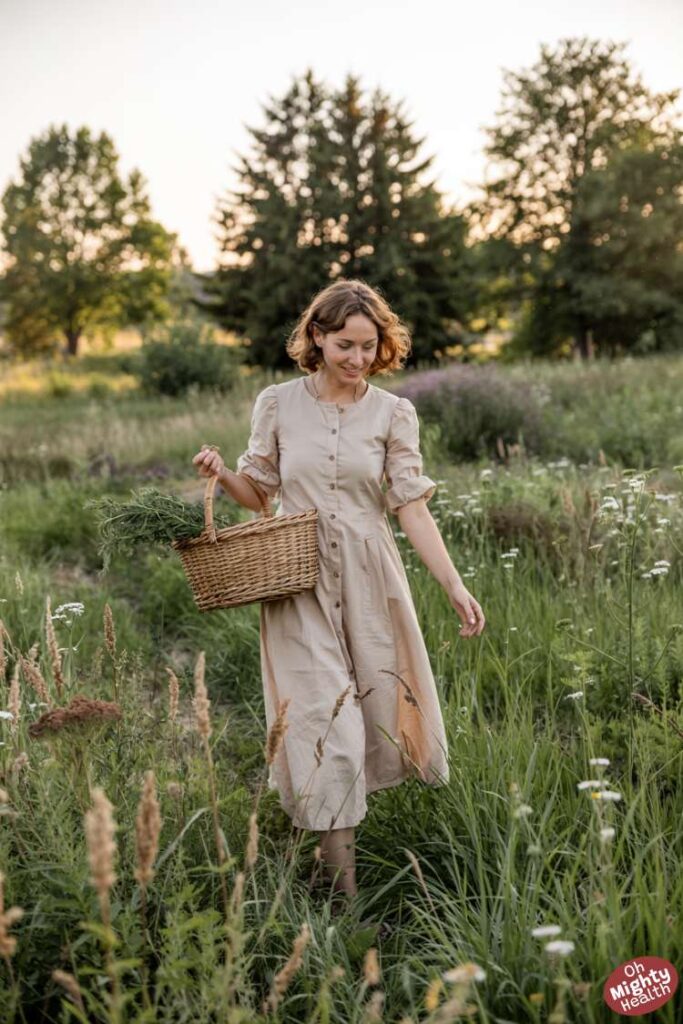
There’s something incredibly calming about walking slowly through nature and noticing the plants growing at your feet. Herbal foraging isn’t just peaceful — it’s also deeply empowering once you start recognising the healing plants around you.
How to get started:
- Begin nearby: Your local park, the edge of a path, or even a weedy patch of land can hide medicinal herbs like dandelion, yarrow, plantain, nettle or wild mint.
- Use a plant ID app or guide: Apps like PictureThis or PlantNet are a great start, but books on local herbs are even better if you want to learn properly.
- Keep a field notebook: Sketch or describe what you find, note where it grows, and observe changes over the season.
- Look, don’t pick (yet): The first step is learning. Build confidence in identification before you harvest anything.
- Ethical foraging rule: Only forage where plants are growing in abundance, and never take more than a third of what you see.
Extra idea: Press your favourite finds between sheets of paper and keep a herb journal. You can use these pressed herbs later to decorate handmade labels or blend notes if you’re making your own herbal teas or skincare.
This hobby gently slows you down and connects you with the land — and if you love natural ingredients, it’s a beautiful way to see where they come from.
2. Gardening with healing herbs
Growing your own herbs — even just a few pots on a windowsill — is one of the most rewarding and grounding things you can do. It’s not just about the harvest. It’s about watching something grow slowly, gently, in its own time. It teaches patience and presence.
How to get started:
- Start small: You don’t need a garden. A few pots of rosemary, thyme, calendula or chamomile are perfect. Choose herbs you actually use or want to learn about.
- Pick the right spot: Most herbs love sun. If you’re growing indoors, choose a bright windowsill or balcony. Outdoors, make sure the soil drains well.
- Use organic soil if you can: Healthy soil = healthy herbs.
- Water gently and consistently: Let the top of the soil dry slightly between waterings. Herbs hate soggy roots.
- Harvest with care: Snip leaves with clean scissors in the morning once the plant is well-established. Picking regularly encourages more growth.
Extra idea: Create a small “skincare herb corner” — grow plants like calendula, lavender and aloe. You’ll love using your own herbs in homemade toners, oils, and masks.
This hobby is about more than growing things — it’s about building a quiet relationship with the plants you love. And if you already work with natural skincare, it’s a beautiful way to bring that knowledge to life in your own home.
3. Making your own face masks
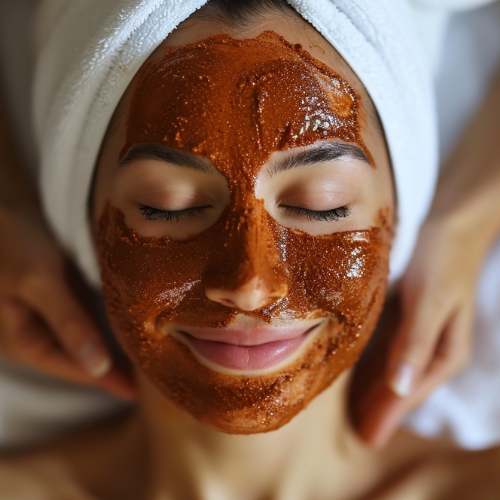
There’s something beautifully intimate about mixing up a face mask with your own hands. No fancy packaging, no long list of ingredients — just a bowl, a spoon, and a few simple things that suit your skin.
How to get started:
Use what you already have: Oats, aloe vera gel, green tea, clay, or mashed fruit can all make wonderful masks. Start simple and observe how your skin responds.
Choose your base:
- For dry skin: mashed avocado, oat flour or aloe vera.
- For oily skin: green clay or blended cucumber.
- For sensitive skin: white clay or cooled chamomile tea.
Optional extras: A drop of jojoba oil, a sprinkle of turmeric (tiny amount), or a splash of rose water can add skin-loving benefits.
Mix in a clean bowl: Use a wooden spoon or your fingers to apply — and always on freshly cleansed skin.
Leave on for 10–15 minutes: Never let a clay mask dry completely; mist it with water if needed to keep it soft.
Extra idea: Create a weekly ritual. Light a candle, tie your hair back, and take a few deep breaths while the mask works. It’s not just skincare — it’s a moment of pause.
This hobby is perfect if you love natural ingredients and want to feel more connected to your skin — without spending a fortune or relying on store-bought products.
These other articles I’ve written can help: Rosemary Oil Hair Mask, Easy & Effective DIY Turmeric Face Masks for Acne, Face Masks with Aloe Vera.
4. Journaling for emotional clarity
Journaling isn’t just for writers. It’s a quiet way to listen to yourself — especially when things feel noisy, rushed, or off-balance. You don’t need rules, prompts or perfect handwriting. Just honesty, space, and a pen.
How to get started:
- Keep it simple: Choose a notebook you like writing in — one that feels inviting. Don’t overthink the setup.
- Write when it suits you: Mornings can be grounding, evenings can help clear your mind. Pick what feels natural and sustainable.
- Start with how you feel: “I don’t know what to write” is a perfectly fine first sentence. Let the words tumble out.
- Try one line a day: If longer journaling feels too much, just write one clear sentence about your day, mood or intention.
- Use it to track patterns: You can also jot down what you’ve been eating, how your skin feels, or how much energy you have, especially helpful if you’re tuning in to your health or cycle.
Extra idea: Keep a second journal just for plant-based self-care. Jot down your favourite mask recipes, herbal tea blends, or how a certain oil felt on your skin.
Journaling is one of those habits that gives back more than it takes — and the clarity it offers can ripple out into every part of your wellbeing.
Check my articles: Self Love Journal Prompts, Gratitude Journals, How to Journal for Beginners
5. Creating a simple tea ritual
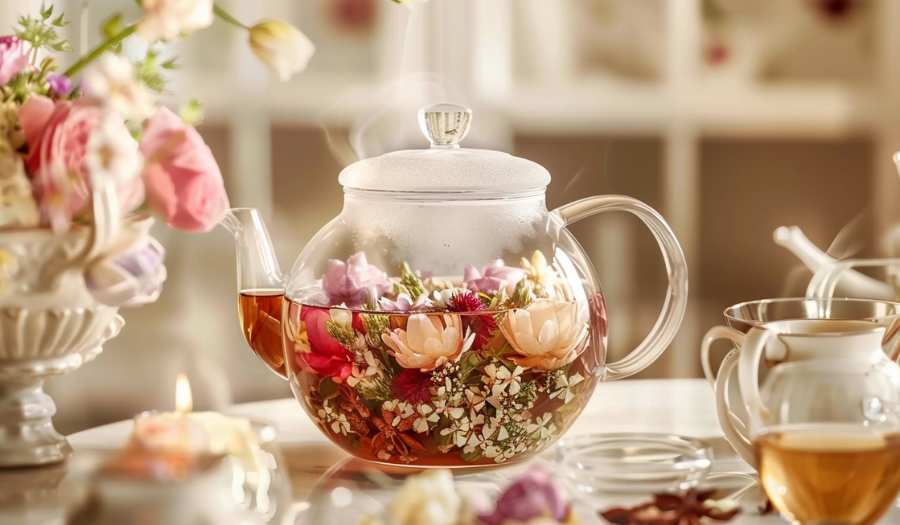
Brewing a cup of herbal tea can be so much more than just making a drink. It can be a ritual — a moment to pause, reflect, and nourish yourself. No multitasking. No phone scrolling. Just you, your herbs, and a bit of steam.
How to get started:
- Choose calming herbs: Chamomile, lemon balm, peppermint, rose, tulsi or lavender are beautiful options for slowing down.
- Use loose herbs if possible: You can see, smell and connect with the plant more clearly than in a tea bag.
- Set the scene: Use your favourite mug, find a quiet spot, and take a moment before sipping to just breathe.
- Drink slowly: Notice the flavour, temperature and how it makes you feel. This isn’t about fixing anything — it’s about being.
- Keep a few favourites on hand: Create a tiny tea station with 2–3 blends that support how you want to feel — uplifted, soothed, grounded…
Extra idea: Blend your own teas! Start with dried chamomile and peppermint, then explore additions like fennel, calendula or lemon peel. It’s a lovely, low-effort way to start learning about herbal actions.
A tea ritual is one of the simplest ways to carve out space for yourself — and when those herbs are part of your skincare world too, the connection deepens even more.
Check my articles: Sage Tea Benefits, Herbal Teas Your Kids Will Love, Stunning Tea Bouquets to Impress Your Guests, 5 Herbal Teas for Mind Blowing Relaxation,
6. Pressed flower art
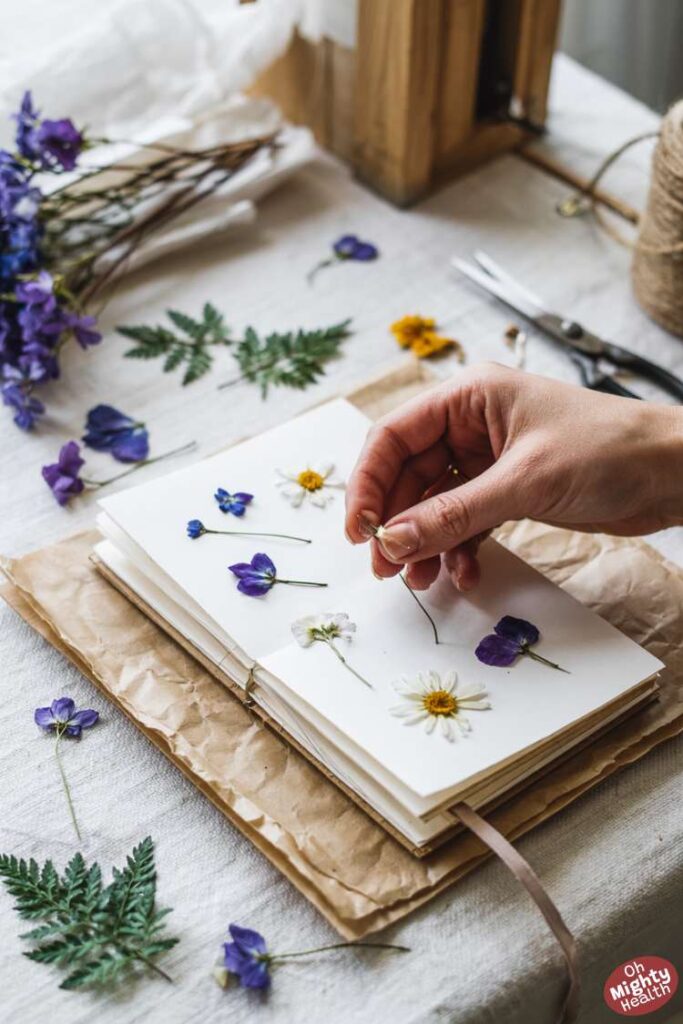
There’s something incredibly satisfying about preserving a delicate bloom and turning it into something beautiful. Pressing flowers connects you to the seasons and offers a creative outlet that’s slow, quiet, and deeply soothing.
How to get started:
- Pick flowers thoughtfully: Choose small, flat blooms or leaves — violets, daisies, ferns, or wild herbs like yarrow and clover press beautifully.
- Press between paper: Place the flowers between sheets of absorbent paper (like blotting paper or even coffee filters), then tuck them inside a heavy book.
- Weight them down: Stack more books on top and leave for 1–2 weeks. Check occasionally to make sure they’re drying well.
- Use your pressed flowers: Decorate cards, notebooks, or even the labels of your DIY skincare creations.
- Store carefully: Keep unused pressed flowers flat in envelopes or a journal so they don’t break.
Extra idea: Create a seasonal journal where you pair pressed herbs or flowers with notes about their uses, benefits, or how you’ve incorporated them into your life.
This hobby is simple, beautiful and deeply meditative — and perfect for anyone who loves both creativity and plants.
7. Making your own botanical oils
Infusing herbs into oils is one of the oldest, simplest ways to extract their skin-loving properties — and you don’t need fancy equipment to do it. It’s slow, rewarding, and incredibly grounding to make your own calendula, chamomile or rosemary oils from scratch.
How to get started:
- Choose your herb: Calendula, lavender, chamomile, rosemary, thyme and plantain are great for skin and easy to find. Use dried herbs only — fresh herbs can cause spoilage.
- Pick a carrier oil: Jojoba, sunflower, olive or sweet almond oil work well. Choose what suits your skin.
- Use a clean, dry glass jar: Fill it ½ to ¾ full with herbs, then top with oil so everything is submerged.
- Label and date it: Herbal infusions take time — usually 4–6 weeks in a sunny windowsill or warm spot. Shake gently every few days.
- Strain and store: Use muslin or a clean cloth to strain the herbs. Store your infused oil in a dark glass bottle away from heat and light.
Extra idea: Use your oil as a base for balms, serums or massage blends. Knowing you made it from scratch adds a whole new layer of connection.
If you’re into natural skincare, this hobby is pure gold — and once you’ve made one infusion, you’ll never look at shop-bought oils the same way again.
8. Creating a moon ritual
Following the moon’s phases can bring a sense of rhythm and reflection into your life — especially if you’re trying to slow down and live more intentionally. A moon ritual doesn’t have to be mystical or complicated. It’s just a moment to pause, check in with yourself, and set gentle intentions.
How to get started:
- New moon = beginnings: A time to reflect, reset, and set small, meaningful intentions.
- Full moon = release: Let go of what’s heavy — habits, thoughts, or patterns you’re done with.
- Keep it simple: Light a candle, make a cup of herbal tea, write in your journal or sit quietly.
- Track the cycle: Mark the moon phases in your calendar or use a lunar app to stay connected.
- Include nature: Bring in dried herbs, flowers, or natural objects like stones or leaves if that feels right for you.
Extra idea: Create a small moon basket with things you love: a soft cloth, favourite tea, a calming essential oil, or a tiny notebook just for your moon thoughts. Keep it tucked away and pull it out when needed.
This practice is beautifully personal, and if you already love working with natural elements, it’s a gentle way to weave mindfulness into your month.
9. Blending your own herbal bath soaks
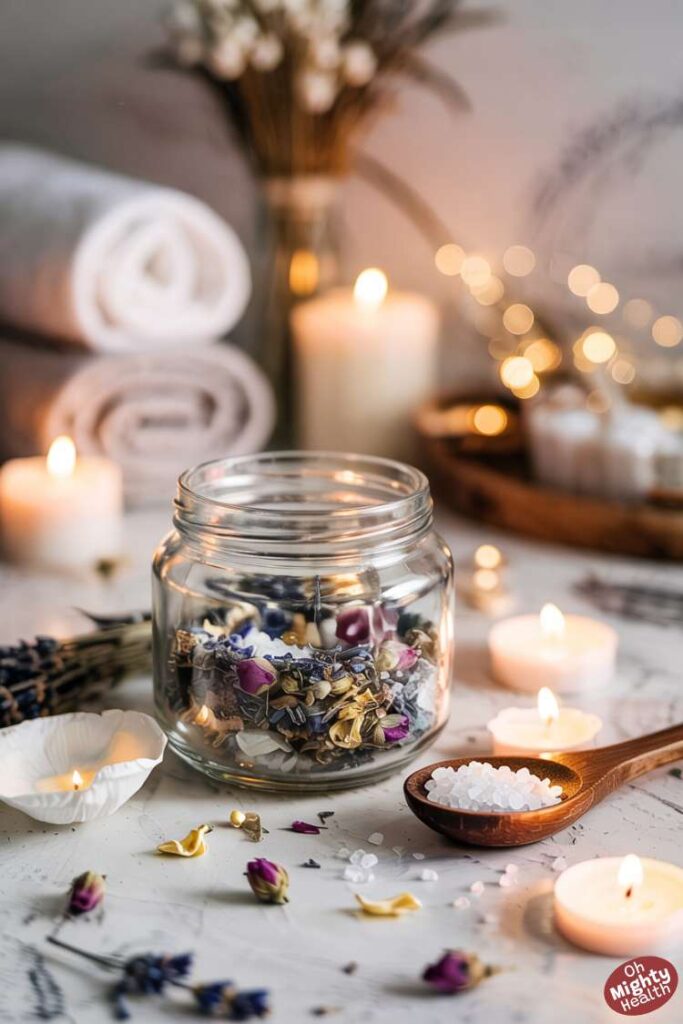
Baths can be deeply healing — not just for the body, but also for the nervous system. Blending your own bath soaks with herbs, salts, and natural powders is a lovely way to care for your skin and your mood at the same time.
How to get started:
- Choose your salts: Epsom salt, sea salt, or Himalayan pink salt are good bases — they soothe muscles and soften skin.
- Add herbs: Dried chamomile, lavender, rose petals, rosemary, or calendula are great options. Place them in a muslin bag or tea strainer to avoid clogging the drain.
- Include skin-soothing extras: Oatmeal, baking soda, or a spoonful of clay can take it to the next level.
- Optional touch: Add a few drops of essential oil (like lavender, geranium or frankincense) to your salts before mixing in.
- Store in a jar: Keep your blend dry and use about ½ cup per bath.
Extra idea: Create blends for different moods — uplifting citrus for mornings, grounding lavender and oat for evenings. Label them with hand-written notes to make it feel special.
If you love formulating or using natural products, this is a gentle way to turn an everyday bath into something truly nurturing — body and mind.
10. Learning aromatherapy basics
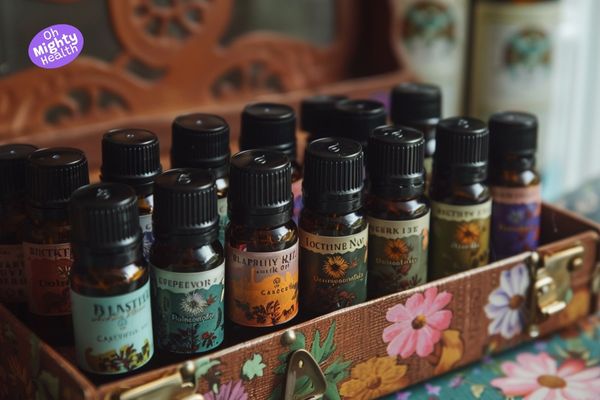
Aromatherapy is more than just lovely scents — essential oils can support mood, skin, sleep and even focus. Learning the basics helps you use them safely and with intention, whether in blends, baths, or skincare.
How to get started:
- Pick a few oils to focus on: Lavender, peppermint, tea tree, geranium, frankincense and lemon are great beginner options.
- Learn the properties: For example, lavender is calming, peppermint is energising, tea tree is cleansing. Focus on 1–2 oils at a time to avoid overwhelm.
- Always dilute properly: Most essential oils should be mixed with a carrier oil (like jojoba or almond). Never apply undiluted oils to your skin.
- Start using oils in simple ways: Add 1 drop to a bowl of hot water for steam inhalation, or blend 3–4 drops into 1 tablespoon of oil for massage or skincare.
- Keep notes: How each oil makes you feel, how your skin responds, and which combinations you enjoy.
Extra idea: Make a small reference booklet with your favourite oils, what they do, and how you like to use them. Add sketches or dried herbs to make it personal and visual.
If you’re already into natural skincare, this is a beautiful next step — and it deepens your understanding of the ingredients you work with.
Check my articles on aromatherapy and essential oils. Lots to learn there!
11. Building a seasonal altar or nature corner
A small space in your home that reflects the current season can be grounding, inspiring, and a quiet reminder to live in rhythm with nature. It doesn’t need to be spiritual — it can simply be a space that brings beauty and calm into your day.
How to get started:
- Choose a small surface: A shelf, corner table, windowsill, or even part of your desk works well.
- Gather natural objects: Think pressed leaves, flowers, feathers, stones, seed pods, pine cones, or anything you find beautiful and grounding.
- Include items with meaning: A small herbal bundle, your favourite tea blend, a handmade product, or a photo that soothes you.
- Keep it fluid: Change it with the seasons — add fresh flowers in spring, dried herbs in summer, warm tones in autumn, candlelight in winter.
- Use it intentionally: Pause here when you need to reset, reflect, or simply breathe.
Extra idea: Keep a small journal nearby and write one sentence each week from this space — something you noticed in nature, something you’re letting go of, or a reminder to slow down.
This hobby invites presence into your daily life — and if you already connect with herbs, the seasons, or simple rituals, it becomes a quiet way to honour that.
12. Sketching herbs and flowers
You don’t have to be an artist to enjoy this. Sketching the plants you love — whether it’s a chamomile flower, a rosemary sprig, or a calendula bloom — helps you slow down and truly see them. It’s a beautiful way to deepen your connection with the herbs you use.
How to get started:
- Keep it simple: Use a pencil or fine pen and any notebook you have — this isn’t about perfection.
- Pick one plant at a time: Sit with it, notice its lines, curves, textures. Observe rather than invent.
- Draw what you see, not what you think you see: Let go of expectations and allow the sketch to evolve naturally.
- Label your sketches: Add the plant’s name, the date, where you found it, or what it’s used for.
- Practice regularly: Just ten minutes a week can help you improve and deepen your observation skills.
Extra idea: Use your sketches in other parts of your life — on DIY labels, in your skincare journal, or even as little prints for gifts.
This hobby is quiet, slow, and grounding — and if you love herbs and natural skincare, it can help you see your ingredients in a completely new way.
13. Handmaking simple clay items
Working with clay is grounding — your hands are busy, your mind softens, and there’s something satisfying about creating something useful and beautiful. You don’t need a kiln or fancy tools — just air-dry clay, a smooth surface, and a bit of imagination.
How to get started:
- Start with air-dry clay: It’s inexpensive, easy to find, and mess-free.
- Make small, useful items: Try a spoon rest, incense holder, herbal spoon, oil dish, or a tiny tray for your favourite skincare bits.
- Use natural textures: Press rosemary sprigs, leaves, or flower petals into the clay for decoration.
- Smooth with water: Dip your fingers in a little water to soften edges or correct mistakes.
- Let it dry completely: Then sand gently if needed and seal with a natural sealant or leave matte.
Extra idea: Make matching sets — a little clay dish and spoon for your face masks or body scrubs. It makes your skincare feel even more like a ritual.
This hobby brings you back to your hands, to slowness, and to the joy of making something by yourself — especially when it ties into your natural living world.
14. Making plant-based candles
Candle-making might sound complicated, but it’s surprisingly easy — and when you use natural waxes and essential oils, the result is a gentle, beautiful light that supports your mood and space. It’s creative, calming, and wonderfully satisfying.
How to get started:
- Use soy wax or rapeseed wax: Both are cleaner alternatives to paraffin and easy to work with.
- Choose a container: Reuse a small jar, teacup or tin. Make sure it’s heatproof and clean.
- Add a cotton wick: You can buy these pre-tabbed and ready to go. Stick the wick to the bottom of your container with a bit of melted wax or a glue dot.
- Melt the wax gently: Use a double boiler or place a heatproof jug in a saucepan of simmering water.
- Scent naturally: Once the wax cools slightly (to around 55–60°C), stir in a few drops of essential oil — lavender, rosemary, geranium, or citrus oils work well.
Extra idea: Sprinkle dried herbs or petals (like calendula or lavender) on top just before the wax sets. It looks beautiful and ties into your love for natural ingredients.
Making your own candles brings warmth and atmosphere into your space — and it feels even more special knowing you’ve made it with your own hands, from plant-based materials.
15. Creating a personal apothecary notebook
If you love herbs, oils, and natural skincare, building your own apothecary-style notebook is a brilliant way to keep everything you learn in one place. It becomes part journal, part recipe book, part herbal record — completely unique to you.
How to get started:
- Choose a format: A plain notebook, a binder with pockets, or even an old scrapbook will do. Use what feels inviting.
- Create sections: Try simple headings like Herbs I Love, Oils & Butters, Tea Blends, Face Mask Recipes, or Seasonal Skincare.
- Add personal notes: How something worked for you, when you used it, or what you’d change next time.
- Include visuals: Pressed herbs, sketches, dried flower petals, printed labels or photos of your creations.
- Keep it evolving: This isn’t a final product — it grows with you, season by season, batch by batch.
Extra idea: Keep a “favourites” page where you list what’s worked best for your skin or mood. Over time, it becomes a reference you’ll turn to again and again.
This hobby is simple and deeply nourishing — and if you’re already creating things, it gives your process more depth, clarity, and meaning.
16. Handwriting your favourite recipes
There’s something timeless about writing things by hand — especially your go-to herbal blends, face masks, teas or oils. Typing is fast, but handwriting is intentional. This hobby turns your recipes into keepsakes and slows you down just enough to notice the beauty in what you’re creating.
How to get started:
- Choose a notebook or recipe cards: Something you’ll enjoy flipping through. Use a pen you like — little details matter.
- Write slowly and clearly: Include not just the ingredients but why you love the recipe, how you use it, or any notes you’ve learned from experience.
- Add sketches or decorations: Pressed flowers, a botanical border, or even hand-drawn leaves make it feel personal.
- Keep one theme per page: It helps you find things later and keeps the notebook clean and useful.
- Leave space for updates: Natural recipes evolve — leave a few lines in case you tweak things later.
Extra idea: Create a “seasonal favourites” section and rotate a few tried-and-true recipes depending on the time of year. It helps you stay connected to rhythm and climate.
This hobby turns something practical into something beautiful — and when you go back and reread your notes, you’ll remember how much you’ve learned and created.
17. Bee-watching and slow observing
You don’t need to hike deep into the woods to feel connected to nature. Just sitting quietly in a garden, park, or wild corner and watching bees, butterflies, and other little visitors can reset your whole nervous system. This is the kind of hobby that asks for nothing but your attention.
How to get started:
- Find a spot with flowers: Even a pot of lavender or a patch of clover can attract bees and pollinators.
- Sit still and quiet: No distractions. Just observe. Notice the movement, the sound, the rhythm of what’s around you.
- Bring a notebook (optional): Jot down what you see, how it makes you feel, or which plants are most popular with bees.
- Return to the same spot regularly: Over time, you’ll notice patterns — time of day, weather changes, seasonal visitors.
- Avoid pesticides and sprays: If it’s your space, let it grow wild and chemical-free. Bees will thank you.
Extra idea: Plant a small “bee patch” with herbs like thyme, lavender, borage, or calendula. It becomes both a habitat and a healing space — for you and the bees.
This hobby might sound simple, but it brings a deep calm. And if you love working with flowers and herbs, it reminds you they’re part of a much bigger cycle.
18. Walking at sunrise or sunset

There’s something quietly transformative about being outside at the edges of the day. Whether it’s the stillness of early morning or the golden hush of evening, walking at these times becomes less about exercise and more about presence. It’s a soft reset — for your body, your breath, your thoughts.
How to get started:
- Choose your moment: If mornings feel too early, try just before dusk. Both offer a natural pause in the day.
- Keep it local: A nearby path, your garden, a quiet road — the point is the experience, not the destination.
- Walk slowly and notice: The light, the smells, the air on your skin. You don’t need music or a goal.
- Leave your phone behind if you can: Or use it only to snap a photo if something moves you.
- Breathe with your steps: Matching your breath to your pace creates a natural meditation.
Extra idea: Try the same short walk every day for a week. Observe what changes — in the light, in the season, in your own thoughts.
This hobby brings you back to your senses — and if you already connect with nature and natural living, it fits beautifully into your rhythm.
19. Nature photography (with your phone)
You don’t need a fancy camera to capture the beauty around you — just your phone and a bit of attention. Photographing plants, herbs, textures, and quiet scenes helps you see the world differently. It becomes a practice in presence, detail, and appreciation.
How to get started:
- Use what you have: Your phone is more than enough. No filters, no pressure — just observation.
- Look for light: Early morning and late afternoon offer soft, golden tones that bring out beauty in anything.
- Focus on small details: A curled leaf, the inside of a flower, a raindrop on rosemary.
- Take your time: Pause before snapping. Ask yourself what you’re trying to capture — texture, emotion, light?
- Organise your photos: Create albums by season, plant, or mood. They’ll become a visual journal over time.
Extra idea: Print your favourite images and use them as bookmarks, journal covers, or card inserts. You could even pair them with handwritten notes or herbal recipes.
This hobby helps you see your everyday surroundings — and the ingredients you work with — with fresh eyes. It turns the ordinary into something quietly extraordinary.
20. Growing herbs in jars or recycled pots
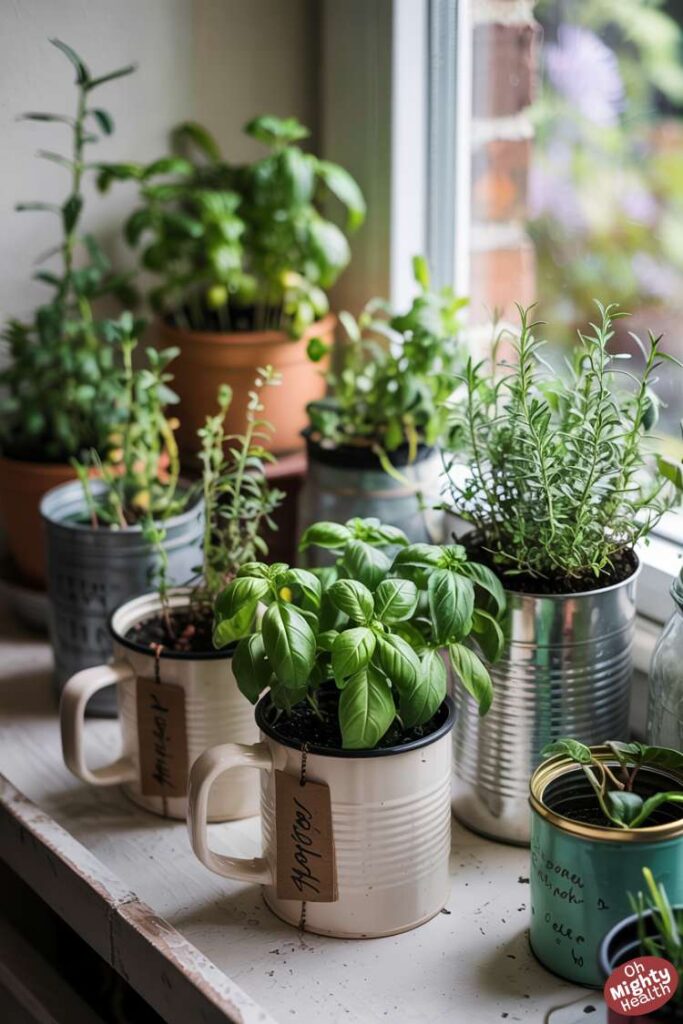
You don’t need a garden — or even a balcony — to grow something meaningful. Starting herbs in jars, teacups, or recycled containers brings a little green life into your space and connects you to your ingredients in the most direct way possible.
How to get started:
- Choose easy herbs: Basil, mint, parsley, thyme, or chives do well in small spaces and grow quickly.
- Pick your container: Use glass jars, yoghurt pots, old mugs, or tins. Just make sure there’s drainage — add pebbles at the bottom if needed.
- Use good soil: A basic organic potting mix works well. You can mix in a little compost if you have it.
- Place in sunlight: A sunny windowsill is ideal. Most herbs need at least 4–6 hours of light daily.
- Water carefully: Keep soil moist but not soggy. Check regularly, especially in warm weather.
Extra idea: Paint or label your pots by hand — use scraps of paper, string, or old fabric to add a personal touch. It turns your growing space into something warm and inviting.
This is more than a hobby — it’s a daily relationship with something living. And when those herbs make it into your skincare, teas, or food, it feels deeply, soulfully satisfying.
Bonus hobby 1: Making your own herbal hair rinses
A simple infusion of rosemary, nettle, chamomile or hibiscus can become a nourishing hair rinse. It’s a lovely way to support your scalp naturally and connect with your ingredients in a new way.
Bonus hobby 2: Swapping skincare with a friend
Make two of your favourite DIY creations and trade one. It’s a beautiful way to connect, share recipes, and build community around natural living.
Bonus hobby 3: Creating a scent memory box
Gather dried herbs, flowers, essential oil blotters, or tiny bundles of plants that hold meaning for you — a rose from your garden, a sprig of lavender from a walk. Keep them in a box to revisit and reflect on.
Bonus hobby 4: Listening to herbal podcasts while resting
Let yourself rest without doing. Lie back with a cup of tea and listen to episodes on herbs, cycles, skincare, or seasonal living. No note-taking. Just letting it wash over you.
Bonus hobby 5: Keeping a “tiny wins” log
Every time you blend a recipe, grow something new, try a mask, or even just notice a plant on your walk — write it down. Over time, it builds a quiet, beautiful record of your growth and presence.
Let this be your season of softness
You don’t need to master all of these hobbies. You don’t need to do them perfectly.
What matters is that they feel good to you. That they bring you back to your breath, your hands, your senses — even if just for a few minutes at a time.
Try one. Let it lead you somewhere. See what it opens up.
Because tending to your wellbeing isn’t always about doing more — it’s about doing gently.
And sometimes, that starts with something as simple as a walk, a flower, or a cup of tea.
Here’s to a slower, softer summer. You deserve it.
