
8 Herbs for Menopause that Can Make this Transition Easier (and Why the Work and How to Take them)
I started my menopause at the age of 45.
I’ll be hones: I’ve loved every minute of it, even the hard parts.
Yes, it’s been uncomfortable at times: the hot flushes, the sleepless nights, the strange shifts in my body. But something much deeper has been happening too.
My mind has expanded like there’s no tomorrow. I feel like I’ve crossed a threshold, from being a girl to being fully, consciously a woman.
There’s a spiritual evolution to this stage that’s hard to describe but impossible to miss.
I wonder if you have felt something similar, too.
Still, the physical side of menopause can feel like your body’s decided to play a game you didn’t sign up for: hot flashes at the worst times, restless nights, mood swings, skin that suddenly feels different.
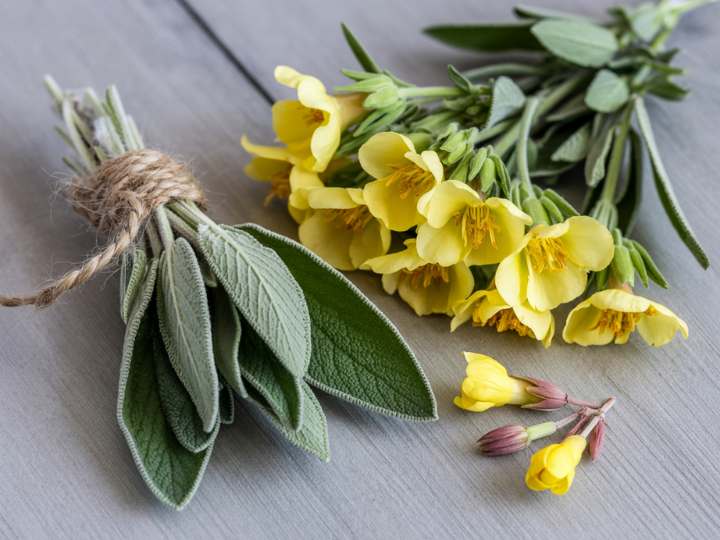
That’s where nature steps in. With the help of herbs and other natural allies, I’ve come to understand my body—and myself—on a whole new level.
If you’ve read my other articles, you already know I’m not about quick fixes or miracle cures. I’m about working with the body, not against it.
So in this article, I want to share eight herbs that can genuinely make this transition smoother.
These are time-tested, well-researched, and safe when used with consistency. They don’t suppress what your body is doing… They support it!
Let’s walk through my top five herbs for menopause, plus three more that might just surprise you.
1. Sage (Salvia officinalis) Leaf
Let’s start with one of the most helpful herbs for the symptoms that probably brought you here: hot flashes and night sweats.
I don’t get night sweats, but I’ve heard from so many women who d, waking up drenched at 2 am, sheets soaked, wondering if something’s seriously wrong. It’s one of those symptoms that can feel quite isolating until you realise how common it actually is. Sage is the herb I recommend most often for this, and the feedback I get is consistently positive.
Sage can be genuinely helpful when hormones start to fluctuate and those sudden waves of heat show up. It works gently to cool the body and make you feel more comfortable.
Studies show that sage can reduce the frequency and intensity of hot flashes, likely because it affects the body’s temperature regulation system.
How to use it: Brew a cup of sage tea twice daily. Steep 1 teaspoon of dried sage leaves in hot water for 5-10 minutes. You can also take sage as a tincture or in capsule form.
A quick note: if you’re experiencing heavy sweating at night, sage can make a real difference. Give it at least 4-8 weeks to work, though.
Herbs need time.
2. Evening Primrose (Oenothera biennis) Oil
As oestrogen levels drop, skin can lose some of its softness and moisture. You might notice this in your face, but it can show up all over your body.
Evening primrose oil provides healthy fats (specifically gamma-linolenic acid, or GLA) that help bring dry skin back to life from the inside out.
Research suggests evening primrose oil may also help with mood changes and breast tenderness that can happen during menopause. Check the studies here, here and here.
How to use it: Take 500-1,000 mg daily with food. Look for cold-pressed, organic oil in capsule form. It can take 6-12 weeks to notice changes, so be patient with it.
Evening primrose oil is one that chemists and health shop staff always recommend for menopause (at least in the UK, where I lived when I first started experiencing the symptoms). When taking it, most women notice mood changes first—feeling a bit less on edge, more steady—before they see improvements in their skin, which is such a plus bonus.
I think it’s one of those herbs that works quietly in the background.
3. Skullcap (Scutellaria lateriflora) Aerial Parts
If your emotions feel unpredictable during menopause, you’re not imagining it.
Hormonal shifts genuinely affect your nervous system. Mine have been so severa at times I really need to remember I’m going through the menopause and that my moods ARE NOT ME.
Skullcap is one of my favourite nerve-relaxing herbs. It calms the nervous system and makes it a little easier to settle when you’re feeling stressed, anxious, or restless.
It’s especially helpful if you’re lying awake at 3 am with your mind racing, or if you’re feeling on edge during the day for no clear reason.
How to use it: Drink skullcap tea in the evening, or take it as a tincture (20-40 drops in water) up to three times daily. You can also find it in capsule form.
I think of skullcap as a gentle hand on your shoulder, reminding your nervous system that it’s safe to relax.
(My mind sometimes spins through worries for no clear reason… Thoughts I can’t quite explain or understand. It’s such a relief knowing that menopause is the cause, not me losing my grip. This herb can helped to find calm when thoughts won’t settle).
4. Oat (Avena sativa) Straw
Here’s something not enough people talk about: menopause affects your bones.
As oestrogen declines, bone density can decrease, making you more vulnerable to fractures and osteoporosis later in life.
Oat straw helps nourish bones and joints with minerals like calcium and silica. It’s a safe, gentle herb to support bone strength through the menopausal years and beyond. Check this study. and this study.
Oat straw is also mildly calming, so it supports your nervous system at the same time it’s feeding your bones.
How to use it: Make an infusion by steeping 1-2 tablespoons of dried oat straw in a litre of hot water for at least 4 hours (or overnight). Strain and drink throughout the day. It has a mild, slightly sweet taste.
(I’ll be honest… oat straw tastes a bit like hay. If you find the flavour too grassy, try adding a touch of maple syrup or blending it with other herbs like nettle or even better, mint. Once you find a way that works for you, it can become a nourishing part of your daily routine.)
5. Marshmallow (Althaea officinalis) Root
This one might surprise you.
As oestrogen levels drop, the mucous membranes in your urinary and vaginal tissues can become dry and irritated. This can lead to discomfort, increased urinary tract infections, and pain during intimacy.
Vaginal dryness is a straightforward physical symptom of hormonal changes. Marshmallow root offers a simple, effective solution: it soothes irritated tissue naturally, without needing synthetic hormones or pharmaceutical interventions.
Check this scientific study and also this study.
How to use it: Make a cold infusion by soaking 1 tablespoon of dried marshmallow root in a glass of cold water overnight. Strain and drink in the morning. You can also take it as a capsule or tincture.
Marshmallow root is gentle and safe for long-term use. If vaginal dryness is affecting your quality of life, this herb deserves a place in your routine.
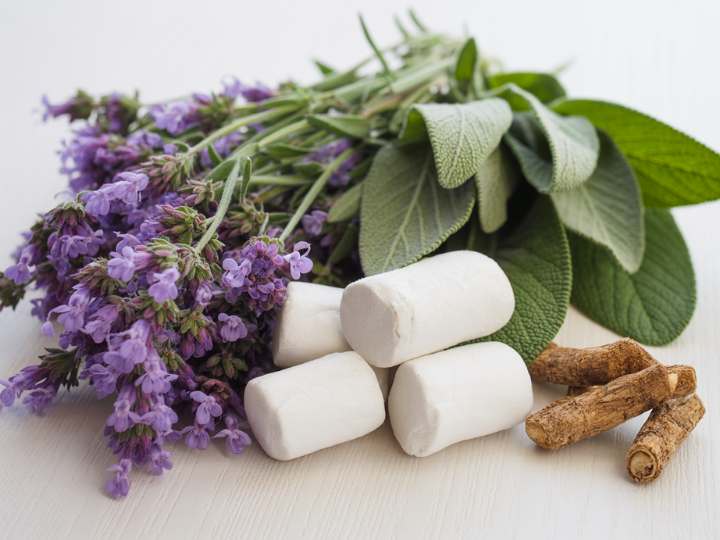
Bonus: 3 More Herbs Worth Knowing About
These three didn’t make my main list, but they’re still helpful for specific symptoms you might be experiencing.
6. Red Clover (Trifolium pratense)
Red clover contains isoflavones, which are plant compounds that act like a very mild form of oestrogen in the body.
Some women find red clover helpful for hot flashes and bone health. The evidence is mixed, but it’s worth trying if sage alone isn’t giving you enough relief.
How to use it: Drink red clover tea (1-2 cups daily) or take it as a capsule (40-80 mg of isoflavones daily).
A note of caution: If you have a history of oestrogen-sensitive cancers or are taking blood-thinning medication, speak with your healthcare provider before using red clover.
7. Black Cohosh (Actaea racemosa)
Black cohosh is one of the most studied herbs for menopause, particularly for hot flashes and mood changes.
It doesn’t work for everyone, but when it does work, it can make a noticeable difference within 4-8 weeks.
How to use it: Take 20-40 mg of standardised extract twice daily. Look for products standardised to contain triterpene glycosides.
Important: Black cohosh may not be suitable if you have liver problems. Check with your healthcare provider first.
8. Vitex (Vitex agnus-castus), Also Called Chaste Tree Berry
Vitex can be helpful during perimenopause (the years leading up to menopause) when your hormones are fluctuating wildly but you’re still having periods.
It works by supporting the pituitary gland, which helps balance progesterone and oestrogen levels.
How to use it: Take 400 mg of vitex extract in the morning. It needs to be taken consistently for at least 3 months to work.
Not for: Women who are fully post-menopausal (no periods for 12+ months). Vitex is most helpful during the transition, not after.

How to Use These Herbs Safely
Here’s what I always tell people: herbs are gentle, but they’re not without effect. Treat them with respect.
Start with one or two herbs. See how your body responds before adding more. This also helps you figure out what’s actually working for you.
Give them time. Most herbs need 4-8 weeks of consistent use before you’ll notice changes. Don’t give up after a week.
Quality matters. Buy organic herbs from reputable suppliers. If you’re buying capsules or tinctures, look for standardised extracts when possible.
Talk to your healthcare provider. Especially if you’re taking medication or have any underlying health conditions. Herbs can interact with pharmaceuticals.
Final Thoughts
These herbs won’t make menopause disappear, but they can make the symptoms more manageable.
They can help you sleep better, feel more like yourself, and move through this change with more comfort and ease.
You don’t need to use all of them. Pick one or two that speak to your specific symptoms and start there.
And remember: your body is changing, and these herbs are here to support you through it.
If you want to read more about how sage specifically helps with menopause symptoms, I’ve written a detailed guide on sage for menopause that goes much deeper into dosing, preparation methods, and what the research actually says.
Take care of yourself. You deserve to feel good in your body, no matter what stage of life you’re in.
Love,
Patri xx
Helpful resources
1. Bonaterra GA, Bronischewski K, Hunold P, Schwarzbach H, Heinrich E-U, Fink C, et al. Anti-inflammatory and Anti-oxidative Effects of Phytohustil® and Root Extract of Althaea officinalis L. on Macrophages in vitro. Front Pharmacol [Internet]. 2020 [cited 2025 Oct 27]; 11:290. Available from: https://www.ncbi.nlm.nih.gov/pmc/articles/PMC7090173/.
2. Deters A, Zippel J, Hellenbrand N, Pappai D, Possemeyer C, Hensel A. Aqueous extracts and polysaccharides from Marshmallow roots (Althea officinalis L.): cellular internalisation and stimulation of cell physiology of human epithelial cells in vitro. J Ethnopharmacol. 2010; 127(1):62–9.
3. Bonaterra GA, Bronischewski K, Hunold P, Schwarzbach H, Heinrich E-U, Fink C, et al. Anti-inflammatory and Anti-oxidative Effects of Phytohustil® and Root Extract of Althaea officinalis L. on Macrophages in vitro. Front Pharmacol [Internet]. 2020 [cited 2025 Oct 27]; 11. Available from: https://www.frontiersin.org/journals/pharmacology/articles/10.3389/fphar.2020.00290/full.
4. Woo S-Y, Lee K-S, Shin H-L, Kim S-H, Lee M-J, Young Kim H, et al. Two new secondary metabolites isolated from Avena sativa L. (Oat) seedlings and their effects on osteoblast differentiation. Bioorg Med Chem Lett. 2020; 30(14):127250.
5. Kim S-H, Kim K-J, Kang HJ, Son Y-J, Choi S-W, Lee M-J. The Dual Role of Oat Bran Water Extract in Bone Homeostasis Through the Regulation of Osteoclastogenesis and Osteoblast Differentiation. Molecules [Internet]. 2018 [cited 2025 Oct 27]; 23(12):3119. Available from: https://www.ncbi.nlm.nih.gov/pmc/articles/PMC6320902/.
6. Safdari F, Motaghi Dastenaei B, Kheiri S, Karimiankakolaki Z. Effect of Evening Primrose Oil on Postmenopausal Psychological Symptoms: A Triple-Blind Randomized Clinical Trial. J Menopausal Med [Internet]. 2021 [cited 2025 Oct 27]; 27(2):58–65. Available from: https://www.ncbi.nlm.nih.gov/pmc/articles/PMC8408320/.
7. Kumari J, Amrita, Sinha A, Kumari S, Biswas P, Poonam. Effectiveness of Evening Primrose and Vitamin E for Cyclical Mastalgia: A Prospective Study. Cureus [Internet]. [cited 2025 Oct 27]; 16(4):e58055. Available from: https://www.ncbi.nlm.nih.gov/pmc/articles/PMC11095819/.
8. Ahmad Adni LL, Norhayati MN, Mohd Rosli RR, Muhammad J. A Systematic Review and Meta-Analysis of the Efficacy of Evening Primrose Oil for Mastalgia Treatment. Int J Environ Res Public Health [Internet]. 2021 [cited 2025 Oct 27]; 18(12):6295. Available from: https://www.ncbi.nlm.nih.gov/pmc/articles/PMC8296106/.
9. Costa Hime L de FC da, Carvalho Lopes CM, Roa CL, Zuchelo LTS, Baracat EC, Andrade J de, et al. Is there a beneficial effect of gamma-linolenic acid supplementation on body fat in postmenopausal hypertensive women? A prospective randomized double-blind placebo-controlled trial. Menopause. 2021; 28(6):699–705.
