

Hairstyles for thin, fine hair over 60: natural oils to add volume and strength
If your hair has felt thinner, flatter, or just less than it used to be, I want you to know you are not imagining it, and you are absolutely not alone.
After 60, hair naturally goes through some real changes. The strands themselves become finer. The scalp produces less sebum. And hormonal shifts (hello, oestrogen dropping off) mean the hair growth cycle slows down too. It can feel disheartening, especially when you’ve always loved your hair.
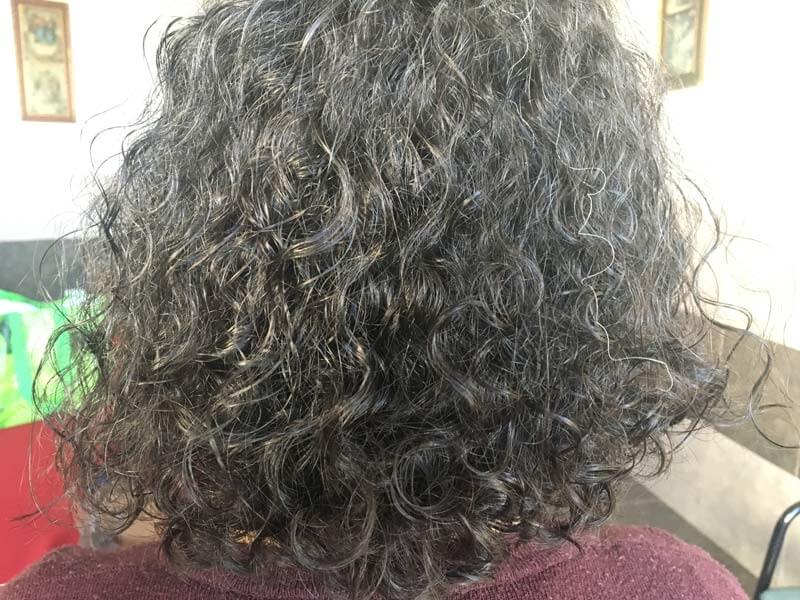
I’m 57 and a certified organic skincare formulator, and I’ve been watching these changes happen in my own hair for a few years now. So when I write about this, I’m not speaking from a distance. I’m right here with you, figuring it out.
But here’s what I know after nearly a decade of formulating: the right oils, used consistently, can genuinely change how your hair looks and feels. And paired with a few clever hairstyle choices? The difference is real.
Let’s get into it.
This post contains affiliate links. As an Amazon Associate I earn from qualifying purchases, at no extra cost to you.
Why hair changes after 60 (and what’s actually going on)
It helps to understand why this is happening, because once you do, the solutions make so much more sense.
After menopause, oestrogen levels drop significantly. Since oestrogen plays a role in keeping the hair growth phase (the anagen phase) longer, lower levels can mean shorter growth cycles and more shedding. Research published in Clinical and Experimental Dermatology confirms that a reduction in the proportion of anagen hairs does occur in postmenopausal women, most noticeably over the frontal scalp, you can read that research here.
On top of that, the hair follicle itself can miniaturise over time, producing thinner, lighter strands. This is especially common at the crown and temples.
It doesn’t mean you’ve done anything wrong. It means your body is changing, and your hair care routine needs to change with it.
The hairstyles that actually work for fine, thin hair over 60
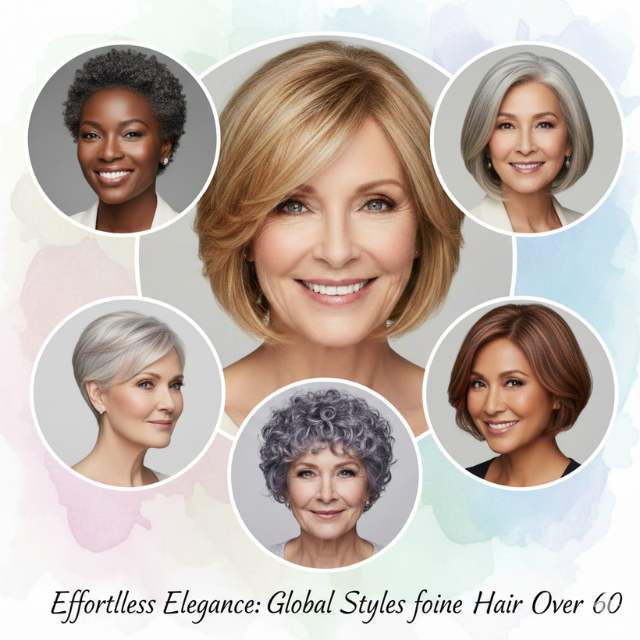
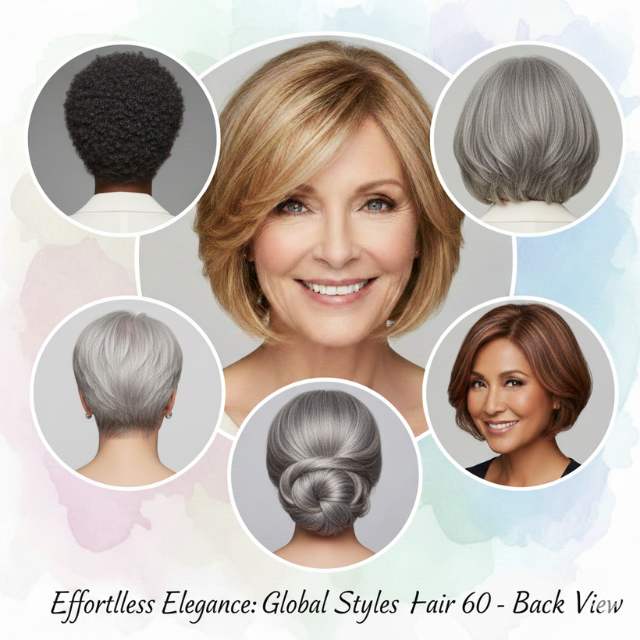
Before we even get to oils, let’s talk about shape. The right cut is genuinely one of the most effective things you can do.
1. Bobs and lobs (long bobs)
A well-cut bob sits beautifully on fine hair because the blunt ends create an illusion of thickness. A chin-length or jaw-length bob is especially flattering. It draws attention to the face and away from a thinning crown.
2. Textured pixie cuts
Short cuts with layers and texture are a brilliant option. When hair is very fine, keeping it shorter means each strand carries less weight, so it naturally has more lift and body.
3. Soft layers at medium length
If you want to keep some length, ask your stylist for soft face-framing layers. Avoid heavy one-length cuts as they tend to flatten fine hair. Light layers give movement and the appearance of volume.
4. Side-swept styles
A deep side part is an old trick that still works. It adds the illusion of fullness by directing hair across a broader section of the scalp. Much better than a centre part that can highlight thinning at the crown.
5. Loose, low updos
Tight ponytails and buns put traction on the follicle over time, which can worsen thinning, particularly around the hairline. If you love wearing your hair up, opt for loose, low styles secured with a fabric tie rather than an elastic band.
The natural oils that genuinely support volume and strength
Now this is where I get excited, because this is my world.
The key with oils for fine hair is to use them on the scalp and on the lengths, but lightly. The goal is to nourish the follicle and strengthen the strand, not to weigh it down. Less really is more here.
1. Rosemary essential oil, for scalp circulation
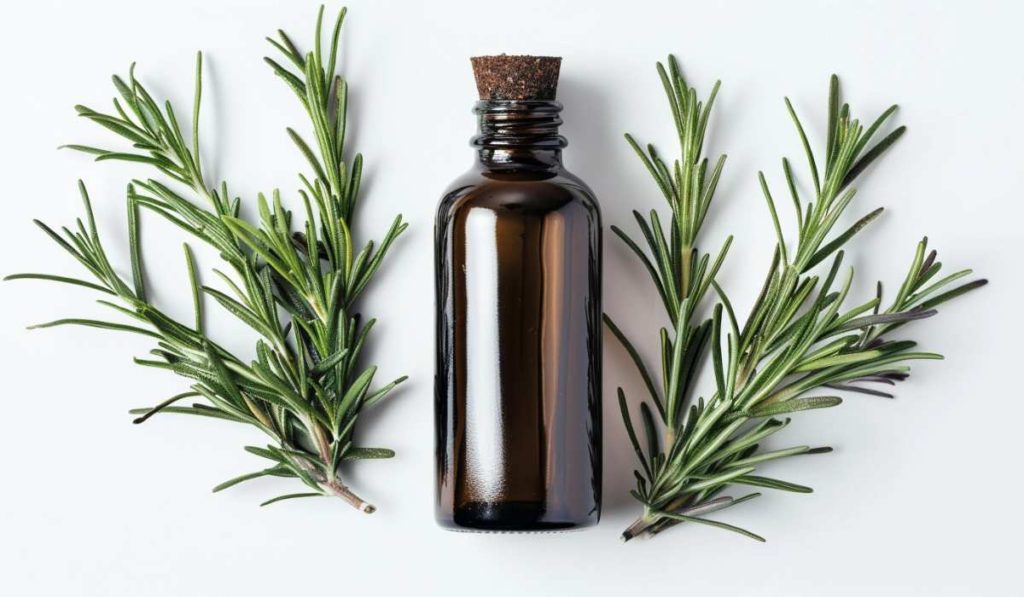
Rosemary is probably the most well-researched essential oil for hair growth, and I talk about it often because the evidence is actually quite solid. A randomised controlled trial published in SKINmed found that rosemary oil produced comparable results to minoxidil 2% for hair density after six months, with less scalp irritation reported in the rosemary group. You can read that study here.
It works by improving blood circulation to the scalp, which means more oxygen and nutrients reaching your hair follicles.
How to use it: Add 3–4 drops of rosemary essential oil to 1 tablespoon of a light carrier oil (jojoba works brilliantly). Massage into the scalp 2–3 times a week and leave on for at least 30 minutes before washing. You can read more about how to make the perfect blend in my guide on Rosemary Oil for Hair Growth.
2. Castor oil, for strength and thickness
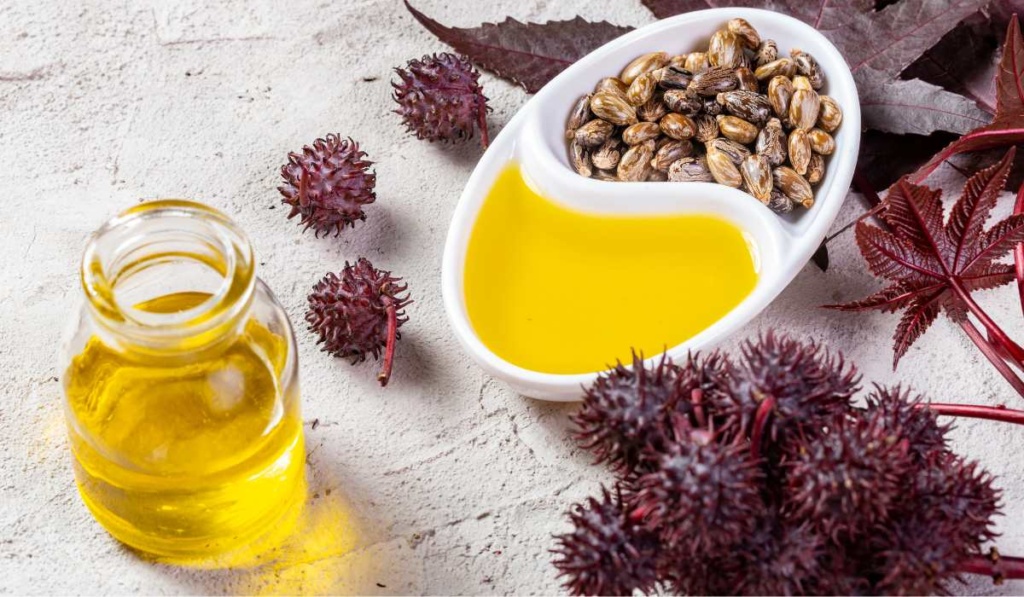
Castor oil is thick, rich, and genuinely impressive for hair. It’s high in ricinoleic acid, which has anti-inflammatory properties that can support a healthier scalp environment.
Because it’s so thick, you definitely want to dilute it with something lighter. For fine hair, a 1:4 ratio, one part castor oil to four parts of a lighter oil, is ideal. It helps condition and strengthen the strand without making it feel heavy or greasy.
Jamaican black castor oil is particularly popular, and with good reason. The roasting process that creates it produces a higher pH, which can help lift the cuticle slightly and allow other nutrients in.
For a thorough read on how castor oil actually works for hair, have a look at my article on castor oil for hair: what it really does (and doesn’t!).
3. Jojoba oil, the scalp balancer
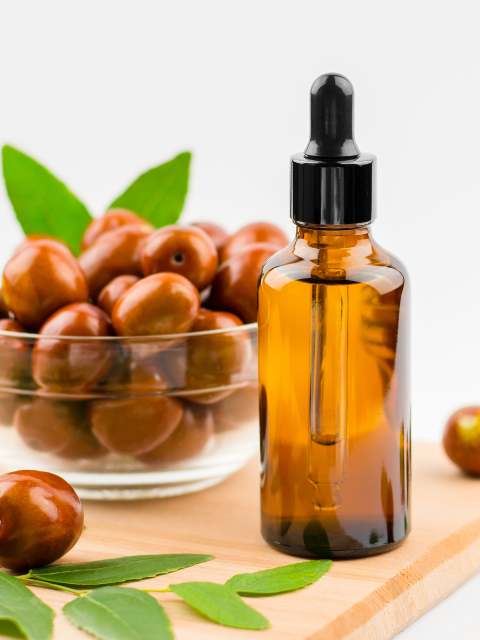
Jojoba oil is technically a liquid wax, not an oil, which makes it uniquely similar to the scalp’s own sebum. This is actually a wonderful thing for mature hair.
Because the scalp produces less sebum after 60, jojoba can help compensate without clogging follicles or making hair look greasy. It sits beautifully on fine hair and absorbs well.
It’s my first recommendation for anyone who wants a daily leave-in treatment: warm a few drops between your palms and smooth lightly over the ends.
4. Argan oil, for shine and protection
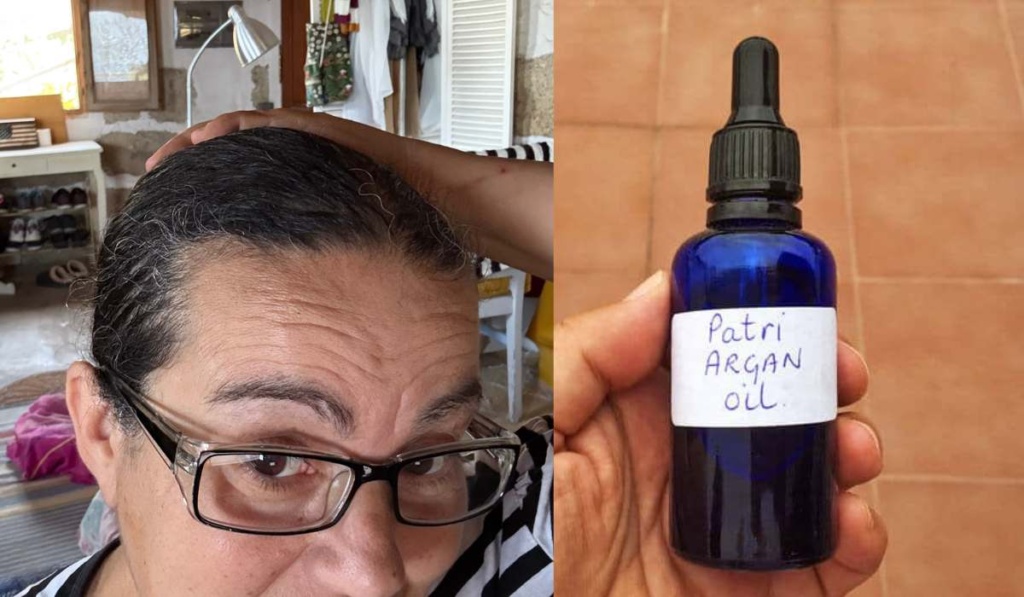
Argan oil is wonderful for adding a natural shine and reducing breakage. Fine hair tends to be fragile, and argan oil’s high vitamin E content means it helps protect the hair shaft from environmental damage and everyday styling stress.
A tiny amount, literally two or three drops, worked through the mid-lengths and ends after washing works brilliantly. I have a whole guide on argan oil for hair if you want to know more.
5. Camellia oil: the lightweight hero
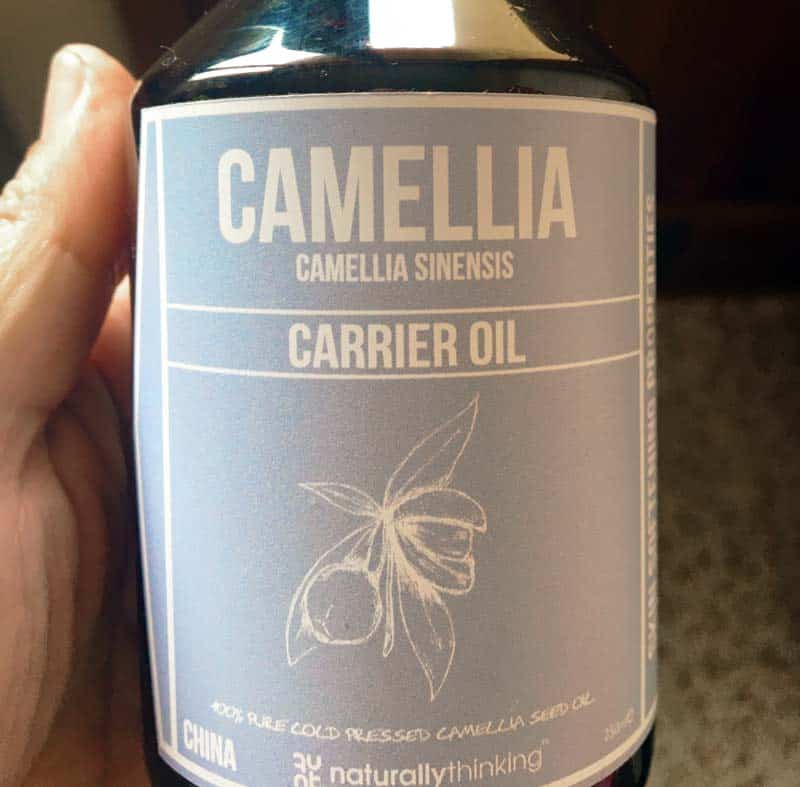
Camellia oil is one of those underrated gems that doesn’t get enough attention. It absorbs quickly, adds a beautiful smoothness, and has a high oleic acid content which helps maintain moisture in the hair shaft.
It’s also incredibly light, perfect for fine hair that can’t handle anything heavier. I use it on days when I want a bit of polish without any weight.
A simple scalp oil recipe for fine hair over 60
Here’s a blend I’d genuinely recommend trying:
Scalp support blend:
- 2 tablespoons jojoba oil
- 1 tablespoon regular castor oil
- 4 drops rosemary essential oil
- 2 drops peppermint essential oil (optional, also great for circulation)
How to apply it:
- Mix everything in a small bottle and give it a gentle shake.
- Apply to the scalp section by section.
- Massage gently for 5 minutes using your fingertips, not your nails.
- Leave on for 30–60 minutes.
- Wash out with a gentle shampoo.
Do this once or twice a week and give it at least 90 days before you judge the results.
For more DIY inspiration, check out my summer hair oil DIY recipes and DIY hair masks — there’s a lot of ideas there you can adapt.
A few things worth knowing
1. Patience is everything. Hair growth cycles are slow. Give any new oil routine at least 90 days before you decide whether it’s working. I know that feels like a long time, but it’s realistic, and the improvements are worth waiting for. My article on the rosemary oil hair mask that grows hair in 90 to 120 days explains this well.
2. Internal nutrition matters too. Thinning hair after 60 can sometimes be linked to nutrient gaps, particularly iron, zinc, biotin, and protein. If you haven’t had your levels checked recently, it’s worth a conversation with your doctor.
3. Less is more with product. Fine hair gets weighed down easily. If your current routine involves heavy serums, thick conditioners, or silicone-heavy products, switching to lighter alternatives can make an immediate difference in how much volume you have.
You’re not losing your hair: you’re learning to care for it differently
I really believe that. The hair you have at 60+ can still be beautiful, full of life, and healthy. It just needs a different kind of attention than it did at 30.
Small, consistent habits, the right cut, the right oils, a gentle scalp massage a few times a week, add up to real change over time.
Start with one oil. Pick up a bottle of jojoba or argan and commit to using it for three months. Then notice what shifts.
You might be pleasantly surprised.
Final thoughts
Hair thinning after 60 is common, but it doesn’t have to feel like something happening to you. With the right knowledge and a handful of good natural ingredients, you can actively support what you have.
You don’t need an expensive salon treatment or a complicated 10-step routine. You need consistency, a little patience, and the willingness to try something new.
The oils I’ve shared here are gentle, effective, and genuinely backed by science. The hairstyle tips are practical and easy to bring to your next appointment. And the recipe above? It takes five minutes to mix and costs very little to make.
Your hair at this stage of life still has so much going for it. Give it the care it deserves, and it will show.
Resources
- Kamp E, Ashraf M, Musbahi E, DeGiovanni C. Menopause, skin and common dermatoses. Part 1: hair disorders. Clin Exp Dermatol. 2022;47(12):2110–2116. Available from: https://pmc.ncbi.nlm.nih.gov/articles/PMC10092469/
- Panahi Y, Taghizadeh M, Marzony ET, Sahebkar A. Rosemary oil vs minoxidil 2% for the treatment of androgenetic alopecia: a randomized comparative trial. Skinmed. 2015;13(1):15–21. Available from: https://pubmed.ncbi.nlm.nih.gov/25842469
- Rushton DH. Nutritional factors and hair loss. Clin Exp Dermatol. 2002;27(5):396–404. Available from: https://pubmed.ncbi.nlm.nih.gov/12190640
- Trüeb RM. The impact of oxidative stress on hair. Int J Cosmet Sci. 2015;37(S2):25–30. Available from: https://pubmed.ncbi.nlm.nih.gov/26574302
- Messenger AG, Sinclair R. Follicular miniaturisation in female pattern hair loss: clinicopathological correlations. Br J Dermatol. 2006;155(5):926–930. Available from: https://pubmed.ncbi.nlm.nih.gov/17034516
- Fabbrocini G, Cantelli M, Masarà A, Annunziata MC, Marasca C, Cacciapuoti S. Female pattern hair loss: a clinical, pathophysiologic, and therapeutic review. Int J Womens Dermatol. 2018;4(4):203–211. Available from: https://pubmed.ncbi.nlm.nih.gov/30627618
