
How to make rosemary oil at home for hair and scalp (step-by-step with images)
There’s a particular kind of satisfaction in looking at a windowsill jar full of rosemary sprigs slowly turning a jug of olive oil deep green-gold.
It feels like alchemy, even though it’s really just chemistry with better PR. If you’ve been scrolling past endless “rosemary oil for hair growth” claims and wondering whether the hype has any substance behind it, or whether you can actually make a decent version at home without ruining a good bottle of olive oil, you’re in exactly the right place.
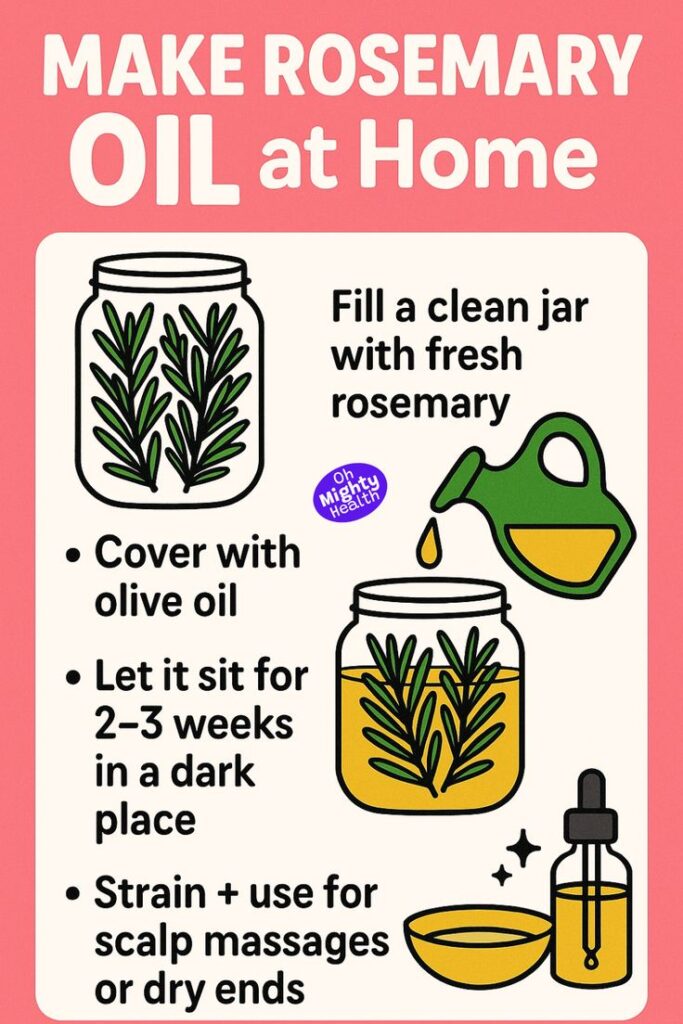
Learning how to make rosemary oil from fresh rosemary is one of those DIY beauty projects that genuinely deserves the fuss. It’s cheap, it’s simple, and unlike a lot of trending “hacks”, there’s real, if modest, science behind why rosemary might be worth having in your hair care rotation.
I’m Patri Hernández, a certified organic skincare formulator and dermocosmetic technician with a background in health coaching. I specialise in natural skincare, botanical ingredients, and practical, evidence-informed approaches to formulating with plant oils and herbs, so I’ll walk you through exactly how to make this properly, and where the science actually stands.
This post may contain affiliate links. If you make a purchase through one of these links, I may earn a small commission at no extra cost to you. I only recommend products I genuinely think are worth your money.
What is rosemary oil, really?

There’s a bit of confusion worth clearing up before we start, because “rosemary oil” actually refers to two quite different things.
- Rosemary essential oil is a concentrated, steam-distilled extract. It’s potent, must always be diluted, and is what you’ll usually find in small dark bottles from skincare suppliers.
- Rosemary-infused oil (what we’re making here) is a carrier oil, such as olive oil, that has been steeped with fresh or dried rosemary to gently draw out its aromatic compounds. It’s much gentler and can be used more liberally.
The recipe we’re covering today is an infusion, not the essential oil. If you want to make your own rosemary oil that’s genuinely gentle enough for regular scalp use, this is the version to go for. It’s much more forgiving on the scalp and doesn’t carry the same irritation risks as using essential oil neat.
Step by step with images






Does rosemary oil actually help with hair?
This is the question worth answering honestly rather than glossing over, because rosemary has become something of a wellness buzzword for hair growth.
The evidence is genuinely interesting, though it’s worth being precise about what it does and doesn’t show. A small clinical trial compared rosemary essential oil against minoxidil (a well-established hair loss treatment) over six months and found comparable improvements in hair count for people with androgenetic alopecia, with less scalp itching reported in the rosemary group. That’s a promising result, but it’s one study, using essential oil at a specific concentration, on a specific type of hair loss.
Rosemary is also traditionally credited with stimulating circulation to the scalp and having mild antimicrobial properties, both plausible mechanisms, but traditional use and a handful of small trials aren’t the same as robust, large-scale clinical proof.
What I’d say confidently: a rosemary-infused oil is unlikely to do harm when used sensibly, it feels lovely as a scalp treatment, and there’s reasonable early evidence it may support scalp health and hair condition. What I wouldn’t say: that it’s a guaranteed cure for hair loss, or a replacement for medical advice if you’re experiencing significant shedding. If hair loss is a real concern for you, it’s worth exploring our natural hair growth tips alongside speaking to a doctor or trichologist.
What you’ll need
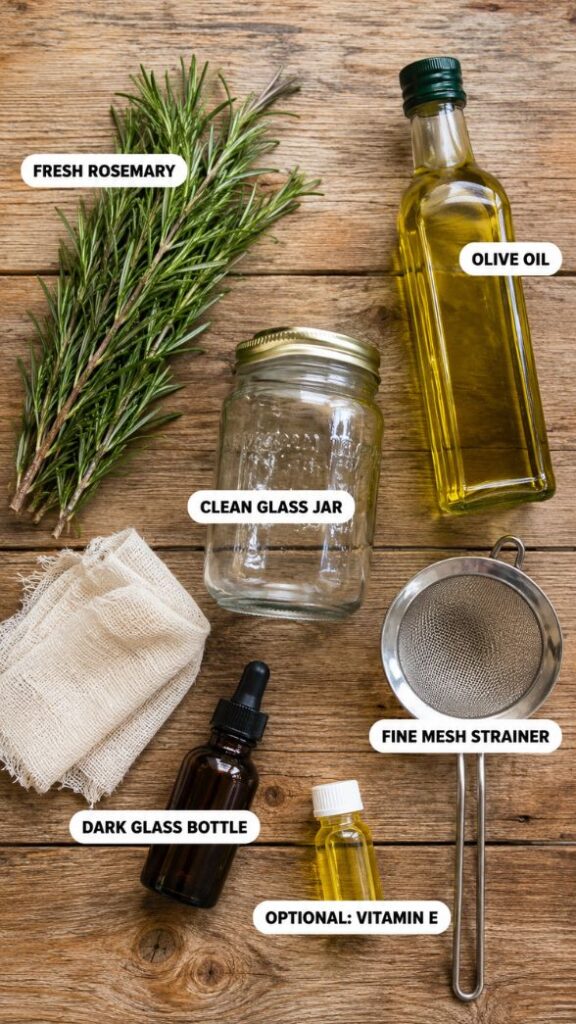
- A clean, dry glass jar with a lid (a small glass jar works perfectly)
- Fresh rosemary sprigs (dried works too, see notes below)
- Olive oil, or another carrier oil of your choice
- A fine mesh strainer or cheesecloth
- A dark glass dropper bottle for storing the finished oil
- Optional: a few drops of vitamin E oil, which acts as a natural antioxidant and helps slow the oil from going rancid
A note on which oil to use
Olive oil is the classic choice, and for good reason. It’s stable, widely available, and has its own mild conditioning properties. But it’s not the only option.
- Olive oil is heavier and richer, ideal for dry or coarse hair.
- Jojoba oil is structurally similar to sebum, so it sits well on oilier scalps without feeling heavy.
- Sweet almond oil is lighter and a nice middle ground if olive oil feels too thick for your hair type.
Whichever you choose, make sure it’s fresh. Infusing rosemary into an oil that’s already close to its use-by date just gives you a shorter shelf life on the finished product.
How to make rosemary oil at home, step by step
There are two ways to do this: the slow, cold infusion method (what the traditional windowsill jar approach uses) and a faster heat-assisted method. I’ll cover both, because they suit different situations, and both count as proper rosemary recipes for hair you can rely on.
Method 1: the cold infusion (traditional method)
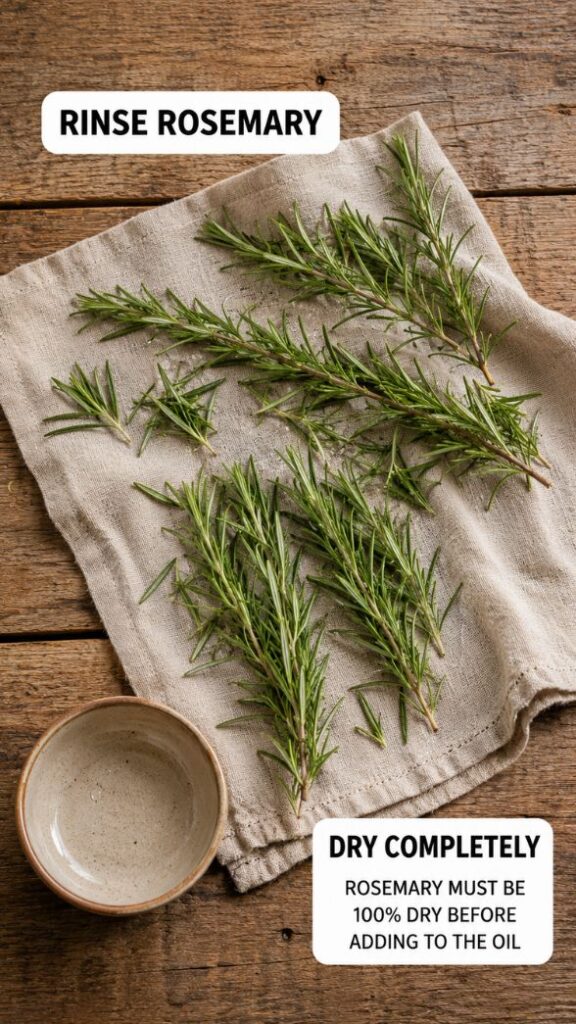
- Rinse your rosemary sprigs and pat them completely dry. This step matters more than people realise, any residual water introduces a real risk of mould growing in your jar over the following weeks.
- Pack the rosemary into your clean, dry jar. Bruising the sprigs slightly with the back of a spoon before adding them helps release more of the aromatic oils.
- Pour olive oil over the rosemary until the sprigs are fully submerged. This is important: any exposed plant material sitting above the oil line is a mould risk.
- Seal the jar and store it somewhere dark and cool, a cupboard rather than a sunny windowsill, despite how pretty that looks on Pinterest. Light and heat degrade the beneficial compounds in both the rosemary and the oil.
- Leave it to infuse for two to three weeks, giving it a gentle shake every couple of days to help redistribute the plant material.
- Strain out the rosemary through a fine mesh strainer or cheesecloth, squeezing gently to extract as much oil as possible, then discard the spent sprigs.
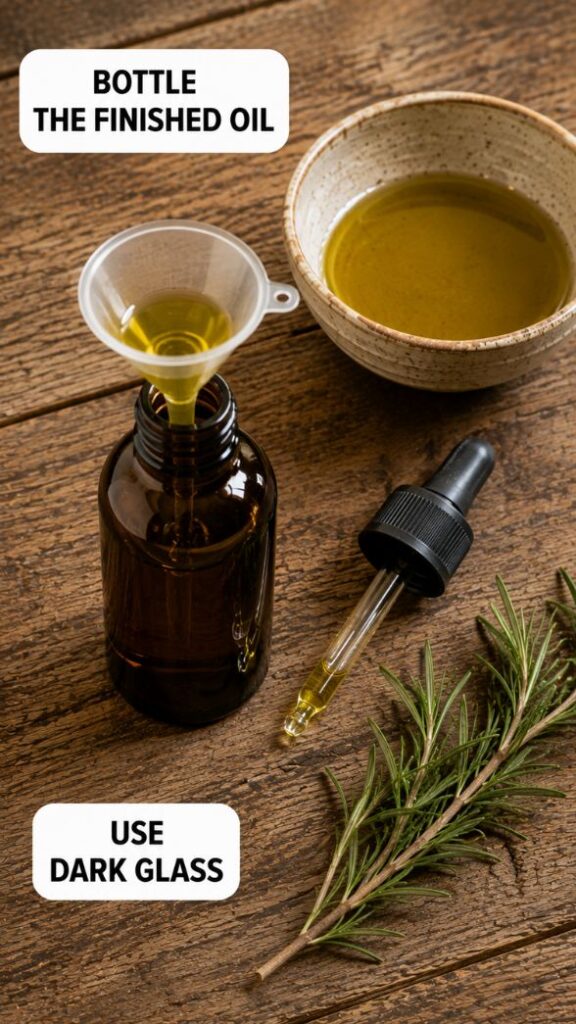
- Transfer the strained oil into a clean, dark dropper bottle for storage.
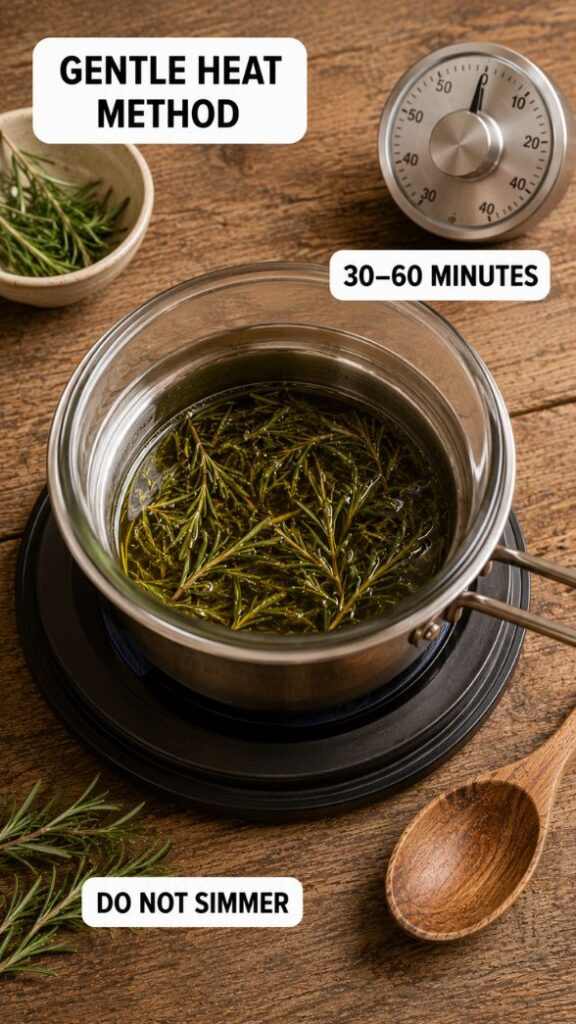
Method 2: the gentle heat infusion (faster method)
If three weeks feels like a long time to wait, a low, gentle heat speeds things up considerably, though it’s worth knowing this method carries a slightly higher spoilage risk if not done carefully. This is the version to reach for if you want a quick DIY rosemary oil without the wait.
- Combine your rosemary and oil in a small saucepan or double boiler.
- Warm on the lowest possible heat, you’re aiming for gentle warmth, not simmering or frying the herb. Overheating can actually degrade some of rosemary’s beneficial compounds.
- Heat for around thirty to sixty minutes, checking regularly.
- Remove from heat and allow to cool completely before straining.
- Strain and bottle as above.
Because heat-infused oils have had moisture driven off more thoroughly, some formulators consider them slightly more shelf-stable than cold infusions, but they should still be treated with the same storage caution below.
Fresh versus dried rosemary
Fresh rosemary gives a brighter, more fragrant result, but it also introduces more moisture into your jar, which is precisely what you’re trying to avoid. Dried rosemary is actually the safer choice for the cold infusion method, since it carries a much lower risk of introducing mould-causing moisture, even if the resulting scent is a touch less vibrant.
If you do use fresh sprigs, make sure they’re bone dry before they go anywhere near that jar. A day or two air-drying on a clean tea towel isn’t overkill. It’s worth knowing this is far from the only one of the fresh rosemary uses worth exploring in the kitchen and around the house, but for hair purposes, dry and fully submerged is the rule that matters most.
How to make rosemary oil for hair: using it once it’s ready
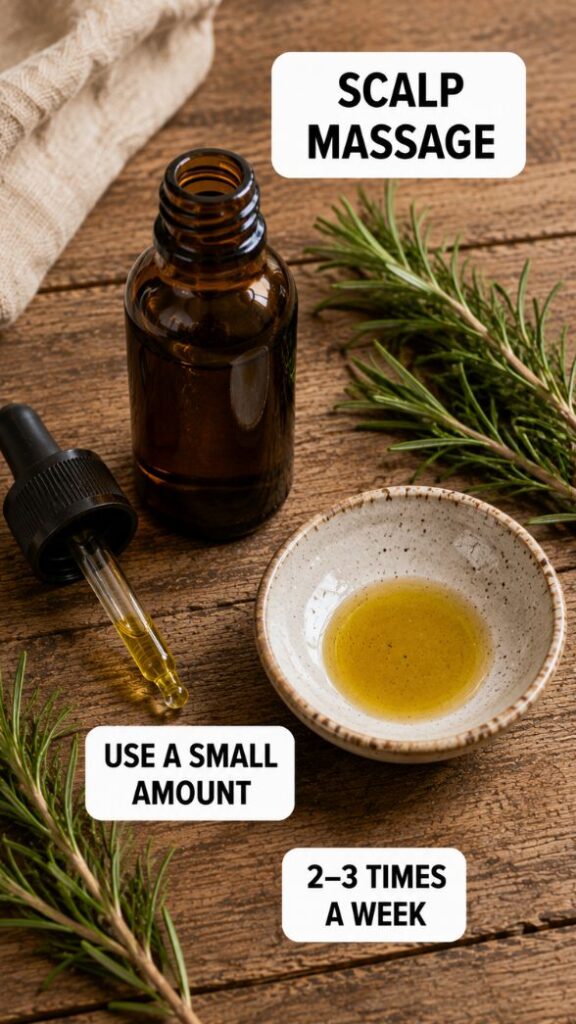
- Scalp massage: Warm a small amount between your palms and massage into the scalp using your fingertips in slow, circular motions for a few minutes. This is where much of the plausible benefit likely comes from, as massage itself is thought to support circulation to hair follicles, independent of what oil you’re using.
- Pre-wash treatment: Apply to the scalp and lengths an hour or two before shampooing, then wash out thoroughly.
- Overnight treatment: For dry or damaged ends specifically, a light application left on overnight (with a towel over your pillow) can help soften and smooth the hair shaft. This is more about the carrier oil’s conditioning effect than rosemary itself.
- Leave-in for dry ends: A tiny amount smoothed over just the ends can tame frizz without weighing hair down, provided you use a genuinely small amount.
Aim for two to three times a week to start. There’s no research suggesting more frequent use produces dramatically better results, and over-oiling can leave fine or oily hair looking flat and greasy rather than glossy.
Patch testing and safety considerations
Always patch test a new infused oil before applying it broadly, even something as generally gentle as this. Apply a small amount to the inside of your elbow or behind your ear, and wait twenty-four hours to check for any redness, itching, or irritation.
A few other points worth knowing:
- Rosemary is generally considered safe for topical use, but people with plant allergies, particularly to other members of the mint family (which rosemary belongs to), should be cautious.
- If you’re pregnant, it’s worth discussing rosemary use with your midwife or doctor, particularly if you plan to move on to using concentrated rosemary essential oil rather than this milder infusion.
- This infused oil is not the same as pure rosemary essential oil, and should never be used interchangeably with recipes calling for the concentrated essential oil, since the potency is entirely different.
- If you have a scalp condition such as eczema, psoriasis, or folliculitis, check with a dermatologist before introducing a new oil-based treatment.
Common mistakes to avoid
- Using wet or damp rosemary. This is the single biggest cause of infused oils spoiling early. Any trace of water invites mould.
- Leaving plant material exposed above the oil line. Always keep the herb fully submerged throughout the infusion.
- Storing the jar somewhere warm or sunny. That gorgeous windowsill jar look is lovely for a photo, but light and heat both accelerate rancidity and can degrade the aromatic compounds you’re trying to capture.
- Skipping the strain. Leaving old plant matter sitting in your finished oil long-term increases the risk of spoilage, even after the infusion period is technically over.
- Expecting essential-oil-strength results from an infused oil. An infusion is gentle by nature. If you’re looking for a more potent formulation, that’s a different (and more technical) project involving proper dilution of true essential oil.
How to store your rosemary oil
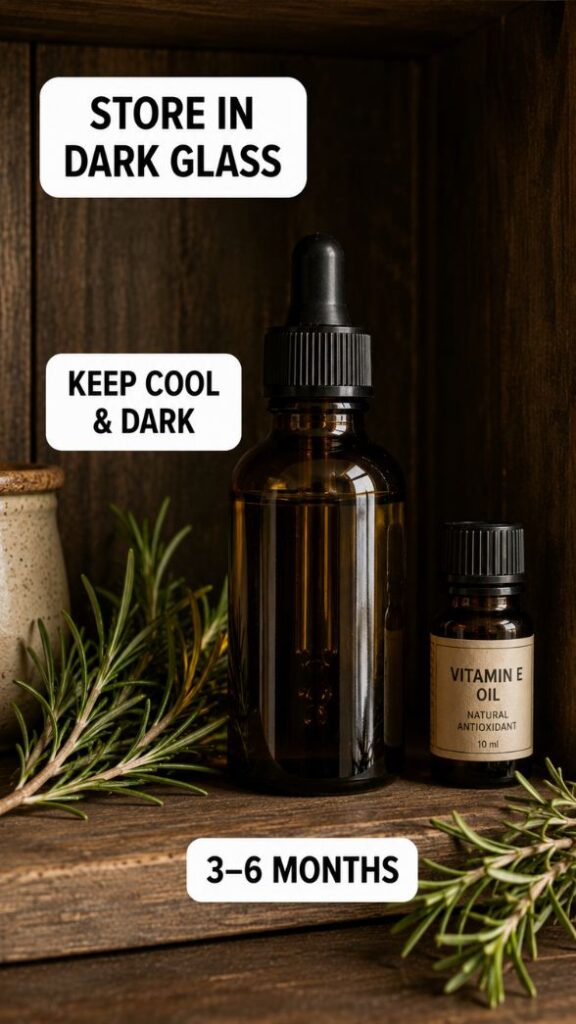
Keep the finished oil in a dark glass bottle, away from direct light and heat, ideally in a cool cupboard rather than a steamy bathroom shelf. Adding a few drops of vitamin E oil when you bottle it can help extend shelf life slightly, since it acts as a natural antioxidant that slows oxidation.
Used and stored properly, a rosemary-infused oil should keep for around three to six months. If it ever smells sour, musty, or “off” rather than herbaceous, discard it. Trust your nose here, it won’t steer you wrong.
Frequently asked questions
Can I use dried rosemary instead of fresh?
Yes, and for the cold infusion method it’s arguably the better choice, since it carries a lower moisture (and therefore mould) risk.
How long does homemade rosemary oil actually last?
Roughly three to six months when stored correctly in a cool, dark place, away from bathroom humidity.
Can I speed up the infusion process?
Yes, using the gentle heat method described above, though it should be done on very low heat to avoid degrading the rosemary’s beneficial compounds.
Is this the same as rosemary essential oil?
No. This is a mild infused carrier oil. Rosemary essential oil is a concentrated distillation that must always be diluted before use and carries a higher irritation risk.
Will rosemary oil definitely regrow my hair?
There’s promising early research, but it’s not a guaranteed fix, and it shouldn’t replace a conversation with a doctor if you’re experiencing significant hair loss.
Making your own rosemary oil is one of those small rituals that’s genuinely worth the three-week wait, both for the process and for what lands in your hair care routine at the end of it. It costs next to nothing, it smells wonderful, and even without miracle claims attached, a well-made herbal oil is a lovely thing to have on your bathroom shelf. If you enjoy this kind of DIY project, you might also like our guide to natural remedies for thicker, fuller hair.
Love, Patri xx
