
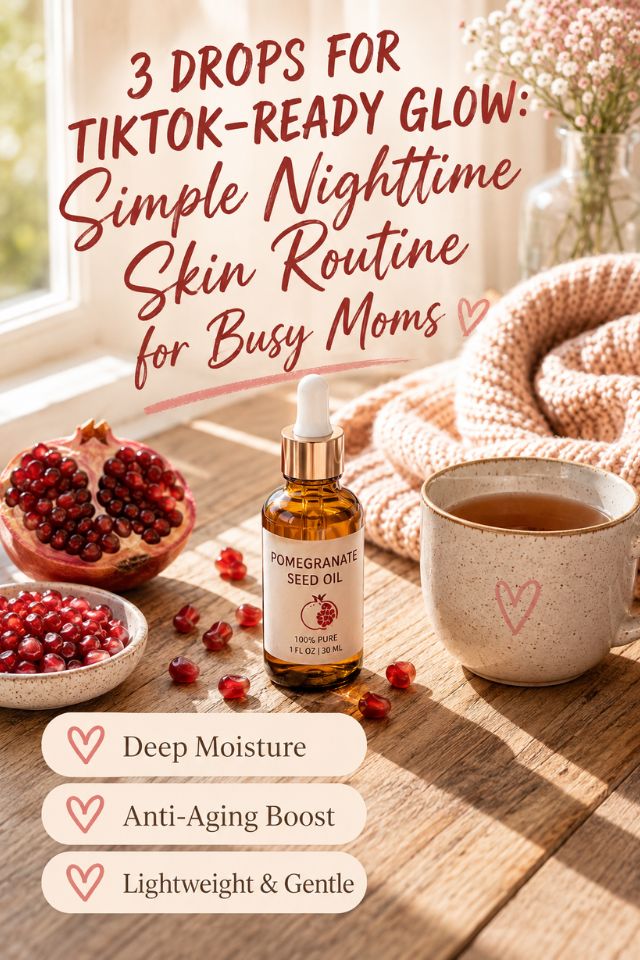
3 drops for a tiktok-ready glow: a simple nighttime skin routine for busy moms
It’s 9.47pm. The children are (finally, mercifully) asleep, there’s a load of washing you’re pretending not to hear beeping at you from the utility room, and the last thing on your mind is a ten-step skincare routine with essences, ampoules and a jade roller you’ll never use twice.
You don’t need one.
What you actually need is something that takes under two minutes, doesn’t require a chemistry degree, and still leaves your skin looking like you had an early night, even when you very much did not. That’s exactly what a simple pomegranate seed oil routine is built for.
I’m Patri Hernández, a certified organic skincare formulator and dermocosmetic technician with a background in health coaching. I specialise in natural skincare and botanical ingredients, and helping busy people build routines that are genuinely realistic, not just Pinterest-pretty, is a big part of what I do.
This post contains affiliate links, which means I may earn a small commission if you buy something through one of them, at no extra cost to you. I only recommend products I genuinely think are worth your money.
Why pomegranate seed oil, specifically?
Pomegranate seed oil is pressed from the seeds inside the fruit, not the juicy arils you eat, which is worth knowing because the two have quite different properties. The seed oil is what’s used in skincare.
It’s rich in punicic acid, an unusual polyunsaturated fatty acid that makes up the bulk of the oil’s fat content. Punicic acid has been studied for its antioxidant behaviour and its role in helping support the skin’s barrier, though most of that evidence comes from lab and animal studies rather than large human trials, so it’s sensible to think of it as promising rather than proven.
Alongside punicic acid, pomegranate seed oil contains natural tocopherols (a form of vitamin E) and polyphenols, both of which contribute to its antioxidant profile. Antioxidants matter in skincare because they help mop up free radical damage from UV exposure and pollution, the kind of everyday stress that contributes to dullness and premature fine lines.
None of this makes pomegranate seed oil a miracle cure, and I’d be doing you a disservice if I implied otherwise. What it is: a genuinely nourishing, relatively lightweight facial oil that layers well and doesn’t leave most skin types feeling greasy.
What the pin gets right (and where I’d add nuance)
The claims on the pin, deep moisture, anti-ageing boost, lightweight and gentle, are all reasonable descriptions of how the oil behaves and feels on skin. I’d just gently reframe “anti-ageing boost” as supportive of a healthy-looking, resilient complexion over time, rather than something that will visibly erase lines overnight. Skincare oils work cumulatively, not instantly.
Why nighttime is the right time for this
Your skin’s barrier is more permeable overnight, and there’s no SPF or make-up sitting on top competing for absorption. It’s also simply the moment in the day when you have two free minutes without a small person asking you something.
Applying an oil as one of the last steps in your evening routine takes advantage of what’s often called the “sandwich” method: water-based products first, oil on top to help seal moisture in. If you want the full logic behind product order, I’ve written a complete guide to the correct order of skincare products that’s worth a read if you’re ever unsure what goes where.
The simple 3-drop nighttime routine
- Cleanse. A gentle, non-stripping cleanser removes the day’s grime without leaving skin tight or squeaky, which is a sign the barrier has been over-cleansed.
- Tone or mist (optional). If you use a hydrating toner, apply it while skin is still slightly damp.
- Apply any actives. If you use a retinoid, vitamin C serum or exfoliating acid, this is where it goes, before the oil, not mixed into it.
- Warm 3 drops of pomegranate seed oil between your palms. Warming the oil slightly helps it spread more evenly and absorb faster.
- Press, don’t rub, into skin. Gentle pressing motions encourage absorption without dragging on delicate areas like under the eyes.
- Let it sit for a minute before bed. This gives it time to settle rather than transferring onto your pillowcase.
Three drops really is enough for the whole face. Facial oils are concentrated, and more product doesn’t mean more benefit, it just means a longer wait for it to sink in and a higher chance of a shiny pillow in the morning.
If you only have thirty seconds
Skip everything except a splash of water and the three drops. An oil applied to slightly damp skin still does useful work, and a partial routine you’ll actually stick to beats a perfect one you abandon by Thursday. If a genuinely minimalist approach appeals to you long-term, my piece on the simple natural face routine goes into this properly.
How to choose a good pomegranate seed oil
- Cold-pressed: heat processing can degrade the delicate fatty acids and antioxidants that make the oil worth using in the first place.
- Unrefined and organic where possible: refining strips out some of the beneficial compounds along with impurities.
- Dark glass bottle: pomegranate seed oil is genuinely prone to oxidation. Light exposure speeds this up considerably, so a clear bottle is a red flag rather than a nice-to-have detail.
- A recent harvest date if listed: this oil doesn’t have an especially long shelf life once opened, so freshness matters more here than with something like jojoba oil.
Who this oil suits, and who might want to be more cautious
Pomegranate seed oil sits at a medium weight, lighter than avocado or olive oil, heavier than something like grapeseed. That makes it a reasonable fit for normal, dry, combination and mature skin.
If your skin leans very oily or is genuinely acne-prone, I’d be cautious about applying it neat as a standalone step. It’s not classically high on the comedogenic scale, but “not high” isn’t the same as “zero risk for everyone,” and individual skin behaves individually. If oily or breakout-prone skin is your main concern, my guide to carrier oils for oily and acne-prone skin covers lighter alternatives in more depth.
Always patch test a new oil on your inner forearm for 24 to 48 hours before applying it to your face, particularly if you have a known allergy to pomegranate or a history of sensitive, reactive skin.
Common mistakes with facial oils
- Using too much. More than a few drops just sits on the surface and can look and feel greasy without adding benefit.
- Applying oil to bone-dry skin. Oils work best as a sealant over some moisture, not as a substitute for it.
- Storing it somewhere warm and bright. A bathroom windowsill is pretty much the worst spot for an oil that oxidises easily.
- Skipping SPF the next morning because “it’s just an oil, not a retinol.” Any nourishing nighttime step still deserves daytime sun protection to protect the results.
Storage and shelf life
Keep pomegranate seed oil somewhere cool, dark and dry, a bathroom cabinet rather than a windowsill. Once opened, expect it to stay in good condition for around six months, sooner if it’s stored somewhere warm.
You’ll know it’s turned if it develops a sharp, slightly bitter or “crayon-like” smell, quite different from its usual mild, faintly tart scent. If that happens, it’s time to replace it rather than keep using it.
Adding a drop or two of vitamin E oil to your bottle can help slow oxidation slightly, though it won’t extend shelf life indefinitely.
Building this into a full routine
Three drops of oil is a lovely finishing step, but it works best as part of a routine that also covers cleansing and hydration properly. If you want to build the whole thing out rather than just the last step, my guide to a basic, minimalist skincare routine is a good place to start, and if dehydration is your main frustration, the hydrating skincare ideas post pairs well with this one.
Frequently asked questions
Can I use pomegranate seed oil every night?
Yes, for most skin types it’s gentle enough for nightly use. If you notice any congestion or breakouts developing, scale back to three or four times a week and monitor how your skin responds.
Can I mix it with other oils?
Yes. It blends well with lighter oils like jojoba oil if you want to stretch it further, or with rosehip oil if you’re specifically targeting uneven tone.
Does it replace moisturiser?
Not really. Oils seal in moisture rather than providing it themselves, so applying it over a hydrating serum or moisturiser gives better results than using it alone on dry skin.
Is it safe during pregnancy?
Topical pomegranate seed oil is generally considered low risk, but if you’re pregnant or breastfeeding, it’s always worth running any new skincare ingredient past your midwife or doctor first.
What if my skin feels greasy the next morning?
Reduce to two drops, or apply it slightly earlier in your routine so it has longer to absorb before you get into bed.
The appeal of this kind of routine isn’t that it’s dramatic, it’s that it’s doable. Three drops, two minutes, done, and that’s realistically what most of us have the bandwidth for on a Tuesday night. Consistency, even a small, unglamorous kind, tends to do far more for skin over months than an elaborate routine you only manage twice a week.
Love, Patri xx
