
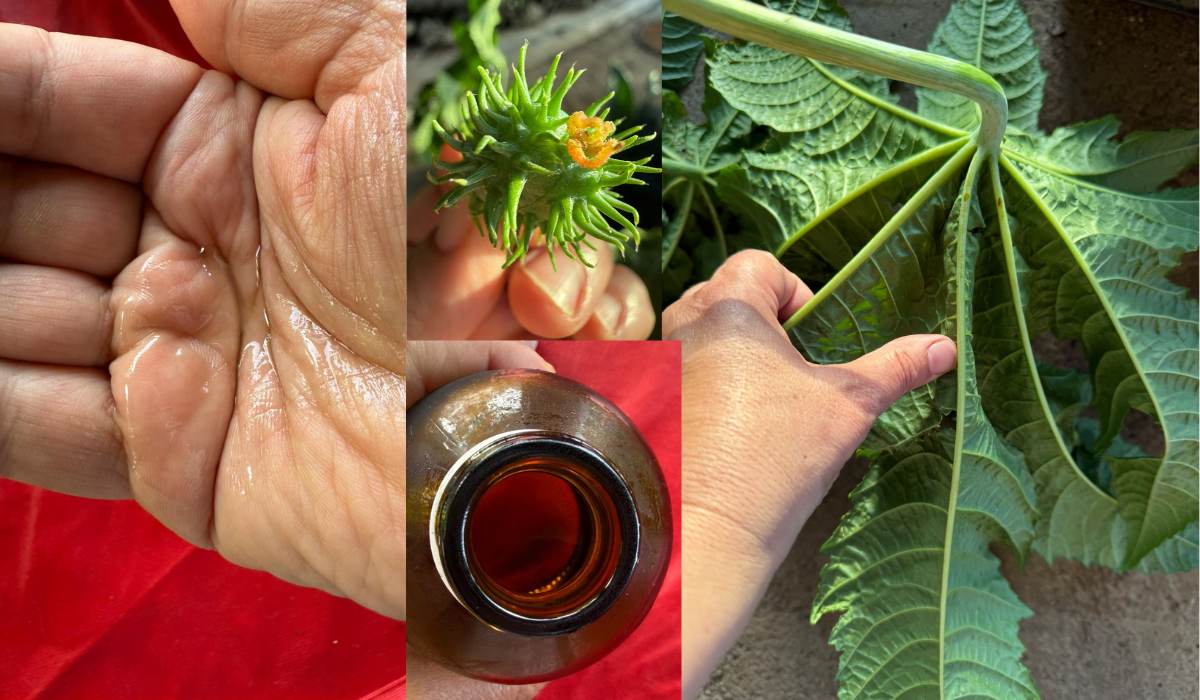
Best Ways To Use Castor Oil For Anti-Aging Skin
I’ll be honest: when I first heard people raving about castor oil for anti-ageing, I was sceptical. It’s thick, sticky, and not exactly the most glamorous ingredient in my formulation toolkit.
But I’ve now used it for many of my formulations. It is wonderful as an ingredient for lip balm, lip gloss, creams, etc.
Castor oil won’t erase wrinkles overnight or replace a good retinol. But it does bring something valuable to the table: deep hydration, support for skin barrier repair, and a gentle boost to skin texture over time.
Let me walk you through how to use it properly, because application matters more than you’d think.

Why Castor Oil Works for Ageing Skin
Castor oil is rich in ricinoleic acid, a fatty acid that makes up about 90% of its composition. This gives it strong emollient properties, meaning it locks moisture into your skin and keeps it supple.
It also contains smaller amounts of oleic and linoleic acids, both of which help maintain your skin’s natural lipid barrier: the thing that keeps moisture in and irritants out.
Castor Oil Fatty Acid Breakdown:
| Fatty Acid | Percentage | Main Benefit |
|---|---|---|
| Ricinoleic acid | ~90% | Deep moisturising, anti-inflammatory |
| Oleic acid | ~4% | Skin barrier support, penetration enhancer |
| Linoleic acid | ~3% | Balances oil production, strengthens barrier |
| Other fatty acids | ~3% | Additional nourishment |
As we age, our skin produces less oil and struggles to hold onto water. That’s where castor oil steps in. It doesn’t stimulate collagen or reverse sun damage, but it does help your skin stay hydrated and smooth, which can soften the appearance of fine lines.
Think of it as a supportive player, not the star of the show.
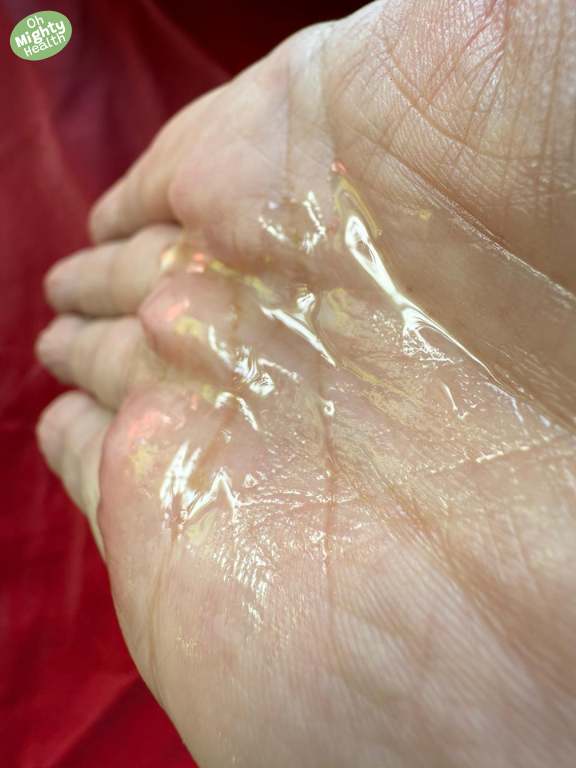
How To Use Castor Oil on Your Face (Without Making a Mess)
1. Mix It With a Lighter Carrier Oil
Castor oil on its own is far too thick for most people’s faces. It sits on the surface and doesn’t absorb well.
Instead, blend it with a lighter oil like:
- Jojoba oil (get it here) (mimics your skin’s natural sebum)
- Rosehip oil (get it here) (adds vitamin A and brightening benefits)
- Squalane (get it here) (ultra-lightweight and non-comedogenic)
My Go-To Blending Ratios:
For Normal to Dry Skin:
– 1 part castor oil (get it here)
– 3 parts jojoba or rosehip oil
For Sensitive or Mature Skin:
– 1 part castor oil
– 4 parts squalane
For Very Dry Skin:
– 1 part castor oil (get it here)
– 2 parts jojoba oil
I keep a little amber bottle of this blend on my bathroom shelf and use it most nights. If you’re just starting out with natural face care, this kind of simple oil blend is exactly what I recommend in Your Skin Needs Less: The Simple Natural Face Routine That Works.
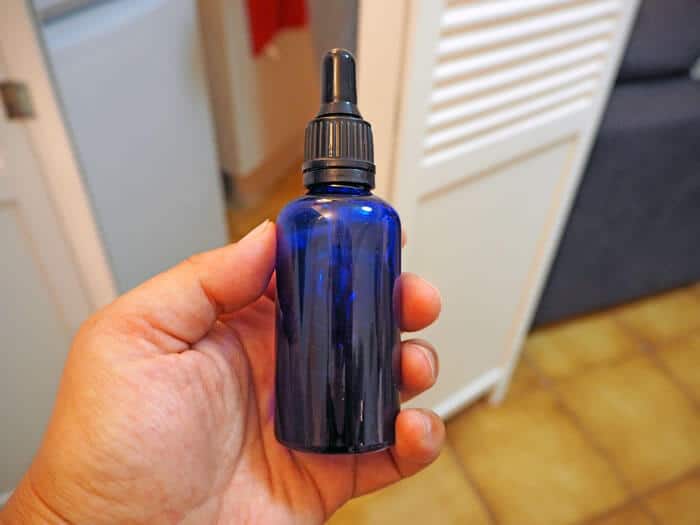
2. Apply It as the Last Step in Your Evening Routine
Castor oil works best when your skin is already slightly damp and prepped.
The Right Order:
Step 1: Cleanse your face ↓ Step 2: Apply your toner or essence ↓ Step 3: Use any serums (like vitamin C or peptides) ↓ Step 4: Pat on your castor oil blend while skin is still damp
This traps moisture and gives the oil something to work with. If you apply it to dry skin, it just sits there doing very little.
Pro tip: If you’re using retinol, apply the castor oil blend 10 minutes after to help buffer any dryness or irritation.
Not sure where facial oils fit into your routine? I break down the correct order of skincare products in detail here.
3. Use It as a Facial Massage Oil

This is one of my favourite methods.
Castor oil’s thickness makes it perfect for facial massage, which can boost circulation and help with lymphatic drainage (that puffy, tired look we all get sometimes).
Simple 5-Minute Facial Massage Routine:
- Warm 3-4 drops of your castor oil blend between your palms
- Forehead: Sweep outward from centre to temples (10 strokes)
- Cheeks: Glide upward from jaw to cheekbones (10 strokes)
- Jawline: Firm pressure from chin along jaw to ears (10 strokes)
- Under eyes: Gentle taps with ring finger around orbital bone
Do this 2-3 times a week. It’s calming, and over time, your skin starts to look more awake and toned.
4. Spot-Treat Dry Patches or Fine Lines
If you’ve got specific areas that are extra dry (like the corners of your mouth, under your eyes, or around your nose), dab a tiny bit of pure castor oil (get it here) there before bed.
Just a drop. Seriously. A little goes a long way.
It won’t make wrinkles vanish, but it will plump up the skin temporarily by holding water in those areas. It’s especially helpful in winter when your skin is tight and flaky. For more seasonal skincare strategies, check out Your Winter Skincare Routine, Simplified (and Natural).
Castor Oil Eye Treatments: Do They Actually Work?
You’ve probably seen people applying castor oil around their eyes to reduce crow’s feet or dark circles.
Here’s the truth: castor oil can help with dryness and fine lines caused by dehydration. It won’t fix pigmentation or deep wrinkles, but it can make the skin around your eyes look smoother and less crepey.
What Castor Oil Can and Can’t Do Around Your Eyes:
| ✓ What It DOES Help | ✗ What It DOESN’T Help |
|---|---|
| Dryness and flaking | Genetic dark circles |
| Fine dehydration lines | Deep wrinkles from sun damage |
| Rough, crepey texture | Puffiness from fluid retention |
| Tight, uncomfortable skin | Loss of collagen and elasticity |
If you want to try it:
- Mix 1 part castor oil with 2 parts rosehip or squalane
- Gently pat (don’t rub) a tiny amount around your orbital bone at night
- Avoid getting it in your eyes; it stings
Use it consistently for a few weeks before deciding if it’s helping. Skin changes take time.
Can You Use Castor Oil During the Day?
Technically, yes. But I wouldn’t recommend it under makeup.
Castor oil is heavy and can make your skin look shiny or greasy. It also doesn’t play well with most foundations or concealers.
Best Times to Use Castor Oil:
| Time | Recommendation | Why |
|---|---|---|
| Evening | ✓ Best choice | Skin repairs itself overnight, oil has time to absorb |
| Morning | ✗ Skip it | Too heavy under makeup, leaves greasy finish |
| Post-shower | ✓ Good option | Damp skin absorbs it better |
| Before bed | ✓ Ideal | Maximum absorption time, no need to look polished |
If you want daytime hydration, go for something lighter like rosehip oil, marula oil, or a good hyaluronic acid serum (get it here). Save the castor oil for your evening routine when your skin can soak it in without pressure to look polished.
For more on building a simple routine that actually works, read Basic Skin Care Routine: Get Glowing Skin With This Minimalist Ritual.
What Type of Castor Oil Should You Buy?
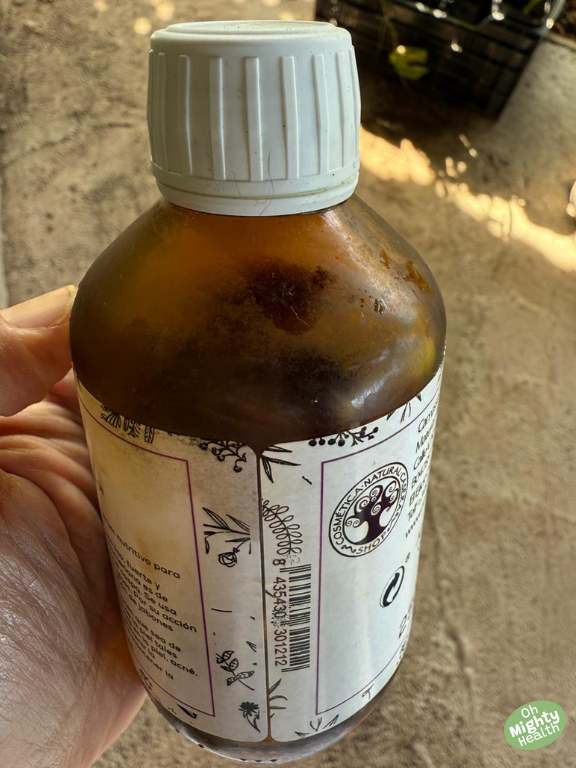
Not all castor oils are created equal.
What to Look For:
✓ Cold-pressed (retains more nutrients) ✓ Hexane-free (some cheap versions use chemical extraction) ✓ Organic if possible (castor plants can be heavily sprayed) ✓ Dark glass bottle (protects oil from light degradation)
I usually go for a simple, unrefined organic castor oil (get it here) from a brand I trust. You don’t need anything fancy, just pure oil properly stored.
Some people also swear by Jamaican black castor oil (get it here), which is roasted before pressing. It has a darker colour and nuttier scent, and some find it works better for hair and scalp issues.
How Long Does It Take To See Results?
This is the part people don’t love hearing: castor oil isn’t a quick fix.
Realistic Timeline for Results:
Week 1-2:
Softer, more hydrated skin
Less tightness and flaking
Week 3-4:
Improved texture
Skin feels more supple
Week 6-8:
Subtle plumping of fine lines
Better overall barrier function
Week 12+:
Maintained hydration
Consistent improvement in skin feel
You might notice softer, more hydrated skin within a week or two. But improvements in texture, plumpness, and fine lines? That takes at least 4-6 weeks of consistent use.
It’s a slow, steady worker. If you’re after dramatic results, you’ll want to pair it with ingredients like retinol, vitamin C, or peptides.
Castor oil supports the work those actives do by keeping your skin barrier strong and hydrated. For more on how natural ingredients fit into an effective skincare approach, see Natural Skin Treatments: Your New & Complete Guide!
Can Castor Oil Cause Breakouts?
It depends on your skin type.
Castor oil is moderately comedogenic (around a 2 on a scale of 0-5), which means it can clog pores for some people, especially if you’re prone to congestion or have oily skin.
Comedogenic Rating Guide:
| Rating | Risk Level | Best For |
|---|---|---|
| 0-1 | Very low | All skin types, including acne-prone |
| 2-3 | Moderate | Normal to dry skin, use with caution |
| 4-5 | High | Avoid if acne-prone or oily |
Castor oil = Rating 2
If you’re worried about breakouts:
- Always dilute it with a lighter, non-comedogenic oil (like squalane or jojoba)
- Use it only at night, and in small amounts
- Pay attention to how your skin reacts in the first week
If you notice new bumps or congestion, scale back or stop. Not every ingredient works for every person, and that’s okay.
Other Uses for Castor Oil (Beyond Your Face)
While we’re here, castor oil is also brilliant for:
- Cuticles and nails: massage a drop into each nail bed before bed (for more nail care tips, see Toenail Health 101)
- Eyebrows and lashes: some people swear it helps with thickness (FACTCHECK: evidence is anecdotal, not proven)
- Dry elbows, knees, and heels: it’s perfect for rough patches
- Lip care: mix with a bit of shea butter (get it here) for a nourishing balm
It’s one of those multi-use staples that earns its place in your bathroom cabinet.
Final Thoughts
Castor oil isn’t going to replace your retinol or give you a facelift in a bottle. But for what it does do (hydrate, soften, and support your skin barrier), it’s incredibly reliable.
I think of it as a steady, quiet workhorse in my routine. Not flashy, but genuinely helpful.
If you’ve been curious about trying it, start small. Mix it with a lighter oil, use it a few nights a week, and see how your skin responds.
You might be surprised.
Have you tried castor oil for your skin? I’d love to hear how it worked for you.
Suggested References
- Lin TK, Zhong L, Santiago JL. Anti-Inflammatory and Skin Barrier Repair Effects of Topical Application of Some Plant Oils. Int J Mol Sci. 2017;19(1):70. Available from: https://www.ncbi.nlm.nih.gov/pmc/articles/PMC5796020/
- Pappas A. Epidermal surface lipids. Dermatoendocrinol. 2009;1(2):72-76. Available from: https://www.ncbi.nlm.nih.gov/pmc/articles/PMC2835894/
- Fiume MM, Bergfeld WF, Belsito DV, et al. Safety Assessment of Ricinus communis (Castor) Seed Oil, Hydrogenated Castor Oil, Glyceryl Ricinoleate, Glyceryl Ricinoleate SE, Ricinoleic Acid, Potassium Ricinoleate, Sodium Ricinoleate, Zinc Ricinoleate, Cetyl Ricinoleate, Ethyl Ricinoleate, Glycol Ricinoleate, Isopropyl Ricinoleate, Methyl Ricinoleate, and Octyldodecyl Ricinoleate. Int J Toxicol. 2007;26 Suppl 3:31-77. Available from: https://pubmed.ncbi.nlm.nih.gov/18080873/
- Vaughn AR, Clark AK, Sivamani RK, Shi VY. Natural Oils for Skin-Barrier Repair: Ancient Compounds Now Backed by Modern Science. Am J Clin Dermatol. 2018;19(1):103-117. Available from: https://pubmed.ncbi.nlm.nih.gov/28707186/
- Vieira C, Evangelista S, Cirillo R, Lippi A, Maggi CA, Manzini S. Effect of ricinoleic acid in acute and subchronic experimental models of inflammation. Mediators Inflamm. 2000;9(5):223-8. Available from: https://pubmed.ncbi.nlm.nih.gov/11200362/
- Ganceviciene R, Liakou AI, Theodoridis A, Makrantonaki E, Zouboulis CC. Skin anti-aging strategies. Dermatoendocrinol. 2012;4(3):308-19. Available from: https://www.ncbi.nlm.nih.gov/pmc/articles/PMC3583892/
- Akihisa T, Yasukawa K, Yamaura M, et al. Triterpene alcohol and sterol ferulates from rice bran and their anti-inflammatory effects. J Agric Food Chem. 2000;48(6):2313-9. Available from: https://pubmed.ncbi.nlm.nih.gov/10888551/
- Ranzato E, Martinotti S, Burlando B. Wound healing properties of jojoba liquid wax: an in vitro study. J Ethnopharmacol. 2011;134(2):443-9. Available from: https://pubmed.ncbi.nlm.nih.gov/21187146/
