

4 Things Everyone Forgets at Christmas Dinner: Ideas that Help!
I know this isn’t my usual skincare and wellness content, but hosting Christmas dinner follows the same principle I apply to everything: small, thoughtful details create the biggest impact. So here are 4 things that slip through every year but actually matter more than the fancy centrepiece everyone’s stressing about!
You’ve got the menu sorted. Table’s set. You’ve even remembered to take the vegan butter out so it’s actually spreadable.
But there are a few things that slip through every single year: small details that don’t seem important until the moment you need them. Then suddenly they’re the difference between a dinner that flows beautifully and one where you’re scrambling to fix something preventable.
Here are four easy-to-miss essentials that’ll genuinely make your evening better.
1. Something proper to drink for people who aren’t drinking

Water’s fine. Juice is… juice. But if you’ve gone to the trouble of choosing nice wine, your non-drinking guests deserve better than an afterthought.
Here’s what actually works: sparkling elderflower cordial mixed with fresh lime. Good ginger beer served over ice with a sprig of rosemary. Kombucha in a wine glass. Alcohol-free prosecco if that’s their preference. Even just sparkling water with frozen berries looks intentional.
The key is presentation. Use proper glassware. Add something visual—herbs, fruit, ice that looks deliberate rather than thrown in as an afterthought.
People notice when they’ve been thought about. Your pregnant friend notices. Your friend in recovery notices. Your teenager who’s driving notices. And they remember it, because so few people bother.
Make non-drinkers feel included:
- Sparkling elderflower cordial with fresh lime slices
- Good ginger beer over ice with rosemary sprigs
- Kombucha served in proper wine glasses
- Alcohol-free prosecco or sparkling wine
- Sparkling water with frozen berries and mint
- Use real glassware, not plastic tumblers
- Offer these drinks at the same time as wine
- Put them on the table, not hidden in the fridge
- Add visual elements: herbs, citrus, ice
- Make it feel intentional, not like an afterthought
This isn’t about being fancy. It’s about making sure everyone at your table feels like they’re part of the celebration, not watching it happen around them whilst clutching a tumbler of orange squash.
Put the nice drinks on the table when you’re pouring wine. Offer them the same way you’d offer wine. Make it normal, not a special request that requires explanation.
It takes five extra minutes at the shop and makes someone’s entire evening better.
2. Lighting that isn’t just everything on full blast
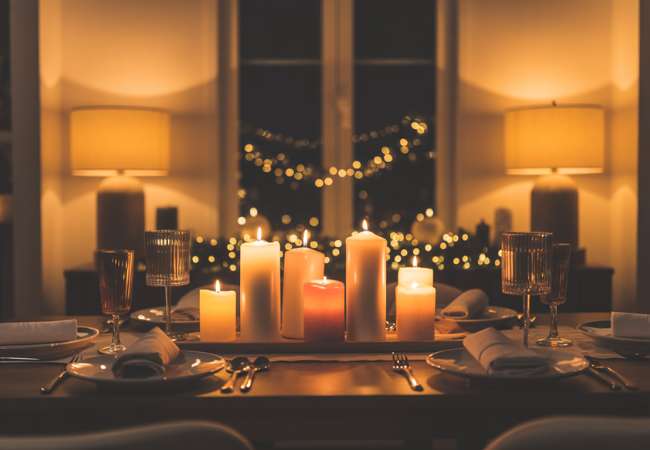
Overhead lights are brutal. They flatten the warmth right out of a room and make everyone look like they’re recovering from flu.
Walk into your dining space right now and turn on all the lights like you normally would. Then look at it honestly. Does it feel cosy? Or does it feel like you’re about to conduct a job interview over roast vegetables?
Here’s what to do instead: turn off the overhead lights completely. Use lamps positioned at different heights around the room. Light candles—lots of them, not just one sad tea light in the middle of the table. If you’ve only got overhead lighting, use a dimmer switch or just turn on half the bulbs.
The difference is startling. Soft lighting makes people’s faces look kinder. It makes the food look better. It makes conversation feel more intimate without anyone knowing why.
There’s actual science behind this. Harsh lighting increases cortisol levels and makes people feel on edge. Warm, low lighting does the opposite—it signals safety and relaxation to your nervous system.
Create warm, flattering atmosphere:
- Turn off all overhead lights before guests arrive
- Use table lamps positioned at different heights
- Light multiple candles; at least 6-8 pillar candles minimum
- Place candles at varying heights on the table
- Use dimmer switches set to 40% brightness
- If no dimmers, switch on only half the bulbs
- Add string lights or fairy lights for extra warmth
- Test the lighting by sitting at the furthest seat
- Aim for enough light to see food, not enough to feel clinical
- Set this up 30 minutes before anyone arrives
- Avoid harsh white bulbs; use warm-toned ones
Restaurants know this. That’s why expensive places are always dimly lit. They’re not trying to hide the food. They’re creating an atmosphere where people naturally relax and enjoy themselves.
You can do the same thing at home for the price of a few pillar candles and switching off the big light.
Set this up before your first guest arrives. Once people are there, you won’t have the headspace to think about it, and the moment for creating atmosphere will have passed.
If you’ve got dimmer switches, set them to about 40% brightness. If you don’t, aim for enough light to see your food clearly but not enough to feel clinical.
Your guests might not consciously notice what you’ve done. But they’ll feel more comfortable, stay longer, and remember your dinner as somehow warmer than others. That’s the lighting working.
3. A plan for where people sit (even if you pretend you don’t have one)

That awkward shuffle where everyone hovers around the table saying “oh, wherever” while secretly hoping they don’t get stuck next to someone they can’t talk to? That sets a weird tone for the entire meal.
You don’t need place cards. You don’t need to make it formal. But you absolutely need to know who’s sitting where before anyone walks through the door.
Think about it properly. Who talks easily together? Who needs rescuing from silence? Who’s going to dominate conversation if they’re next to someone quiet? Who hasn’t seen each other in ages and would love to catch up?
Put couples apart unless they specifically want to sit together. Separate the people who always talk to each other anyway. Mix up the generations if you can… Older relatives often love chatting to younger people who actually ask them questions, and teenagers relax more when they’re not lumped together like they’re at the kids’ table.
Map out your seating before the doorbell rings:
- Identify who talks easily together naturally
- Separate couples unless they specifically want to sit together
- Don’t lump all the quiet people in one corner
- Mix up generations—don’t create a “kids end” and “adults end”
- Put your warmest guest next to anyone struggling emotionally
- Position yourself where you can see everyone and reach the kitchen
- Keep dominant talkers away from shy guests
- Reunite people who haven’t seen each other in ages
- Consider who’ll appreciate deep conversation vs light chat
- Think about dietary requirements (vegan next to the salads)
- Guide people confidently as they arrive: “Dad, you’re here by the window”
- Don’t ask “where do you want to sit?”—just direct them kindly
Position yourself strategically. You want to be somewhere you can see the whole table, reach the kitchen easily, and rescue any conversation that’s dying.
Here’s how to execute it without making it feel controlling: as people arrive and head toward the table, casually guide them. “Dad, you’re here by the window. Emma, come sit next to me. James, grab that spot across from Sarah, she was asking about your new job.”
Do it confidently and people just follow along. Hesitate or ask where they want to sit, and you’re back to the awkward shuffle.
The seating plan isn’t about control. It’s about creating the conditions for good conversation to happen naturally. You’re the host. This is your job.
Get it right and people will have a genuinely lovely time talking to whoever’s next to them. Get it wrong and someone’s going to spend two hours making painful small talk while resenting you slightly for not thinking it through.
One more thing: if you’ve got someone who’s struggling (recently bereaved, going through a divorce, dealing with something hard) put them next to your warmest, most emotionally intelligent guest. Not someone who’ll pry, but someone who’ll make them feel safe and included without effort.
These small acts of thoughtfulness are what people remember about your home.
4. Background music, sorted before anyone arrives
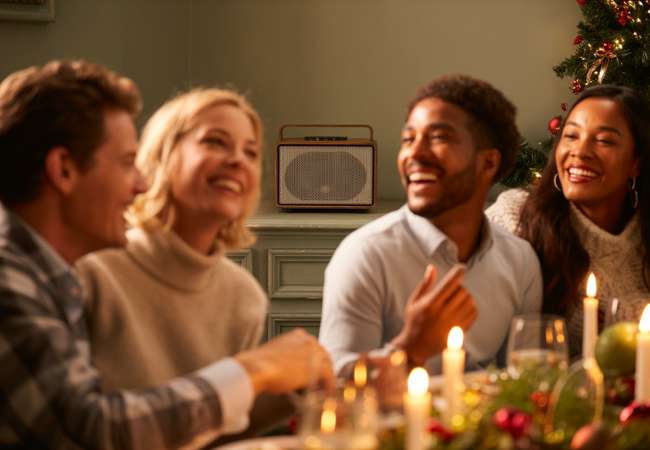
Silence feels strange when you’re eating with other people. It amplifies every clink of cutlery, every chewing sound, every awkward pause in conversation.
But music that’s too loud, too lyric-heavy, or too attention-grabbing kills the easy flow of talk. People end up half-listening to songs instead of each other, or they’re straining to hear over the volume.
Here’s what works: instrumental versions of familiar songs. Jazz standards. Classical guitar. Film scores. Acoustic covers where the lyrics fade into pleasant background noise rather than demanding attention.
Volume matters more than you think. You want it just loud enough that silence doesn’t feel oppressive, but quiet enough that someone at the far end of the table doesn’t have to raise their voice to be heard.
Test it before people arrive. Sit at the furthest seat from your speakers and have a normal conversation with yourself. If you’re straining to hear your own voice, it’s too loud.
Set up a playlist that’s at least three hours long. Nothing worse than the music stopping halfway through dinner and someone having to get up to restart it. The interruption breaks the mood.
Avoid anything with jarring tempo changes or sudden loud sections. Christmas songs are fine if they’re instrumental and mellow, but skip the ones everyone’s heard fifteen times already this week. Your guests are likely drowning in Mariah Carey everywhere else they go.
Set the soundtrack before the chaos starts:
- Choose instrumental versions of familiar songs
- Jazz standards, classical guitar, or acoustic covers work well
- Avoid anything with dominant lyrics or loud vocals
- Create a playlist that’s at least 3 hours long
- Test the volume from the furthest seat—you shouldn’t have to raise your voice
- Set it to shuffle or queue multiple playlists
- Skip Christmas songs everyone’s heard 50 times already
- Avoid jarring tempo changes or sudden loud sections
- Film scores work beautifully (think Amélie, Pride & Prejudice)
- Start the music 15 minutes before guests arrive
- Don’t use Spotify free (ads will ruin the flow)
- Have a backup playlist ready in case the first one finishes
What you’re creating is sonic wallpaper. It should be there when people need it: filling an awkward silence, giving the room warmth and life, and invisible when they don’t.
Music affects mood more than most people realise. The right soundtrack makes your home feel welcoming before anyone’s even said hello. It smooths out the transition from arriving to settling in. It gives shy guests something to comment on if they’re struggling for conversation.
Sort this before your first guest walks through the door. Once people arrive, you won’t have the mental bandwidth to think about whether the playlist’s right, and the moment for setting the atmosphere will have passed.
If you’re terrible at making playlists, find one someone else made. Search for “dinner party background music” or “Christmas jazz instrumental” and pick something with good reviews. You don’t need to reinvent the wheel.
Just don’t leave it until people are already there. That’s when you end up with silence, or Spotify ads interrupting dessert, or someone’s well-meaning partner putting on their personal playlist that absolutely doesn’t suit the occasion.
Two bonus tips!
These are important too, take a look below.
Bonus 1: A clear surface near the door for coats, bags, and keys
Stop the coat pile chaos:
- Designate one specific spot before anyone arrives
- A chair, coat rack, or even cleared bed works fine
- Don’t let guests wander looking for somewhere to put things
- Point it out immediately: “Coats go in here”
- Have a small bowl or tray for keys and phones
- Keep it away from the main gathering space
- Make sure it’s not blocking a bathroom or bedroom people need
- If space is tight, use sturdy hangers on the back of a door
- This stops bags cluttering the floor around the table
- Guests feel more settled when their belongings have a home
- No one’s hunting for their coat at leaving time
The coat situation always gets forgotten until suddenly there’s a heap on your bed, bags blocking the hallway, and someone’s scarf has disappeared under a pile of jackets.
People feel more comfortable when they know where their things are. They’re not worrying about whether they’ve left their phone somewhere random or whether someone’s sat on their coat.
It’s a tiny detail that removes a layer of low-level anxiety people don’t even realize they’re carrying. They walk in, you point them to the coat spot, and immediately they can relax into being a guest rather than someone cluttering up your space.
Set this up before anyone arrives. Clear whatever surface you’re using. Get rid of the random stuff that’s been living there. Make it completely obvious where things should go.
If you’ve got a lot of people coming, use multiple spots. Coats in the bedroom, bags by the door, shoes lined up neatly. Just tell people clearly where each thing goes as they arrive.
The goal is to remove decision-making. No one wants to figure out where to put their coat while holding a bottle of wine and trying to say hello. Just tell them.
This is especially important if you’ve got elderly guests or anyone with mobility issues. They need to know exactly where to put things without navigating stairs or tight spaces.
And when people are leaving, there’s no awkward hunt through a coat mountain. Everyone knows exactly where their things are. Goodbyes are smoother. No one’s stuck waiting while someone excavates their scarf from the bottom of a pile.
Bonus 2: One meaningful moment planned (not a forced toast, something genuine)
Create a memory, not just a meal:
- Don’t wing the emotional connection—plan it
- Not a stiff formal toast that makes everyone uncomfortable
- Could be: going around the table saying one good thing from this year
- Or: asking everyone to share their favourite Christmas memory
- Or: a simple “I’m really glad you’re all here” before you sit down
- Or: lighting candles together while someone reads a short poem or quote
- Keep it under 3 minutes total
- Do it at the start, not awkwardly mid-meal
- Make it optional: no forcing shy people to perform
- Avoid anything that feels like a corporate icebreaker
- The point is genuine connection, not entertainment
Christmas dinner can easily become just… dinner. Everyone eats, chats, clears up, goes home. Nice enough, but nothing that stays with anyone.
The meals people remember years later always have a moment. Something that made it feel like more than logistics and food.
This doesn’t need to be elaborate. It just needs to be intentional.
Before everyone sits down, you could light the candles and say something simple: “I’m really grateful we get to do this together. Let’s eat.” That’s enough.
Or go around the table quickly—everyone shares one thing they’re looking forward to next year. Thirty seconds each. It connects people and shifts the evening from ordinary to memorable.
What you’re creating is a shared pause. A tiny moment where everyone’s attention is together rather than scattered across individual conversations.
It marks the evening as special without being performative or awkward. It says “this matters” without making a big deal of it.
Plan what you’re going to do beforehand. Don’t leave it to chance or assume someone else will do it. As the host, this is your moment to set the tone for the entire evening.
Keep it short. Long toasts make people squirm. Quick, genuine moments make them feel included.
Avoid anything that requires preparation from guests. No one wants homework. No one wants to be put on the spot. Make it easy for people to participate without feeling exposed.
If someone’s grieving or going through something hard, this moment can be especially meaningful. It reminds them they’re not alone. But don’t force anyone to speak if they don’t want to.
The best version of this is something that feels like it came naturally, even though you planned it. That’s the skill: making intention feel effortless.
Your guests will remember this moment more than what you served for dessert. That’s what makes a dinner meaningful rather than just nice.
It’s not about perfection…
Christmas dinner doesn’t need to be perfect. It needs to be warm, welcoming, and genuinely comfortable for everyone there, including you.
These four things won’t make headlines. Your guests probably won’t consciously notice you’ve done them. But they’ll feel the difference. They’ll relax more easily. They’ll stay longer. They’ll leave feeling like your home is somewhere special, even if they can’t quite explain why.
That’s what good hosting is. Not grand gestures or expensive food. Just small, thoughtful details that show you’ve actually considered what makes people feel looked after.
Get these right, and everything else falls into place far more easily than you’d think.
Love,
Patri xx
