

Stop Wasting Serums and Use This Skin Care Routine Order for Real Results
You’ve invested in quality serums. You’re following skincare accounts. You’ve read the guides.
Yet your skin looks… exactly the same.
Here’s the truth nobody tells you upfront: the order matters more than the products themselves.

I’ve watched people pile on expensive serums in completely random sequences, then wonder why nothing changes. As a formulator, I can tell you that slapping brilliant ingredients on your face in the wrong order is like trying to build a house starting with the roof.
Your skin can’t absorb what it needs when you block the pathway.
Today, I’m giving you the blueprint that actually works. No confusion, no wasted product, no more guessing.
DISCLAIMER: This article contains affiliate links. If you purchase through them, I may earn a commission at no extra cost to you.
Why layering order genuinely matters (the science bit, made simple)
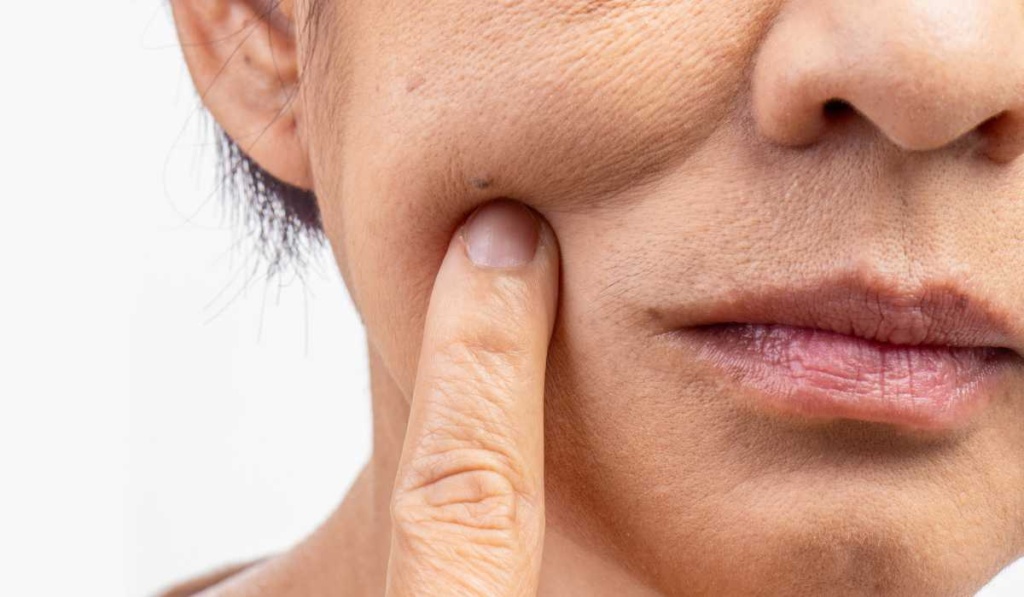
Your skin isn’t a sponge that absorbs everything equally.
It’s selective. Strategic. Sometimes stubborn.
Molecule size matters. Small molecules penetrate first. Large molecules sit on top. If you apply a thick oil before a lightweight serum, that serum has zero chance of getting through.
Water and oil don’t mix. Water-based products absorb into damp skin. Oil-based products seal everything in. Mix up that sequence and you’ve just created a barrier that blocks your expensive actives.
pH affects effectiveness. Some ingredients need specific pH levels to work. Vitamin C serums work best at lower pH. If you apply them after an alkaline product, you’ve just neutralised their power.
Think of skincare layering like cooking. You can’t frost a cake before it’s baked. You can’t add cream to coffee before brewing it. Same principle applies here.
When you layer correctly, each product prepares your skin for the next one. When you layer incorrectly, products fight each other or sit uselessly on the surface.
The result? Wasted money, wasted time, and skin that looks exactly the same as when you started.
The mistake-proof layering blueprint (your new daily sequence)
Right, let’s sort this out properly.
This sequence works for morning and evening routines. The only difference? SPF goes on in the morning, richer treatments go on at night.
Step 1: Cleanse (30-60 seconds)
Morning: Splash with lukewarm water or use a gentle, pH-balanced cleanser if your skin feels grimy.
Evening: Remove makeup and daily grime with an oil-based cleanser, then follow with a gentle water-based wash if needed.
Plant-based options: Pure castile soap, plant-based cleansing oils with jojoba or sunflower oil, gentle foaming cleansers with coconut-derived surfactants.
Your skin should feel clean but not tight or squeaky. If it feels stripped, your cleanser is too harsh.
Step 2: pH reset / gentle prep (optional but helpful)
After cleansing, your skin’s pH might be temporarily disrupted (especially if you used a harsher cleanser or alkaline tap water).
When to use: If you’re about to apply pH-dependent actives like vitamin C or AHAs.
Plant-based options: Witch hazel (alcohol-free), diluted apple cider vinegar (1:4 with water), rose water.
Pat gently onto clean skin. Wait 30 seconds before moving to the next step.
Step 3: Treatment slot 1 – acids, exfoliants, vitamin C
These are your pH-dependent, penetration-focused treatments. They work best on bare, slightly damp skin.
Choose ONE per routine. Don’t layer multiple acids together.
Morning options:
- Vitamin C serum (brightening, antioxidant protection)
- Azelaic acid (redness, texture, gentle brightening)
Evening options:
- Glycolic acid / Lactic acid (exfoliation, texture)
- Salicylic acid (congestion, breakouts)
- Bakuchiol (gentle retinol alternative, read more here)
Apply to clean skin. Wait 1-2 minutes for absorption before moving on.
FACTCHECK: Some sources suggest waiting 10-15 minutes after acids, but research shows 1-2 minutes is usually sufficient for pH-dependent products to begin working.
Step 4: Hydration drivers – essences, toners, humectant serums
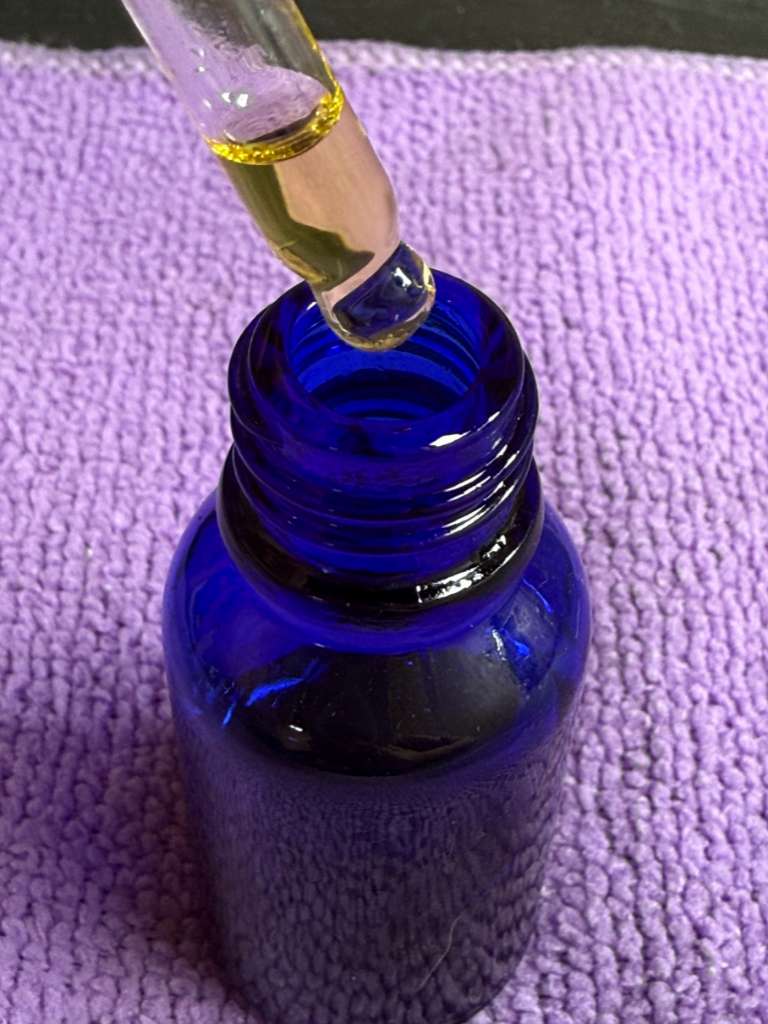
Now we’re adding moisture magnets that draw water into your skin.
These are lightweight, water-based products that prepare your skin to hold onto everything that comes next.
Plant-based options:
- Hyaluronic acid serum
- Glycerin-based essences
- Aloe vera gel
- Rose water or chamomile hydrosol
Apply while skin is still slightly damp. Pat gently until absorbed.
Step 5: Treatment slot 2 – targeted serums
Here’s where you address specific skin concerns with concentrated actives.
Morning favourites:
- Niacinamide (redness, pore appearance, barrier support)
- Peptides (firmness, fine lines)
- Antioxidant serums (protection from environmental stress)
Evening favourites:
- Bakuchiol serum (gentle retinol alternative, anti-aging)
- Azelaic acid (if not used in Step 3)
- Peptide serums
You can layer 2-3 serums here if they’re compatible. Wait 30-60 seconds between each.
Step 6: Moisturisers
Time to seal everything in with a barrier-supporting moisturiser.
For oily skin: Lightweight, gel-based moisturisers with aloe or hyaluronic acid base
For dry skin: Richer creams with plant butters (shea, kokum, mango)
For sensitive skin: Simple formulas with minimal ingredients, ceramide-rich options
Plant-based ingredients to look for: Shea butter, squalane oil, plant-derived ceramides, glycerin, aloe
Apply to slightly damp skin using gentle upward motions.
Step 7: Oils (if used)
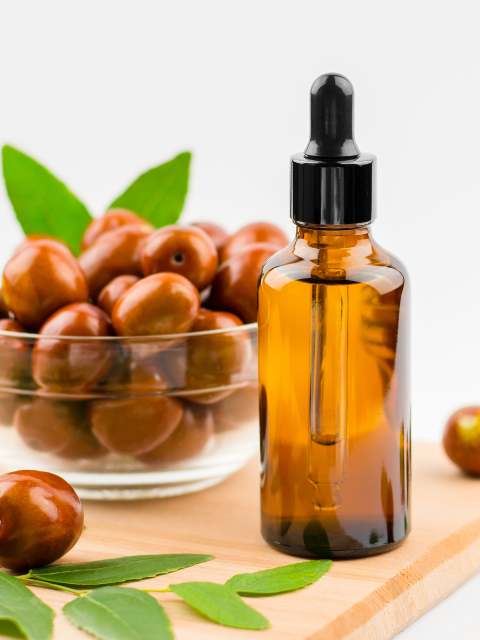
Facial oils go AFTER moisturiser, not before.
They create a protective seal that locks everything underneath in place.
Best plant-based facial oils:
- Rosehip oil (brightening, fine lines)
- Jojoba oil (balancing, non-greasy)
- Argan oil (hydration, elasticity)
- Squalane oil (lightweight, barrier support)
Warm 2-3 drops between your palms. Press gently onto skin.
Step 8: Daily SPF (morning only)
Your final morning step. Non-negotiable.
Mineral sunscreens: Look for zinc oxide or titanium dioxide without animal-derived ingredients.
Apply generously. Don’t skip your neck, ears, and the backs of your hands.
Reapply every 2 hours if you’re in direct sunlight.
Ingredient compatibility guide (what works together, what doesn’t)
Understanding which ingredients play nicely together saves you from wasting products and irritating your skin.
Ingredients that work beautifully together
Niacinamide + Hyaluronic acid Niacinamide strengthens your barrier while hyaluronic acid hydrates. They enhance each other’s benefits.
Vitamin C + Vitamin E These antioxidants work synergistically. Vitamin E helps stabilise vitamin C, making both more effective.
Peptides + Hyaluronic acid Peptides support collagen production while hyaluronic acid keeps skin plump. Perfect partnership.
Azelaic acid + Niacinamide Both address redness and uneven tone. They’re gentle enough to use together without overwhelming skin.
Bakuchiol + Niacinamide Bakuchiol offers retinol-like benefits (cell turnover, anti-aging) while niacinamide soothes and supports the barrier.
Ingredients that need separation
Vitamin C + Retinoids/Bakuchiol Both are potent. Using together can overwhelm skin. Solution: Vitamin C in the morning, retinoid alternative at night.
AHAs/BHAs + Retinoids/Bakuchiol Too much exfoliation causes irritation and barrier damage. Solution: Alternate nights or use acids 2-3 times weekly.
Benzoyl peroxide + Vitamin C Benzoyl peroxide can oxidise vitamin C, making it ineffective. Solution: Use benzoyl peroxide at night, vitamin C in the morning.
Multiple acids together Layering glycolic acid + salicylic acid + lactic acid = disaster. Solution: Choose ONE acid per routine.
Ingredients that should alternate AM/PM
Vitamin C → Morning Provides antioxidant protection against daily environmental stress. Works brilliantly under SPF.
Bakuchiol → Evening Supports skin renewal while you sleep. No risk of sun sensitivity.
Exfoliating acids → Evening Some acids can increase sun sensitivity. Evening use gives your skin overnight recovery time.
Antioxidant serums → Morning Maximum protection when your skin faces pollution, UV exposure, and environmental oxidative stress.
Three mistake-proof mini routines
These streamlined routines show you exactly how to layer for specific goals. All plant-based, all realistic.
Routine 1: Brightening & evening out skin tone
Morning:
- Gentle cleanser or water rinse
- Vitamin C serum
- Hyaluronic acid serum
- Niacinamide serum
- Lightweight moisturiser
- SPF
Evening:
- Oil cleanser
- Water-based cleanser
- Gentle acid (glycolic or lactic, 2-3 times weekly)
- Hyaluronic acid serum
- Azelaic acid serum
- Moisturiser
- Rosehip oil (2-3 drops)
Key insight: Consistency over intensity. Using brightening ingredients daily at appropriate strengths beats occasional harsh treatments.
Routine 2: Calming redness & supporting sensitive skin
Morning:
- Water rinse or ultra-gentle cleanser
- Aloe vera gel
- Niacinamide serum
- Soothing moisturiser with ceramides
- Mineral SPF
Evening:
- Oil cleanser (gentle, fragrance-free)
- Aloe vera gel
- Hyaluronic acid serum
- Azelaic acid (if tolerated, start 2-3 times weekly)
- Rich moisturiser
- Jojoba oil (optional, 2-3 drops)
Key insight: Less is more. Sensitive skin thrives on simplicity and barrier support, not active overload.
Routine 3: Anti-aging support (fine lines, firmness)
Morning:
- Gentle cleanser
- Vitamin C serum
- Hyaluronic acid serum
- Peptide serum
- Moisturiser with plant-derived ceramides
- SPF
Evening:
- Oil cleanser
- Water-based cleanser
- Bakuchiol serum (4-5 nights per week)
- Hyaluronic acid serum
- Peptide serum
- Rich night moisturiser
- Rosehip or argan oil (3-4 drops)
Key insight: Anti-aging is about prevention and support, not aggressive treatments. Consistency with gentle, effective ingredients wins.
Troubleshooting: When serums don’t seem to work
Problem: “I’ve been using this serum for weeks and see zero difference”
Possible causes:
- Wrong order (applying too late in your routine)
- Not using long enough (most actives need 6-8 weeks minimum)
- Formula isn’t penetrating (too many occlusive products applied first)
- Product expired or degraded (especially vitamin C)
Fix: Check the date on your product. Ensure you’re applying it early enough in your sequence. Give it a full 8 weeks of consistent use.
Problem: “My skin feels dry even though I’m using hydrating serums”
Possible causes:
- Applying humectants (hyaluronic acid, glycerin) without sealing them in
- Using oils too early, blocking hydration from penetrating
- Over-exfoliating, damaging your moisture barrier
Fix: Always apply humectant serums to damp skin, then immediately seal with a moisturiser. Skip the facial oil or move it to the very end.
Problem: “I’m getting irritation and redness”
Possible causes:
- Layering too many actives together
- Using incompatible ingredients simultaneously
- Applying products to damaged skin barrier
Fix: Strip back to basics (cleanser, hydration, moisturiser, SPF) for 1-2 weeks. Slowly reintroduce ONE active at a time.
Problem: “My serums pill or ball up on my skin”
Possible causes:
- Layering silicone-heavy products with water-based serums
- Applying too much product too quickly
- Not allowing enough absorption time between steps
Fix: Use less product. Wait 30-60 seconds between each layer. Avoid mixing silicone-rich formulas with water-based serums.
Myth-busting: Common layering advice that’s wrong
Myth 1: “Apply everything in order of consistency, thinnest to thickest”
Reality: Consistency matters, but chemistry matters more. A thick vitamin C serum should still go on before a lightweight oil. pH and molecule size trump texture.
Myth 2: “Wait 15 minutes between each product”
Reality: You don’t need to wait that long. 30-60 seconds is usually plenty for most products to begin absorbing. Acids benefit from 1-2 minutes. Anything longer is unnecessary unless your skin feels wet or sticky.
Myth 3: “You can’t mix brands because formulas won’t work together”
Reality: Formulas from different brands absolutely can work together. What matters is ingredient compatibility, not brand loyalty.
Myth 4: “Oils always go last”
Reality: Facial oils do typically go at the end, but some oil-based serums (like bakuchiol in a lightweight oil carrier) can be applied earlier in your routine if they’re designed for penetration rather than occlusion.
Myth 5: “More products = better skin”
Reality: Your skin can only absorb so much. More products often mean more irritation, more expense, and more confusion. A well-chosen 4-5 product routine beats a chaotic 12-step routine every time.
The gentle approach: Less really can be more
Here’s something the beauty industry doesn’t want you to know: you don’t need 10 serums to have healthy, glowing skin.
Your skin barrier is clever. It regulates itself beautifully when you support it with consistency, not chaos.
I’ve seen people transform their skin by stripping back to four products used religiously rather than cycling through elaborate routines they can’t maintain.
The minimum effective routine:
- Gentle cleanser
- ONE targeted serum (choose your top concern)
- Moisturiser
- SPF (morning only)
That’s it. Four products. Done consistently, they’ll outperform 15 products used sporadically.
When to add more: Only when you’ve mastered the basics and your skin barrier is strong. Then introduce ONE new active at a time, waiting 2-4 weeks to assess its impact.
Signs you’re overdoing it:
- Increased sensitivity
- Redness that wasn’t there before
- Breakouts that seem random
- Skin that feels tight, dry, or irritated
- Products that suddenly “don’t work anymore”
Your skin is trying to tell you something. Listen.
Your action plan (start here)
Don’t try to overhaul everything tonight.
Week 1-2: Audit your current routine. Write down what you’re using and in what order. Compare it to the blueprint above. Identify what needs to change.
Week 3-4: Implement the correct order with products you already own. Focus on getting the sequence right before buying anything new.
Week 5-6: Assess how your skin feels. Is it less irritated? More hydrated? Notice what’s working.
Week 7-8: Only now consider whether you need to add, remove, or replace products. Make ONE change at a time.
Remember: Skincare is personal. This blueprint gives you the foundation, but you’ll need to adjust based on your skin’s unique needs. Some people thrive with minimalism. Others need a few extra steps for their specific concerns.
The goal isn’t perfection. It’s consistency with products applied in the right order so they can actually work.
Final thoughts
You didn’t need more products.
You needed the right sequence.
Order matters. Chemistry matters. Patience matters.
Your expensive serums aren’t failing you. They’ve just been fighting an uphill battle because they never had a chance to penetrate properly.
Now you’ve got the blueprint. Use it. Adjust it as needed. Give it time.
Your skin will thank you.
Love,
Patri xx
Resources
- Rodan K, Fields K, Majewski G, Falla T. Skincare bootcamp: The evolving role of skincare. J Clin Aesthet Dermatol. 2016;9(11):S16-S25. Available from: https://pmc.ncbi.nlm.nih.gov/articles/PMC5172479/
- Hu A. All your questions about skin-care layering, answered. Vogue. 2022 Mar 20. Available from: https://www.vogue.com/article/all-your-questions-about-skin-care-layering-answered
- The Ordinary. How to build your skincare regimen. The Ordinary. 2025 Jan 13. Available from: https://theordinary.com/en-us/blog/mastering-skincare-routine-guide.html
- Cult Beauty. A foolproof guide on how to layer skincare. Cult Beauty. 2025 Jul 27. Available from: https://www.cultbeauty.com/blog/a-foolproof-guide-to-layering-skin-care-2/
- Go Native. What order to layer your skincare: A step-by-step guide. Go Native Skincare. 2025 Mar 26. Available from: https://www.gonative.co.nz/blogs/our-journal/what-order-to-layer-your-skincare-products-a-step-by-step-guide
- Simple Skincare Science. Why the pH of skin and products are crucially important. Simple Skincare Science. 2020 Apr 17. Available from: https://simpleskincarescience.com/ph-acid-mantle/
- Snow White and the Asian Pear. Putting your products in order, including pH dependent acids. Snow White and the Asian Pear. 2015 Jan 10. Available from: http://www.snowwhiteandtheasianpear.com/2015/01/skincare-discovery-putting-your.html
- The Acid Queen. Skin pH and urban legends: An argument against wait times and pH-adjusting toners. The Acid Queen Blog. 2015 Dec 3. Available from: https://theacidqueenblog.com/2015/12/04/skin-ph-and-urban-legends-an-argument-against-wait-times-and-ph-adjusting-toners/
- Curology. What skincare products you may not want to mix. Curology. 2023 Sep 29. Available from: https://curology.com/blog/what-skincare-products-not-to-mix-according-to-dermatology-experts/
- Typology. Which skincare actives should not be combined? Typology. 2025 Jul 8. Available from: https://us.typology.com/library/skincare-ingredients-not-to-mix
- Women’s Health. Dermatologists reveal skincare ingredient combos you should never combine. Women’s Health. 2025 Oct 9. Available from: https://www.womenshealthmag.com/beauty/a69000578/skincare-ingredients-you-should-never-combine/
- Niod. Optimising hydration through skincare layering. Niod. Available from: https://niod.com/en-es/blog/layering-for-skin-hydration.html
- Vichy Laboratoires. The complete guide and tips for skincare layering. Vichy Laboratoires. 2024 Mar 3. Available from: https://www.vichyusa.com/blog/skin-concern/wrinkles-fine-lines/complete-guide-to-skincare-layering.html
- Medik8. Skincare routine guide – steps & products for all skin types. Medik8. Available from: https://us.medik8.com/blogs/lab-notes/skincare-routine-guide
- Ots Dermatology. Skincare ingredients that deliver real results, according to science. Ots Dermatology. 2025 Oct 12. Available from: https://www.otsdermatology.com/blog/skincare-ingredients-that-deliver-real-results-according-to-science
