

What to Do With Expired Essential Oils: Complete Guide + GENIUS Uses & Much More (A MUST Read)
That expensive frankincense bottle that’s gone cloudy. The lemon oil that smells more like furniture polish than fresh citrus. The drawer full of impulse purchases that never quite fit into your routine…
Essential oils DO NOT last forever. Pretending they do (hey, I’m guilty as charged) won’t help your skin, your health, or your wallet.
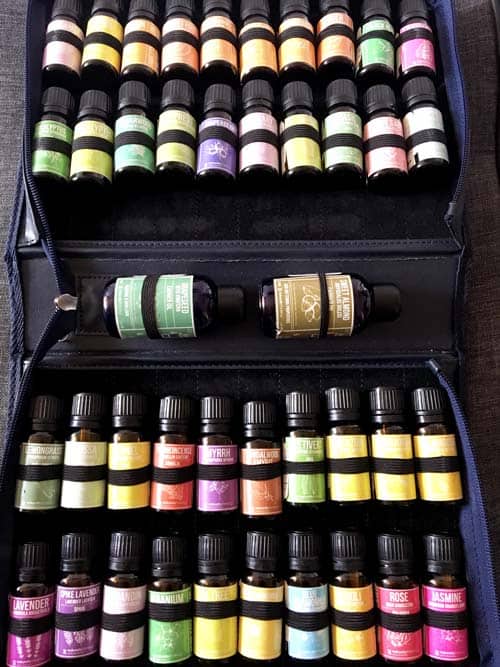
But throwing them away feels wasteful, I hear you, and pouring them down the sink, in case you didn’t know, is actually dangerous for the environment.
Here’s how to sort out that essential oil chaos whilst getting every last bit of value from what you’ve got.
Understanding your essential oil lifecycle
Essential oils aren’t like dried herbs that slowly lose their oomph.
They’re SUPER-CONCENTRATED plant extracts that change over time, and knowing what to look for helps you decide 1) what to keep, 2) what to repurpose, and 3) what to let go.
So, yes, you can probably KEEP some of them, you can REPURPOSE others but, unfortunately, you will HAVE TO LET GO of the spoiled ones.
Your oil’s journey starts the moment you first twist off that cap.
Every time it meets air, light, or gets too warm or cold, it BEGINS TO CHANGE.
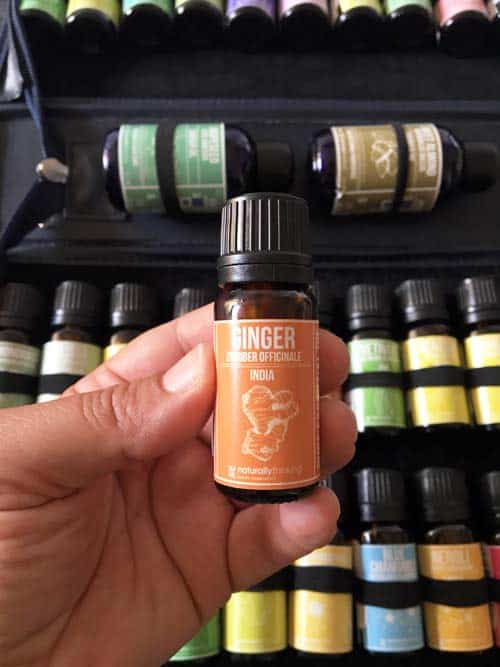
This isn’t just about the smell fading… no, these changes can actually make oils less effective or even irritating to your skin.
(Here’s a study that shows old essential oils can turn irritating and cause skin reactions as they break down and meet air or light.)
Here’s how long essential oils do actually last
No, in case you didn’t know, not all essential oils age equally.
Understanding their shelf life helps you make BETTER DECISIONS about what stays and what goes.
Citrus oils: these are the DELICATE ONES. Lemon, sweet orange, grapefruit, and lime oils typically last 6-12 months once opened. They go off quickly because citrus oils are naturally more fragile and lose their freshness first.
Other oils: they will serve you well for 1-3 years with proper storage. Think lavender, peppermint, tea tree, eucalyptus, and rosemary. These oils have more stable compounds that don’t break down as quickly.
Base and fixative oils: these are marathon runners. Patchouli, vetiver, sandalwood, and frankincense can last 5+ years or more. Some develop more complex aromas with age as certain compounds mellow and blend, though this doesn’t necessarily maintain therapeutic potency.
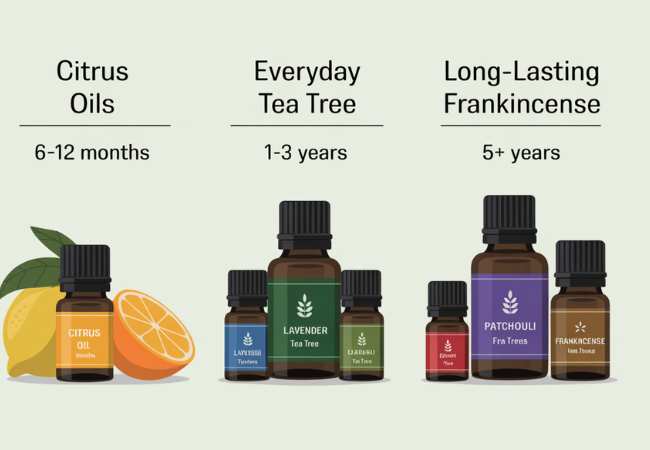
Not all oils age equally. Understanding these three categories helps you make smarter decisions about what to keep, repurpose, or let go.Without drifting off-topic, here’s a quick overview of essential oils and their typical shelf lives. It’s just good to have at hand:
Quick guide: essential oils and typical shelf life
| Type | Oils | Typical shelf life (opened) | Key notes |
|---|---|---|---|
| Citrus oils | Lemon, sweet orange, grapefruit, lime, bergamot, mandarin | 6–12 months | Fragile, lose freshness quickly |
| Everyday oils | Lavender, peppermint, tea tree, eucalyptus, rosemary, thyme, clary sage, geranium | 1–3 years | More stable, store away from heat and light |
| Long-lasting oils | Patchouli, vetiver, sandalwood, frankincense, myrrh, cedarwood | 5+ years | Some deepen in aroma but may lose potency |
Signs your essential oils have actually expired
Your nose and eyes are brilliant at telling you what’s going on with your oils.
Trust what you can see and smell rather than just looking at dates on bottles (those dates are often cautious guesses anyway).
I’m saying this because, as you can imagine, shelf-life dates are only estimates as storage conditions and air exposure can change how long it actually lasts.
Changes to look out for:
- Goes cloudy or you see residue floating at the bottom (especially worrying if your oil was clear before!)
- Colour changes that look weird or dramatic (a big hint something’s changed)
- Gets thick and gloopy or separates into layers (old oils can lose their smooth consistency as they break down)
- Crusty bits around the bottle neck (one of the quickest signs to spot)
When the smell gives it away:
- Aroma smells weaker or noticeably altered
- Sharp, sour, or “off” notes creep in
- Scent profile shifts completely from when it was new
- Harsh or acrid smell makes you instinctively pull away
Texture changes you might notice:
- Thicker or stickier consistency than before
- Separates and won’t blend back together, even when shaken
- Leaves a stubborn film on the inside of the bottle
Why using expired oils can be a BIG problem
Knowing what can go wrong helps you feel sure about letting oils go without wondering if you’re being a little wasteful.
But think of it. They will most definitely have reduced therapeutic benefits. You’re essentially paying full price for watered-down results. Old oils lose the very compunds that provide health benefits.
You need to be careful with skin irritations. Using oils that have gone off can cause proper irritation as well as unwanted reactions.
For instance, mixing old citrus oil into a face serum might cause redness or stinging because degraded compounds can become more irritating to the skin.
Research shows that old essential oils significantly increase the risk of skin sensitivity and allergic reactions, particularly if you use them repeatedly.
You can also experience breathing problems when diffusing expired oils which include throat irritation, headaches, and potential allergic responses. An example would be diffusing old eucalyptus oil. It might release compounds that trigger coughing rather than the clear-breathing effect you expect.
(Your lovely aromatherapy session becomes anything but relaxing!!).
Then there’s the unpredictable reactions that can happen when you mix expired oils with other ingredients or products, especially since you don’t know exactly what’s changed inside that bottle.
For example, adding old peppermint oil to homemade cleaning sprays could react unpredictably with vinegar or alcohol bases, creating unpleasant fumes rather than a fresh scennt.
Trust your senses.
If something seems off, it probably is.
GETTING RID OF ESSENTIAL OILS THAT HAVE TURNED HARMFUL
Here’s what nobody tells you about getting rid of essential oils…
The aromatherapy world doesn’t always prepare you for what happens when oils go off. I’ve done countless courses particularly to do with natural and organic skincare formulation and, yes, while they do mention while they do mention shelf life and formulations (recipes), they don’t really teach you what to actually do with oils once they’ve gone bad. Or a thorough look into how to spot the signs before things go wrong.
Unlike many other things around your house, essential oils need SPECIAL CARE when you’re getting rid of them because they’re concentrated and can mess with the environment.
Those lovely “all natural” labels start feeling a bit misleading when you’re stuck with a bottle of oil that smells absolutely awful.
Just because something’s natural doesn’t mean it won’t harm rivers and wildlife, especially when it’s this strong.
1. They don’t usually tell you why proper disposal is so important
Problem 1: The environmental impact is serious.
Even tiny amounts of essential oils can disrupt water ecosystems. According to environmental research, essential oils should never be poured down drains or toilets as they can contaminate water supplies and harm fish and other water life.
Problem 2: Fire risk
Fire risk makes careless disposal potentially dangerous. Many essential oils can catch fire easily, particularly eucalyptus, tea tree, and peppermint oils, so YOU NEED TO BE CAREFUL when getting rid of them.
Problem 3: Dangerous for pets & wildlife
Cats are particularly sensitive to many essential oils, and even small amounts in streams or ponds can harm fish and other water creatures.
And… NEVER pour oils down drains, toilets or water sources!
And, yes, this includes “natural” and “organic” oils – concentration matters more than origin. Water treatment plants simply can’t cope with these super-strong oils.
2. Then, they don’t go into HOW to get rid of them safely (you can learn below)
Getting rid of oils safely isn’t rocket science, but you do need to think about it properly.
Here are methods that work well and won’t harm you (or the planet).
a) The absorption method (best for small amounts)
This is the easiest way to get rid of old oils using things you probably already have at home.
Materials needed:
- Unused clay-based cat litter (VERY effective for absorption)
- Used coffee grounds (environmentally friendly option), or
- Sawdust or wood shavings is also a good alternative
Ok, here’s the step-by-step process:
- Pour oils into a disposable container with your chosen option
- Mix thoroughly until completely absorbed (no visible liquid remaining)
- Allow mixture to sit for 30 minutes to ensure complete absorption
- Seal in a plastic bag to prevent leakage
- Dispose in regular household waste
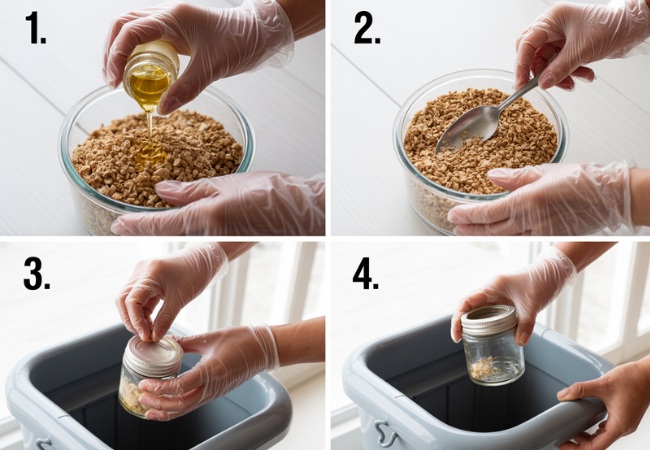
The absorption method in action. This simple process keeps oils out of waterways whilst using materials you probably already have at home.Pro tip: Even tiny amounts should go on paper towels, coffee grounds, or cotton pads, then straight in the bin. Whilst washing-up liquid can help break oils down, most councils say don’t put ANY down the drain because even the smallest amounts can hurt fish and water life.
b) Community disposal options
Many areas offer specialised disposal services that handle essential oils safely and responsibly.
Hazardous waste collection programmes accept essential oils in many councils. Contact your local authority to find collection dates and locations. These usually happen a few times a year and take all sorts of household chemicals.
Council waste centres know how to handle things that can catch fire and keep them from harming the environment. This is especially handy when you’ve got loads to get rid of or you’re clearing out multiple products at once.
Some pharmacies will take essential oils, especially if you bought them for health reasons. Give them a quick call first to check they’ll take yours.
REUSING ESSENTIAL OILS THAT HAVE A SECOND LIFE
Before tossing out older essential oils, check if they might still be useful for other things.
Some oils might lose their aromatherapy magic or be too old for skin care but can still work brilliantly around the house, especially for cleaning, freshening the air, or keeping things smelling lovely.
- Good candidates: tea tree, eucalyptus, lemon, peppermint, lavender, rosemary.
- Skip these: anything that smells rancid, looks cloudy, or has a harsh, chemical-like edge (see the signs of expiration above). Citrus oils like lemon, lime, grapefruit, and sweet orange, plus delicate oils like chamomile or neroli that degrade faster
The trick is being honest about what you’ve got: if it smells awful or looks clearly off, it’s time to say goodbye.
But if it’s simply lost some punch or smells a bit flat, it might still have a second life ahead.
1. IDEAS 1: Home cleaning applications
Older essential oils often work brilliantly for cleaning because whilst they might have lost some of their healing power, they usually keep enough of their fresh scent and germ-fighting abilities to be useful around the house.
Think of it like using day-old bread for toast… while it’s not perfect anymore, it’s still perfectly good for the job.
1.1 All-purpose cleaning solutions
Basic recipe:
- 10-15 drops of older essential oils
- 250ml white vinegar
- 250ml water
- Spray bottle
Best oils for cleaning
Tea tree, eucalyptus, lemon, and lavender work particularly well, even when past their aromatherapy prime.
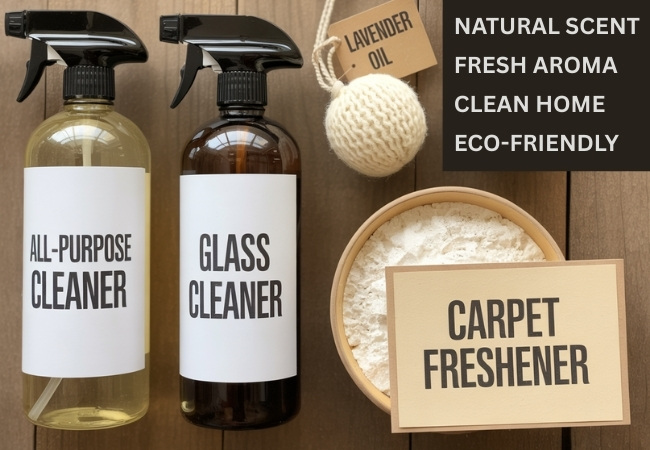
Give your older oils a second life. They might not be perfect for aromatherapy anymore, but they're brilliant for keeping your home fresh and clean naturally.Application tips: Shake before each use, test on inconspicuous areas first, and don’t use on marble, limestone, or granite worktops where the vinegar could cause damage or dulling.
1.2 Easy home jobs for oils past their prime
1. Toilet bowl refreshers
Add 5-10 drops directly to the bowl before cleaning. Peppermint and eucalyptus are fantastic for this. (Because the amount is tiny and everything gets diluted during cleaning, this doesn’t carry the same risks as pouring whole bottles of oil down the drain.)
To play it safe:
- Keep it occasional rather than daily (once every 2-3 weeks is plenty).
- A few drops go a long way (4-5 is usually enough).
- If you’ve got a septic system, skip this and use the absorbent method instead.
2. Bin deodoriser
Soak cotton pads with older oils and pop them at the bottom of your bins. Swap them out weekly to keep things fresh.
- When you replace them, wrap the used pads in newspaper or a paper bag and pop them in the general waste bin. This way, the oil stays contained and doesn’t leach out.
- Don’t compost them. The concentrated oils can harm soil microbes and worms.
3. Carpet refresher
Mix 10 drops with 200g bicarbonate of soda, sprinkle on carpets, leave for 15 minutes, then hoover thoroughly.
2. IDEAS 2: Making laundry smell fresh
Essential oils that aren’t quite up to scratch for healing anymore can still make your laundry smell LOVELY and might even help fight germs.
2.1. Dryer ball refresher
Add just 1-2 drops to wool dryer balls for a lovely scent. Don’t go mad with the amount though, essential oils can catch fire, and too much combined with all that heat isn’t really a good idea.
2.2. Linen spray recipe:
- 5-8 drops older essential oils
- 100ml distilled water
- 25ml witch hazel
- Spray bottle
2.3. Drawer sachets: Soak cotton pads with older oils and tuck into drawers or wardrobes. Replace monthly for ongoing freshness.
2.4. Freshen up your washing machine: Add 5-8 drops to an empty hot wash cycle monthly to help maintain freshness. All that water dilutes the oils so it’s pretty safe, but don’t go overboard.
This one’s generally safe as long as you keep it occasional (monthly is fine), stick to just a few drops, and skip it altogether if you’re on a septic system.
3. IDEAS 3: Try these ideas outdoors or your garden
Your garden can be a great place to use up oils that aren’t good enough for your skin anymore, but you need to be careful not to harm the helpful bugs and plants.
Essential oils are highly concentrated so too much can harm insects like bees, upset soil microbes, or even damage delicate plants. Please do take this into account.
3.1. Natural pest deterrent
Mix strong-scented oils (peppermint, rosemary, eucalyptus) with water at about a 1:100 ratio (roughly 2–3 drops of oil per standard spray bottle of 250–300ml) and spray around outdoor seating areas. Reapply after rain as the scent fades quickly if you like.
3.2. Greenhouse cleaning
Add a few drops of essential oil to your usual cleaning mix for greenhouse surfaces. It may help discourage mould and mildew without those harsh chemicals.
Tip: Always use sparingly and keep an eye on plant and soil health to make sure you’re not disrupting the balance.
Creative ways to using those empty bottles
Those gorgeous little bottles feel too special to just chuck in the bin, don’t they?
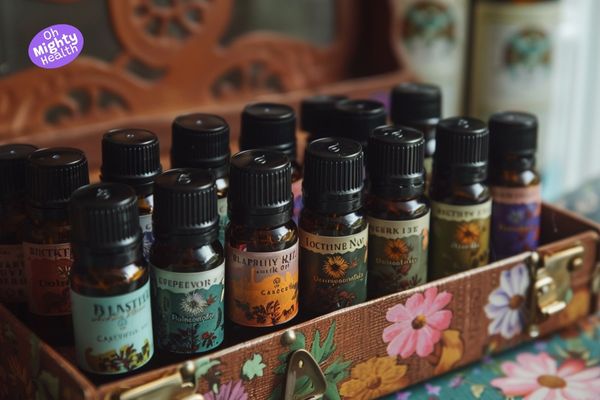
With a bit of cleaning effort, they can have a whole new life around your house.
The tricky bit is getting every last drop of oil out. It really clings to the glass and doesn’t want to budge.
Plus, you’ll be doing the planet a favour. Essential oil bottles make up quite a bit of packaging waste, so giving them a second job means less guilt and more useful containers for your projects.
1. First you need to clean the bottles properly
Getting those bottles properly clean requires patience and the right technique, but you’ll have gorgeous containers afterwards that are safe for new purposes.
Get the bottles ready:
- Remove labels using a hair dryer to soften adhesive
- Use coconut oil or adhesive remover for stubborn residue
- Wash thoroughly with washing-up liquid to remove oil
Give them a thorough clean:
- Fill with warm, soapy water and soak overnight
- Use a cotton swab or small bottle brush to reach inside corners
- Rinse multiple times with hot water until no oil scent remains
- Fill with isopropyl alcohol, shake, and let sit for 10 minutes
- Final rinse with hot water
- Air dry completely upside down
Testing for cleanliness:
Fill with plain water and smell. There should be no residual oil scent. (If you detect any oil smell, repeat the cleaning process).
2. Check out these practical reuses for your empty bottles
Once properly cleaned, these bottles are perfect for numerous household and personal care applications.
1. For your personal care goodies
Travel-sized containers
Perfect for face oils, serums, or custom perfume blends. The dark glass keeps light from spoiling whatever you put inside.
DIY skincare storage
Perfect for homemade toners, your custom oil blends, or those experimental DIY recipes you’re trying out.
Perfume atomisers
Pop a spray top on and they’re brilliant for your own perfume blends or face mists.
2. Handy uses around the house
Seed storage
The dark glass keeps your delicate seeds safe from light and damp, and the tiny size is perfect for storing just one type at a time.
Craft supply storage
Excellent for small items like beads, buttons, or hardware that’ll stay nice and dry.
Travel medicine bottles
Perfect for carrying small amounts of liquid medications or supplements whilst travelling.
3. Fun decorative ideas
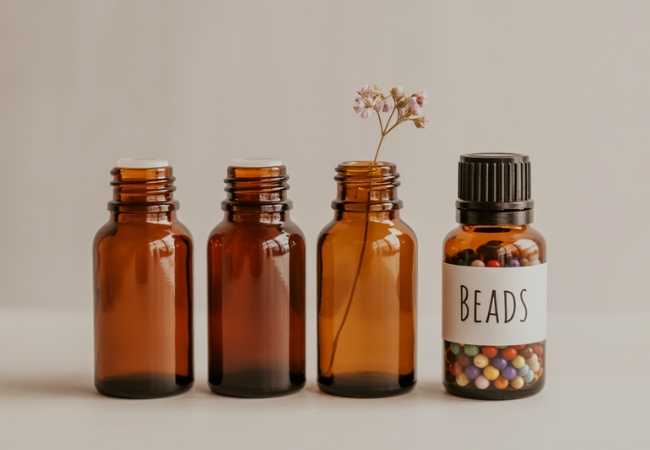
Mini bud vases
Single stems or tiny flower arrangements look gorgeous in these little bottles.
Fairy garden accessories
Just the right size for miniature gardens. Pop in tiny plants or use them as sweet little decorations.
Holiday decorations
Fill with coloured water, glitter, or tiny festive bits to make lovely seasonal displays.
Smarter essential oil habits for the long run
Getting smart about essential oils isn’t just about binning them properly.
It is also about creating habits that stop you wasting money and getting the most from what you buy.
This means being brutally honest about what you actually use, storing things properly, and buying what you need rather than what you think you should have.
I’ve had to take a hard look at what I’ve got and, yes, there’s a lot that needs to go. It is very painful as I grow attached to my essential oils but, it is what it is!!
A thoughtful approach also means thinking about where your oils come from: the farms, the packaging, the transport miles. Making better choices helps your skin, your wallet, and the planet all at once. I started looking into this almost from my first purchase.
1. Keep your oils happy for longer
It’s always better to stop oils going off in the first place, and storing them properly can keep them good for ages whilst they keep all their lovely healing properties.
What your oils need to stay fresh
The basics:
- Temperature: Cool and consistent (15-21°C ideal)
- Light: Dark storage away from direct sunlight
- Air exposure: Minimal contact with oxygen
- Humidity: Keep them somewhere dry
Places to avoid:
- Bathroom cabinets (too hot and steamy one minute, cold the next)
- Kitchen windowsills (gets too hot and bright)
- Car glove compartments (freezing cold in winter, boiling hot in summer)
- Near radiators or heating vents
Simple ways to stay organised
Keep track of what you’ve got:
- When you bought it and when you first opened it
- Your best guess of when it’ll go off based on what type it is
- How often you actually use it (every day, weekly, or just sometimes)
Use up the old stuff first:
- Put older bottles at the front so you see them first
- Move newer ones to the back
- Have a quick look through your collection every few months
- Keep track of what you actually use so you don’t buy silly amounts
Storage containers:
- Wooden boxes for light protection
- Small fridges for citrus oils (FACTCHECK: Some experts recommend refrigeration for citrus oils, though this may affect consistency)
- Drawer organisers for easy access
2. Buy only what you’ll really use!
Getting realistic about what you actually buy stops you ending up with loads of bottles you never touch, whilst making sure you’ve always got the ones you really use.
Questions to ask before you buy
These will be helpful to ask yourself:
- Which oils do you actually grab every week?
- What do you realistically keep up with?
- How much do you actually get through in a month?
- Are you buying for what you need now or what you think you’ll do someday?
Tips for keeping track of what you use:
- Write down which oils you reach for and when
- Notice which bottles just sit there gathering dust
- See if you use different ones in summer vs winter
- Spot those impulse buys that never quite fit into your life
Buying the right size bottles
What size bottle makes sense?
- 5ml bottles for occasional-use oils like frankincense or rose, or expensive ones you use sparingly
- 10ml bottles for your everyday favourites like lavender, tea tree, or peppermint
- Larger sizes only for oils you use loads of, like lemon for cleaning or eucalyptus for frequent diffusing
How to avoid buying too much
- Buy smaller amounts more frequently rather than large bottles that expire
- Consider seasonal needs (peppermint for summer, eucalyptus for winter)
- Think about whether you like to share oils with friends or family
3. Choosing better quality oils (What to look for in a good supplier)
It’s usually better to buy fewer, really good oils than loads of mediocre ones that don’t work as well.
When you’re choosing oils, look for suppliers who are open about where their oils come from and how they’re made.
Organic certification can be worth it for some oils, and it’s lovely when companies care about sustainable farming.
Good suppliers will test their batches and tell you about it. Nice!
The packaging tells you a lot too. Proper dark glass bottles with caps that actually seal tight, labels that include the proper plant names (not just “lavender” but the full botanical name like Lavandula angustifolia), and bottles that are the right size for the oil type.
If a company cares about these details, they probably care about what’s inside too!
Recycling your essential oil bottles
Essential oil bottles are a bit tricky when it comes to recycling – they don’t fit the usual rules you’ll find on council websites. Knowing what to do with them helps you make the right choice when you can’t reuse them.
Even when bottles look empty, they’ve still got oil traces that can mess with recycling machinery and potentially harm the workers handling them. That’s why giving them a proper clean isn’t just about reusing them – it’s about being responsible when they go for recycling too.
1. How to prepare glass bottles for recycling
Get them properly clean first
Glass bottles can often be recycled, but only after thorough cleaning to remove oil residue. According to disposal guidelines, residual oils are flammable and potentially toxic, requiring complete removal before recycling.
Check your local council’s rules
Some councils require essential oil containers to be handled as hazardous waste rather than regular recycling due to their previous contents. Contact your local waste management authority for specific guidance.
What “clean enough” really means
- No detectable oil scent remaining
- No visible residue on glass surfaces
- Labels completely removed
- Caps and dispensers removed (these typically can’t be recycled)
2. Other ways to dispose of bottles
When recycling isn’t an option:
- Include in household waste if thoroughly cleaned
- Take to household waste recycling centres
- Some glassworks accept clean bottles for repurposing
What to do with the plastic bits
Plastic caps, droppers, and dispensers typically cannot be recycled through standard programmes and should be disposed of in regular waste streams.
When to bring in the professionals
Sometimes you need to call in the experts rather than trying to sort it yourself. Knowing when to do this keeps everyone safe and means you’re not worrying about whether you’ve done the right thing.
Professional disposal services have all the proper kit and know-how to handle dodgy essential oils safely. Yes, it costs a bit, but it’s worth it for the peace of mind and knowing you’re not harming the environment.
1. Times it makes sense to call the experts
Large quantities: If you’re getting rid of loads of full bottles at once, or when you’ve got oils that have gone properly off, professional services stop you from overwhelming your regular bin collection whilst making sure everything’s handled safely.
Unknown or unlabelled oils: When you can’t identify oils or their condition, calling in the experts stops any nasty surprises.
Mixed product disposal: When you’re clearing out loads of different aromatherapy bits at once, professional services know how to handle all the different types safely.
2. What NOT to do yourself
Never attempt to:
- Don’t burn oils
- Don’t bury them in the garden
- Don’t mix with other household chemicals
- Don’t pour into outdoor drains or water sources
Your essential oil action plan
1. Start with what you’ve got
Gather all your oils in one place and have a proper look at each one.
Check how they smell and look, then sort them into three piles: keep, use for cleaning, or bin.
I repeat: KEEP // USE FOR CLEANING // BIN
If it helps, take a photo or write down what you found. It’s quite eye-opening to see it all laid out.
Keep the ones that still smell and look good. Use slightly dodgy ones for household cleaning. Get rid of anything that smells awful or looks really off (using the safe disposal methods we talked about above).
REMEMBER! Keep the ones that still smell and look good. Use slightly dodgy ones for household cleaning. Get rid of anything that smells awful or looks really off (using the safe disposal methods we talked about above).
2. Choose your next steps
Pick disposal methods that feel right to you, whether that’s the absorption method at home or taking things to your local waste centre.
If you’ve got oils suitable for cleaning, gather what you need for those DIY projects.
Same goes for upcycling empty bottles, but be REALISTIC about what you’ll actually do.
3. Make sure it doesn’t happen again!
Set up proper storage now, NOT LATER.
Get some decent containers, start labelling things with dates, and put older bottles at the front.
Buy smarter going forward!! Smaller bottles of things you use occasionally, only buy what you’ll actually use, and check in with your collection every few months so nothing gets forgotten at the back.
I think that’s all!
Every oil that once made you smile deserves a proper goodbye.
Every empty bottle can start a new chapter.
Every mistake made teaches you something that stops you making the same one twice.
Your essential oil story doesn’t end when bottles go off, it just gets smarter, more sustainable, and so much more satisfying.
You don’t need to be perfect. You just need to create small, consistent habits that feel good.
Start where you are, use what you have, and build better habits as you go.
Love,
Patri xx
Time for your FAQs 🙂
Also, please read my Essential Oils and Pet Responsibility article. Very important that you learn how to manage your essential oils around pets! (or simply accepting you probably will have to let them go).
What happens if you use expired essential oils?
Using expired essential oils can lead to skin irritation, allergic reactions, or they might just stop doing what you bought them for. Over time, oils lose their punch, their scent can turn sour, and some can even form compounds that are harsh on sensitive skin. For anything going on your skin or in wellness blends, it’s best to skip the expired ones.
Can I use expired essential oils in a diffuser?
Sometimes, yes. If the oil still smells pleasant and hasn’t changed in texture, using it in a diffuser to freshen the air is usually fine. Just know the scent might not be as strong or vibrant as before. And if it smells off or rancid, skip it altogether. But, personally, I wouldn’t. Just to keep things on the safe side.
Do essential oils expire if unopened?
They do, just more slowly. A sealed, well-stored bottle will last longer, but over time, oxidation still happens, changing the oil’s quality and aroma. Keep oils in a cool, dark spot with the lids tightly closed to give them the best chance of lasting.
What happens if you use expired tea tree oil?
Tea tree oil can be harsh even when fresh, so once it’s expired, the risk of irritation or allergic reactions jumps way up. Never use expired tea tree oil directly on your skin. If it’s only just past its prime but still smells okay, save it for cleaning jobs or use it in a diffuser instead.
How to dispose of essential oils
Never pour essential oils down the sink or toilet. They can harm water systems and wildlife. For small amounts, mix them with something absorbent like cat litter or used coffee grounds, seal in a bag, and put in the household rubbish. For bigger amounts, check with your council about hazardous waste collection or drop-off points.
Shelf life of essential oils chart
Different oils have different shelf lives, even unopened. Here’s a simple guide:
| Essential Oil Type | Shelf Life |
|---|---|
| Citrus oils (lemon, orange, grapefruit) | 1–2 years |
| Tea Tree, Rosemary, Chamomile | 2–3 years |
| Lavender, Eucalyptus, Bergamot | 3–4 years |
| Sandalwood, Patchouli | Up to 10 years |
Are essential oils hazardous waste?
In bulk, yes. Essential oils are highly concentrated, flammable, and toxic to aquatic life in larger amounts. Always handle old oils carefully and follow local guidance for safe disposal.
