
Castor Oil Temple Massage for Dry Hairline Care
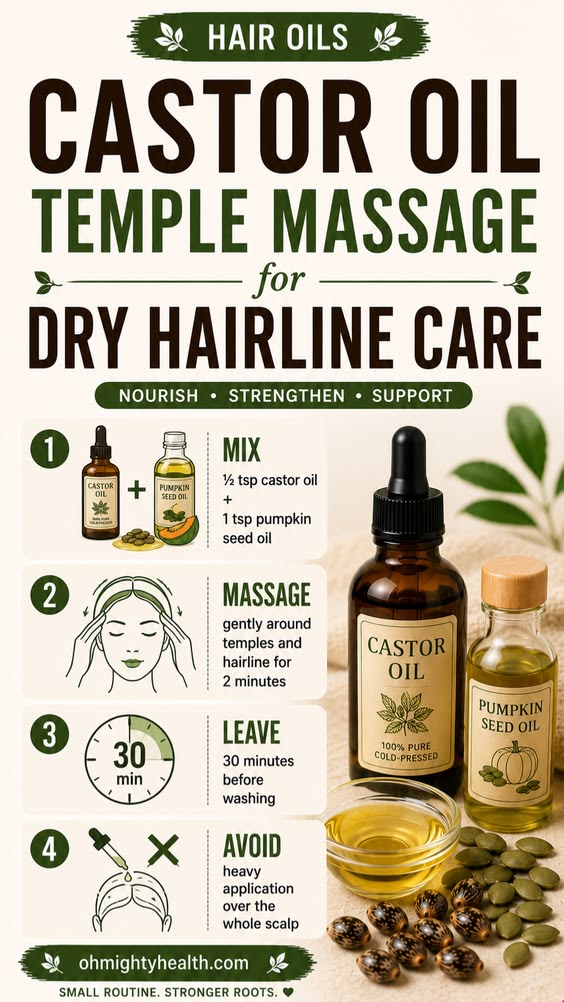
If your hairline feels dry, brittle or a bit thin around the temples, a simple oil massage can make a real difference.
This castor oil and pumpkin seed oil blend is one of the easiest natural routines you can add to your week, and it takes less than five minutes from start to finish.
Why the hairline needs extra care
The skin around your temples and hairline is thinner than the rest of your scalp, and it gets less natural oil from your sebaceous glands.
Add in central heating, hard water, frequent washing or hormonal changes, and this area can end up dry, flaky or prone to shedding before anywhere else.
A targeted massage with the right oils helps restore moisture, calm irritation and support the follicles sitting just under the surface.
What you’ll need
Half a teaspoon of castor oil, plus one teaspoon of pumpkin seed oil.
Castor oil is thick and rich in ricinoleic acid, a fatty acid known for its anti-inflammatory properties. It’s been used for generations to support scalp health, though it’s worth knowing the science on hair growth itself is more anecdotal than proven.
What it does reliably do is seal in moisture and soothe dry, flaky skin, which makes it a good ally for a struggling hairline.
Pumpkin seed oil is lighter and packed with zinc, essential fatty acids and phytosterols. Some small studies have linked it to improved hair density when taken as a supplement, and topically it works well to nourish the scalp without weighing hair down.
Mixing it with castor oil balances out that heaviness and makes the blend easier to massage in and rinse out.
Step 1: Mix
Combine your half teaspoon of castor oil with one teaspoon of pumpkin seed oil in a small bowl or straight in your palm. This ratio keeps the blend light enough to spread easily while still giving you the benefits of castor oil. If your hair is very fine, you can lean even further towards pumpkin seed oil, using less castor.
Step 2: Massage
Using your fingertips, not your nails, massage the oil gently around your temples and along your hairline for about two minutes. Use small circular motions and work with a light, steady pressure. This isn’t about scrubbing, it’s about encouraging blood flow to the area, which helps nutrients reach the hair follicles more efficiently. Take your time here. A slow, mindful massage is genuinely relaxing and doubles as a nice moment to unwind, especially in the evening.
Step 3: Leave
Let the oil sit for thirty minutes before washing it out. This gives it time to properly absorb into the skin and soften any dry patches or flaking. If you want to boost the effect, pop on a shower cap or wrap a warm towel around your head. The gentle heat helps the oil penetrate a little deeper.
Step 4: Avoid heavy application over the whole scalp
This routine is designed for the hairline and temples specifically, not your entire head. Applying too much oil across your whole scalp can clog pores, weigh hair down and make it much harder to wash out properly. Stick to a light touch in the areas that actually need it.
How often should you do this?
Two to three times a week is a good starting point. Daily use isn’t necessary and can leave the area feeling greasy or lead to product build-up over time, especially if you have fine hair. Give your scalp time between sessions to breathe and reset.
A few extra tips
Always do a small patch test before your first full massage, particularly with castor oil, as it can occasionally cause sensitivity in some people. Warm the oil slightly between your palms before applying, since this helps it spread more evenly and feels lovely against the skin. If you’re also dealing with dandruff or scalp irritation, a drop of diluted tea tree oil mixed in can help, though keep the total essential oil content low.
Wash the oil out with a gentle, sulphate-free shampoo. You may need to shampoo twice to fully remove the residue, particularly from the castor oil, which is thicker and more stubborn to rinse than lighter oils.
When to expect results
Natural routines like this work gradually. Give it four to six weeks of consistent use before judging whether it’s helping. You’re looking for a calmer, less flaky hairline and hair that feels a bit stronger at the roots, rather than dramatic overnight change. Hair growth cycles are slow by nature, so patience really does matter here.
If your hairline concerns are severe, sudden or accompanied by noticeable bald patches, it’s worth having a chat with a dermatologist or trichologist rather than relying on home remedies alone. But for everyday dryness and general upkeep, this small routine is a lovely, low-effort way to look after an often-neglected part of your scalp.
Small routine, stronger roots.
