
Castor Oil Heel Softening Mask: The Simple Overnight Fix for Cracked Heels
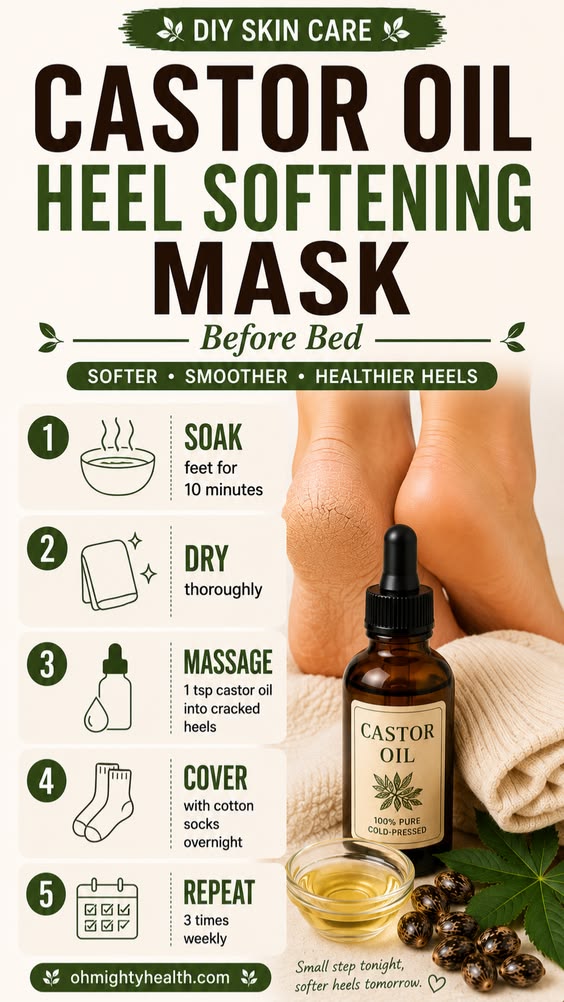
If your heels feel rough, dry, or downright cracked, a castor oil heel mask before bed is one of the easiest natural fixes you can try. It takes five minutes, uses one ingredient you probably already have, and works while you sleep.
Cracked heels are incredibly common, especially as the seasons change or if you spend a lot of time on your feet, in sandals, or in dry heated rooms. The skin on your heels has no oil glands of its own, which means it relies entirely on the oils and creams you apply to stay soft. Left untreated, dry heels can deepen into painful fissures.
This heel mask uses cold pressed castor oil, cotton socks, and a warm soak to help soften rough, thickened skin over time. Below, I’ll walk you through exactly how to do it properly, why each step matters, and what to watch out for.
What This Heel Mask Is
This is a simple five step overnight ritual: soak your feet, dry them, massage in castor oil, cover with cotton socks, and repeat a few times a week. It’s not a one-off treatment. Like most skin softening routines, it works through consistency rather than a single dramatic result.
Castor oil is a thick, rich vegetable oil pressed from the seeds of the castor plant (Ricinus communis). It’s mostly made up of ricinoleic acid, an unusual fatty acid that gives the oil its notably thick, almost sticky texture. That thickness is actually the whole point for cracked heels: it sits on the skin’s surface for longer than lighter oils, forming a barrier that slows water loss from the skin underneath.
Why It May Help
Dry, cracked heels happen when the outer layer of skin loses moisture faster than it can replace it. Thickened, calloused skin (which builds up from friction and pressure) makes this worse, because thick dry skin cracks more easily than supple skin.
Castor oil helps in a few practical ways:
- It’s an occlusive. Its thick texture creates a barrier on the skin that reduces water loss, similar to how petroleum jelly works, though castor oil also absorbs somewhat into the skin rather than sitting purely on top.
- It softens hardened, thickened skin. Consistent oil application over cracked or calloused skin helps soften built-up dead skin cells, making them easier to gently remove later with a foot file or pumice stone.
- It’s fairly gentle. Compared with some essential oil blends, plain castor oil is generally well tolerated on the tougher skin of the feet, though patch testing is still worth doing (more on that below).
It’s worth being clear about what castor oil isn’t. There’s no strong clinical research showing castor oil heals deep fissures or has specific wound-healing properties beyond what any good moisturising oil offers. What it does reliably do is soften and hydrate, which is often exactly what dry, cracked heels need to stop getting worse and start looking and feeling better.
If your cracks are deep, bleeding, or painful to walk on, a home remedy like this is a good maintenance step, but it’s not a substitute for proper skincare guidance or, in more severe cases, a visit to a podiatrist or GP.
What You Need
- A basin or bowl big enough to soak both feet
- Warm water
- A clean towel
- 100% pure, cold-pressed castor oil (regular castor oil works well; some people prefer Jamaican black castor oil, which is roasted before pressing and has a slightly different scent and colour, though the softening effect is similar)
- A pair of thick cotton socks kept just for this purpose
- Optional: a foot file or pumice stone for removing dead skin
Choose a pure, cold-pressed, hexane-free castor oil where possible. Cheaper, heavily processed oils can contain residues from the extraction process and won’t feel as nourishing on the skin.
Step-by-Step Instructions
1. Soak your feet for 10 minutes. Fill a basin with comfortably warm (not scalding) water and soak your feet for around 10 minutes. This softens the outer layer of skin and opens up the pores slightly, which helps the oil penetrate more effectively afterwards. If you want to boost the soak, a tablespoon of Epsom salts or a splash of apple cider vinegar can help soften rough skin further, though plain warm water works perfectly well on its own.
2. Dry your feet thoroughly. Pat your feet completely dry with a towel, paying particular attention to between the toes. This matters more than people realise: trapping moisture between damp skin and cotton socks overnight creates a warm, humid environment that can encourage fungal growth, which is the opposite of what you want.
3. Massage in about 1 teaspoon of castor oil per foot into the cracked areas. Warm the oil slightly between your palms first, then massage it into your heels and any other rough or cracked patches using firm, circular motions. Spend a good minute or two on each foot. This isn’t just about applying the product: massage itself improves local circulation, which supports the skin’s natural repair process.
If your heels are severely calloused, gently buff them with a foot file before applying the oil (never straight after soaking, when skin is softest and easiest to over-exfoliate). This helps the oil absorb into fresher skin rather than sitting on top of a thick, dead layer.
4. Cover your feet with clean cotton socks and leave them on overnight. The socks do two jobs: they lock the oil against your skin so it can keep working while you sleep, and they stop the oil transferring onto your sheets. Cotton is the best choice here because it’s breathable, unlike synthetic fabrics, which can trap heat and moisture against the skin.
5. Repeat three times a week. Consistency is what actually changes the condition of your heels. A single overnight treatment will leave your feet feeling smoother the next morning, but visibly reducing cracks and calluses generally takes several weeks of regular use. Three times a week is a realistic, sustainable starting point; you can always do it nightly if your heels are particularly bad.
Expert Tips
- Warm the oil slightly before applying it. A few seconds rubbed between your palms, or standing the bottle in a cup of warm water, makes castor oil easier to spread and slightly more comfortable on the skin.
- Exfoliate gently once or twice a week, not daily. Over-exfoliating cracked heels can make things worse by damaging the skin barrier further.
- Layer it under a thicker foot cream if your heels are very dry. Castor oil on its own is often enough, but for genuinely stubborn dryness, applying it underneath a urea-based or shea butter foot cream can give an extra boost.
- Keep a dedicated pair of “castor oil socks”. The oil can stain fabric over time, so it’s worth using an old or inexpensive pair rather than your good socks.
- Be patient with deep cracks. Fissures that have been there for months took time to develop and will take a few weeks of consistent care to visibly improve.
Common Mistakes
- Skipping the soak. Applying oil to completely dry, unsoftened skin means it mostly sits on the surface rather than absorbing where it’s needed.
- Using too little oil. Heels need a generous, visible layer, not a light dab. A full teaspoon per foot is a reasonable guide.
- Going straight to bed with wet feet. Damp skin under socks encourages fungal growth rather than healing.
- Over-filing cracked skin. Aggressive scrubbing on already compromised skin can cause micro-tears and irritation.
- Expecting overnight miracles. This is a maintenance routine, not a one-time fix. Deep, long-standing cracks need weeks of consistent care.
Safety Considerations
Castor oil is generally well tolerated on the skin, but a few precautions are worth knowing:
- Patch test first. Apply a small amount to the inside of your wrist or ankle and wait 24 hours before using it on your heels, especially if you have sensitive skin or a history of allergic reactions to plant oils.
- Avoid open, bleeding, or infected cracks. If your fissures are deep, bleeding, or show signs of infection (redness, swelling, warmth, or discharge), see a podiatrist or GP rather than self-treating.
- Be cautious if you have diabetes. Diabetic foot care requires extra vigilance because of reduced sensation and slower healing. Speak to a podiatrist before starting any new foot care routine if you’re diabetic.
- Castor oil is for external use here. This article is about topical application only. Ingesting castor oil (as a traditional laxative) is a completely different use with its own risks and isn’t something this routine involves.
- Store your oil properly. Keep castor oil in a cool, dark place, tightly sealed, away from direct sunlight, to prevent it from going rancid.
How Often to Use It and How to Store It
Three sessions a week is a solid starting routine for general dryness. If your heels are particularly cracked, nightly use for one to two weeks, then dropping back to three times weekly for maintenance, tends to work well.
Store your castor oil bottle at room temperature, away from heat and light. A cupboard or drawer near your bed is ideal, both for keeping the oil in good condition and for making the routine easy to stick to.
When to Avoid This Routine
Skip this treatment, or check with a healthcare professional first, if you have:
- Open wounds, deep bleeding fissures, or signs of skin infection on your feet
- A known allergy or sensitivity to castor oil or related plants
- Diabetes with any degree of neuropathy or circulation issues
- Active athlete’s foot or another fungal infection (treat this first, since occlusive oils and damp socks can make fungal conditions worse)
Frequently Asked Questions
Can I use this if I have very sensitive skin? Most people tolerate castor oil well, but always patch test first. If you notice redness, itching, or irritation, discontinue use.
Do I need Jamaican black castor oil specifically, or will regular castor oil work? Regular, pure castor oil works just as well for softening dry heels. Jamaican black castor oil is roasted during processing, giving it a smokier scent and darker colour, but the moisturising effect on skin is very similar.
Can I add essential oils to the mix? You can, in small amounts. Lavender or tea tree are popular choices, but always dilute essential oils properly in the carrier oil (generally no more than 1 to 2 drops per teaspoon of castor oil) and patch test the blend, since essential oils carry a higher irritation risk than castor oil alone.
Will this get rid of calluses completely? It softens them and makes them easier to gently exfoliate away over time, but very thick, long-standing calluses may also benefit from professional treatment with a podiatrist, particularly if they’re causing discomfort.
How long until I see results? Many people notice softer skin after just one or two nights. Visible improvement in cracks and calluses typically takes two to four weeks of consistent use, three times a week or more.
Can I do this in the morning instead of before bed? You can apply castor oil any time, but the overnight sock method works particularly well because you have several uninterrupted hours for the oil to absorb without being wiped off by socks, shoes, or walking around.
For more on building out a simple, natural approach to skin and body care beyond just your feet, have a look at this guide to natural skin treatments, or, if nail health is also a concern alongside your heels, this piece on toenail health covers that in more depth.
Love, Patri xx
