
The Damp Skin Trick That Makes Castor Oil Feel Better
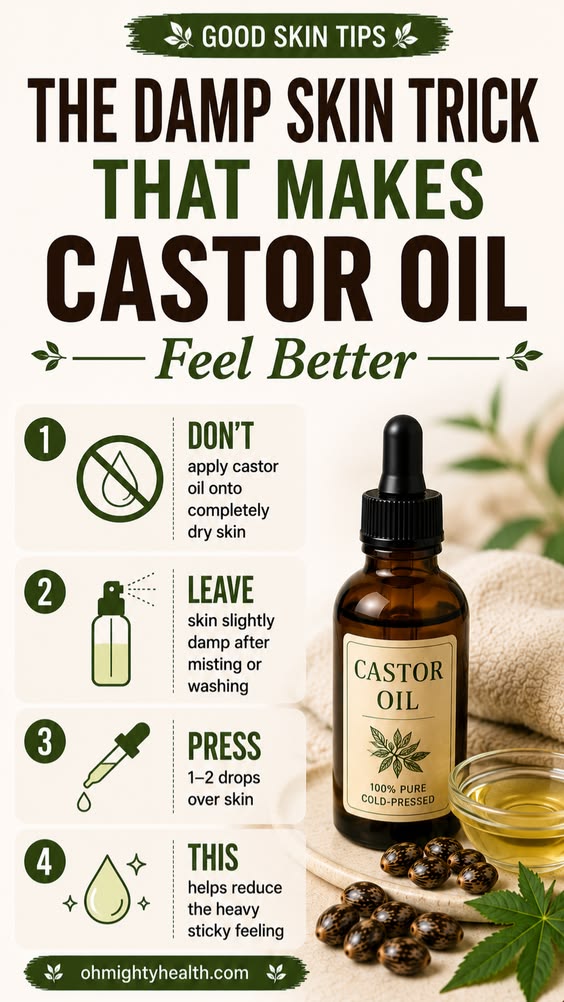
If castor oil has ever left your skin feeling heavy, tacky or almost varnished, the problem probably isn’t the oil itself. It’s how and when you’re applying it.
I’m Patri Hernández, a certified organic skincare formulator and dermocosmetic technician with a background in health coaching, and one of the questions I get asked most often is why castor oil feels so much nicer on some people’s skin than others. The answer usually comes down to one small step that gets skipped: applying it to damp skin instead of dry.
Some of the links in this post are affiliate links, which means I may earn a small commission if you make a purchase through them, at no additional cost to you. I only recommend products or ingredients that I genuinely believe may be useful, and affiliate relationships never influence what I choose to suggest.
Why Damp Skin Changes Everything
Castor oil is thick. Really thick, compared to lighter carrier oils like jojoba oil or grapeseed oil. Its viscosity comes from ricinoleic acid, an unusual fatty acid that makes up around 90 percent of its composition and is largely responsible for both its texture and its long history of traditional use on skin and hair.
When you apply any oil to completely dry skin, it tends to sit on the surface rather than blending in. There’s nothing for it to glide over, so it pools, feels greasy, and takes far longer to absorb. This is especially true of a dense oil like castor.
Damp skin works differently. A thin layer of water on the surface acts as a bridge. The oil spreads more evenly across it, and the water helps carry some of the oil into the very top layers of skin instead of leaving it sitting on top like a film. You end up using less product for a better result, and the finish feels lighter and less occlusive.
This isn’t unique to castor oil. It’s actually the reasoning behind the “moisturise on damp skin” advice you’ll see recommended for body lotions and facial moisturisers generally. Castor oil simply benefits from it more than most oils because it’s so viscous to begin with.
What the Pin Gets Right
The core trick shown in the original tip is a genuinely useful one:
- Don’t apply castor oil to completely dry skin
- Leave your skin slightly damp after washing or misting
- Use only one to two drops
- Press it into the skin rather than rubbing it in
That last point about pressing rather than rubbing is worth expanding on, because it’s easy to overlook.
Why Pressing Beats Rubbing
Rubbing an oil vigorously into the skin creates friction, which can be irritating, particularly on the face or on skin that’s already sensitised, sunburnt or compromised. Pressing, by contrast, uses gentle, repeated palm or fingertip contact to encourage absorption without dragging the skin.
This technique, sometimes called “patting” or “pressing” in skincare circles, is especially gentle around the eye area and anywhere the skin is thinner. It also gives the oil time to properly meet the water on the skin’s surface rather than being pushed straight past it.
How to Actually Do This: Step-by-Step
- Cleanse your face as usual, or simply mist it with a hydrating facial spray or plain water.
- Pat your skin so it’s still slightly damp, not soaking wet and not fully dried off. You want a light sheen of moisture left behind.
- Place one to two drops of castor oil onto your fingertips.
- Warm the oil slightly by rubbing your fingertips together for a second or two.
- Press the oil gently into your skin using your palms or fingertips, working in small sections across the face.
- Give it a minute or two to settle before applying anything else, such as a moisturiser, on top if needed.
Two drops is genuinely enough for most faces. Castor oil goes further than lighter oils because of how dense it is, and using more won’t improve results, it will just increase the risk of that heavy, sticky feeling the pin is trying to help you avoid.
Why People Use Castor Oil on Skin in the First Place
Castor oil has a long history of traditional use in skin and hair care, and it remains popular in natural beauty routines today. It’s worth being clear about what’s established and what’s more anecdotal.
What’s Reasonably Well Supported
- Castor oil is a strong emollient, meaning it helps soften skin and reduce the feeling of dryness by forming a protective layer that slows water loss from the skin’s surface.
- Its high fatty acid content, particularly ricinoleic acid, gives it notable moisturising and lubricating properties, which is why it’s a common ingredient in balms, lip products and body oils.
- It has been studied for anti-inflammatory and antimicrobial properties in laboratory settings, though this doesn’t necessarily translate directly into dramatic effects when applied topically to skin.
What’s More Traditional or Anecdotal
- Claims that castor oil can dramatically reduce fine lines, cure acne, or regrow eyelashes are popular online but are not well supported by strong clinical evidence. Some people do report softer-looking skin or fuller-looking brows and lashes with consistent use, but this is more likely related to its emollient and conditioning effect than any dramatic biological regrowth mechanism.
- It’s often described as “detoxifying” for the skin. This is a marketing term rather than a scientific one, and it’s best to view castor oil as a moisturising, protective oil rather than one that removes toxins.
I’d always encourage treating castor oil as a supportive part of a routine rather than a miracle fix for any particular skin concern.
Common Mistakes People Make With Castor Oil
Using Too Much
This is by far the most common issue, and it’s exactly what the original pin is addressing. A little goes a long way. Start with one drop and build up only if your skin genuinely needs more.
Applying It Last, on Fully Dry Skin
Waiting until your whole routine is finished and your skin has dried down means you’re working against the oil’s natural thickness. Damp skin, applied early in your routine, gives far better results.
Skipping the Patch Test
Castor oil is generally well tolerated, but any new oil carries a small risk of irritation or allergic reaction, particularly for people with sensitive skin or known allergies to related plants. Always patch test on the inside of your forearm and wait 24 to 48 hours before applying anything new to your face.
Using It Undiluted on Broken or Very Sensitive Skin
If your skin is compromised, inflamed, or you have a known skin condition such as eczema or dermatitis, check with a dermatologist before introducing a new oil, even a gentle one.
Not Storing It Properly
Castor oil is fairly stable, but heat, light and air will still degrade it over time. Keep your bottle tightly closed, away from direct sunlight, and ideally somewhere cool like a bathroom cabinet rather than a sunny windowsill.
Choosing a Good Quality Castor Oil
Not all castor oil is created equal. For skin use, look for:
- Cold-pressed and unrefined: This preserves more of the natural fatty acid profile and avoids the high heat processing that can degrade quality.
- Hexane-free: Some cheaper oils are extracted using chemical solvents. Cold-pressed avoids this.
- Organic where possible: Reduces the likelihood of pesticide residue, particularly important for something applied directly to skin.
- Packaged in dark glass: Protects the oil from light degradation.
If you’re deciding between regular cold-pressed castor oil and Jamaican black castor oil, know that the Jamaican black version is roasted before pressing, which gives it a darker colour, smokier scent and slightly different mineral content. Both work well on skin, though the standard cold-pressed version tends to have a milder scent, which some people prefer for facial use.
When to Avoid Castor Oil
- If you have a known allergy to castor beans or related plants
- On broken, actively inflamed or infected skin
- If you notice redness, itching or breakouts after use, discontinue and consult a dermatologist if symptoms persist
- As a substitute for prescribed treatment for a diagnosed skin condition
How Often Should You Use It?
For most people, using castor oil two to four times a week is plenty, either as a spot treatment for particularly dry areas or as an occasional addition to a facial oil blend. Using it daily isn’t necessarily harmful for most skin types, but it isn’t required to see benefits, and more frequent use increases the chance of that heavy feeling if you’re using more than a drop or two.
Frequently Asked Questions
Can I mix castor oil with other oils?
Yes. Because it’s so thick, many people blend a small amount of castor oil with a lighter carrier oil, such as jojoba or grapeseed, to make it easier to spread and absorb.
Is castor oil good for all skin types?
It tends to work well for dry and normal skin. Those with oily or acne-prone skin may find it too heavy, or may prefer to use it very sparingly, as its comedogenic rating is moderate compared with lighter oils.
Can I use castor oil around my eyes?
Some people do, particularly for the lash line, though the eye area is delicate and sensitive. Use an extremely small amount, avoid direct contact with the eyes themselves, and stop if you notice any irritation.
Does the damp skin trick work for body use too?
Yes. The same principle applies anywhere on the body. Apply straight after a shower or bath while skin is still slightly damp for a lighter, less greasy finish.
Love, Patri xx
