

Self-Care Advent Calendar: 24 Natural Gift Ideas (Under $13 Each)
Be honest. When did an advent calendar last give you something you actually kept?
I mean, the doors are fun. Opening one every morning is a lovely little ritual.
But what’s behind most of them? A mini chocolate. A sample sachet fragranced within an inch of its life. A plastic trinket that’s in the bin by the 3rd.
Twenty-four doors, twenty-four tiny letdowns.
Here’s the good news. A self-care advent calendar can be the exact opposite.
Twenty-four small, useful, natural things, all under $13, that get used up instead of gathering dust. Skin, hair, hands, feet, and a proper wind-down to finish.
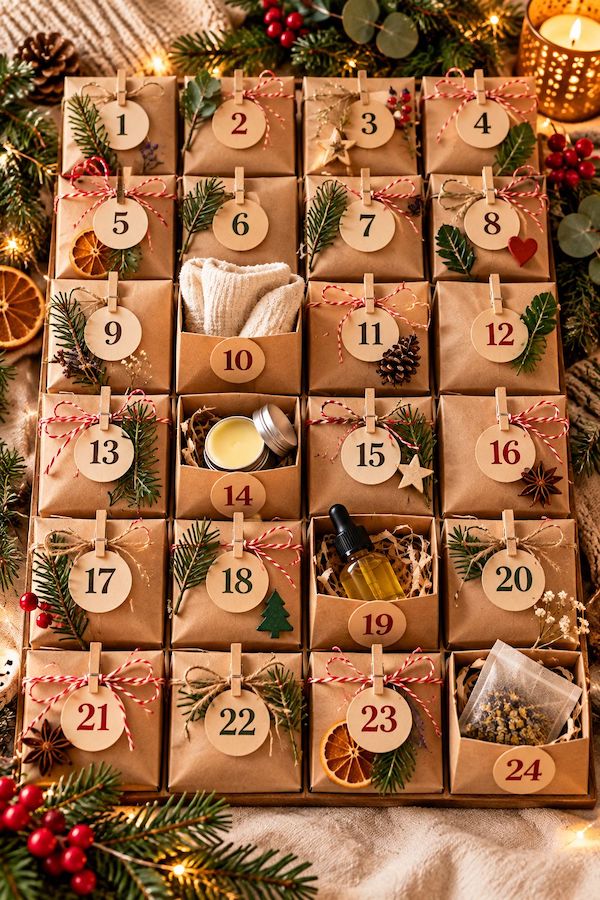
But (and it’s a big but) it only works if what goes behind the doors is chosen with some thought. Chuck in random “pamper” bits and you’ve made the same drawer-filler, just in a prettier box.
So what should go behind the doors? And what should never go in, however nice it looks on the shelf?
Here’s how to build one she’ll actually use. (Or you. No judgement.)
I’m Patri Hernández, a certified organic skincare formulator and dermocosmetic technician with a background in health coaching. I specialise in natural skincare, botanical ingredients and essential oils, so every idea below gets the three questions I’d ask of any formula: what does it do, what does the evidence say, and who should be careful with it?
Some links in this post may be affiliate links, meaning I may earn a small commission if you buy through them, at no extra cost to you. That never influences what I recommend, and I only suggest things I genuinely think are worth your money.
What a homemade self-care advent calendar solves for you
Gift guides love the word “thoughtful”. Here’s what a calendar like this actually fixes:
- No more “what do I buy her?” panic. Twenty-four ideas, already sorted by theme. One list, one shop, done.
- A budget you control. Every item is small, so you can see where the money goes. A realistic total lands around $130 to $200.
- A gift for the person who has everything. Nobody needs another candle set. Small things like a cuticle oil or a foot soak get used up, so nothing adds to the clutter.
- Fewer bad reactions. Fragrance-free by default, with scent kept to a candle and a sachet, avoids the classic gift fail: a product her skin hates.
- A daily pause. One door, one small thing, five minutes just for her. You’re not promising a result, only a break.
- Gifts that carry on into January. Hand cream, lip balm and cuticle oil get finished. Novelty items are forgotten by the 26th.
- Less waste than a ready-made calendar. You pick every item, so nothing arrives that she’d never use. The bags or boxes can come out again next year.
- Time back. Plan in October, buy over a few weeks, wrap in one evening. December stays calm.
Making it for someone else? Pop a short note behind door one saying what the calendar is for. It makes the whole thing feel considered, not assembled.
How to build one that feels special
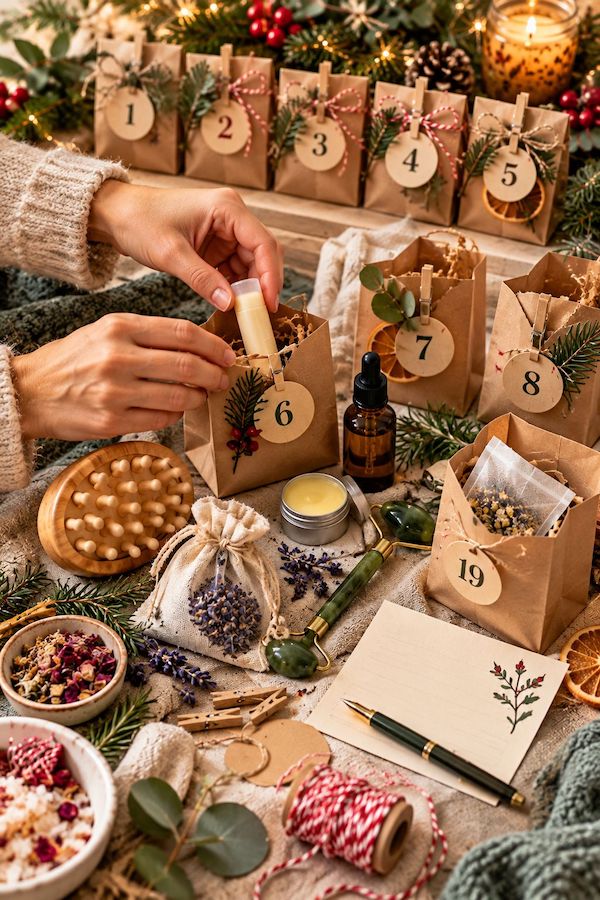
The container matters less than you’d think. Small kraft bags, numbered envelopes, a row of mini jars or a simple wooden drawer set all work.
These rules make the whole thing easier:
- Set a total, then average it. Twenty-four items at $13 each comes to about $310, which is a lot. Mix $3 to $5 items (a tea bag, a note, a nail file) with a few $10 to $13 treats.
- Order the days on purpose. Put the bigger gifts on weekends and the first of December. Save the most soothing item for the 24th.
- Go fragrance-free by default. Scent is a common trigger for skin reactions, and you may not know what she tolerates. Add scent through candles and sachets instead, where it can be skipped.
- Check her lifestyle. If she’s vegan, skip beeswax, honey and lanolin. Candelilla wax and shea butter are great plant-based swaps.
- Think about the season. Cold air and central heating are hard on skin, so lean towards barrier care. My winter skincare routine explains why.
Did you know? The first printed advent calendar came from a Munich publisher, Gerhard Lang, in 1903. Before that, families counted down with chalk lines on doors. The little opening doors only arrived in 1920, according to this history from Christian Today.
As a formulator, the label I’d read twice is “unscented”. It sounds safe, but it isn’t the same as “fragrance-free”.
| Label says | What it can mean | What to do |
|---|---|---|
| Fragrance-free | No fragrance ingredients added | Safest pick for gifts |
| Unscented | May contain a masking fragrance to cover other smells | Check the ingredient list for “fragrance” or “parfum” |
| Natural scent or essential oils | Still fragrance, and natural oils can irritate too | Patch test first |
How to patch test anything new (two minutes of effort, then a day of waiting):
- Wash and dry a small patch of inner forearm.
- Dab on a little of the product.
- Leave it alone for at least 24 hours. 48 is better.
- Any redness, itching, bumps or swelling? Wash it off and don’t use it.
- Tell the person you’re gifting to do the same with anything new, especially if her skin is sensitive.
One formulator’s warning: if you make anything yourself, keep it water-free. Oils, butters, salts, clays and dried herbs are safe to handcraft. Anything with water in it (lotions, sprays, gels) needs a proper preservative or it will grow bacteria and mould quickly.
Skin: days 1 to 6
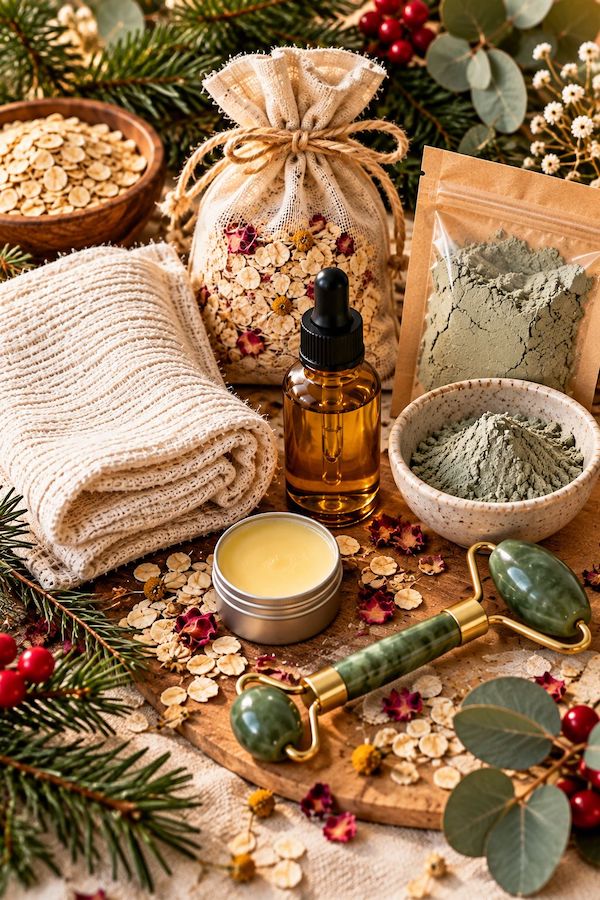
Day 1: a soft muslin cloth. Cheap, reusable and far kinder than a dry paper towel. Warm water and a cloth is a perfectly good way to remove cleanser and gently lift dead cells without a scrub.
Day 2: a colloidal oatmeal bath sachet. This one has real science behind it. A review in the Journal of Drugs in Dermatology by Kurtz and Wallo describes colloidal oatmeal as a soothing, anti-inflammatory ingredient long used for itchy, dry skin. In the US it’s also recognised as an over-the-counter skin protectant.
The detail that matters: colloidal oatmeal is oats ground extremely fine and standardised so it mixes into water. Porridge oats blitzed in a blender aren’t the same thing, though they make a harmless, pleasant substitute.
Day 3: a mini bottle of jojoba oil. Technically a liquid wax rather than an oil. It’s stable, light and rarely clogs pores for most people. It works on dry cuticles, flyaway ends and as a face oil, which makes it one of the best-value gifts on this list.
Day 4: a single-use clay mask sachet. Lovely as a once-a-week reset for oily or congested skin. Tell her to rinse it off before it dries completely. Over-dried clay irritates more than it helps, especially on dry or mature skin.
Day 5: a lip balm. Check the label for plant waxes if she’s vegan. If you’d rather make your own, candelilla wax is the plant-based way to give a balm its structure.
Day 6: a facial roller. Straight talk: rollers feel wonderful, and the cool temperature and gentle pressure may ease temporary morning puffiness. But there’s no solid evidence they change skin structure or “sculpt” a face. Enjoy it as a ritual, not a miracle.
Hair and scalp: days 7 to 12
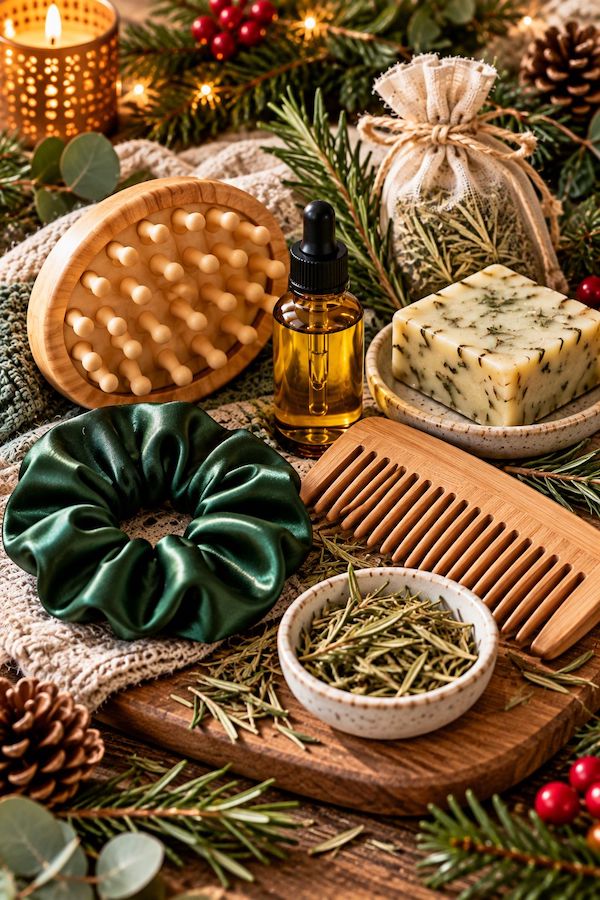
Day 7: a scalp massager. A small 2016 study in Eplasty tested a four-minute daily scalp massage on nine men. After 24 weeks, hair on the massaged side had got slightly thicker, while the untreated side hadn’t changed significantly (Koyama et al.).
It’s a very small study, partly funded by a device company, so it’s interesting rather than proof. Still, a scalp massage costs almost nothing and feels fantastic.
Day 8: a satin or silk scrunchie. A smoother surface means less friction, which is a sensible reason for fewer snags and less breakage. Formal studies are thin, so call it a pleasant upgrade, not a treatment.
Day 9: a wide-tooth comb. Especially good for wet or curly hair, which is more fragile when damp.
Day 10: dried rosemary for a hair rinse. Rosemary is a traditional hair-care herb. There’s some early research on rosemary oil, but it’s limited and the studies are small. Steeped in hot water, cooled and poured over the scalp after washing, it’s a gentle, low-risk ritual. Our natural hair growth tips put it alongside habits with better backing.
Day 11: a vegan shampoo bar. Travel-friendly, plastic-free and a nice change from the bathroom shelf. Bars are alkaline, so a diluted vinegar rinse afterwards can help hair feel smoother.
Day 12: a small bottle of hair oil. A drop on dry ends before styling does more than most “repair” serums. For more ideas, our natural thick hair remedies cover what’s worth trying.
Hands, feet and nails: days 13 to 18
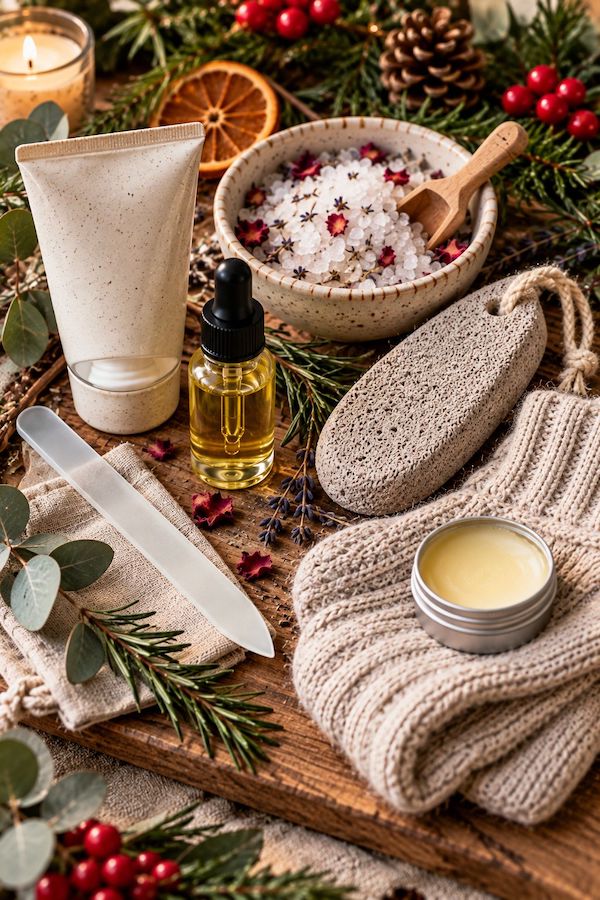
Day 13: a rich hand cream. Look for shea butter or glycerin near the top of the ingredients. Apply it while hands are still slightly damp, which helps it hold on to moisture. More on how moisture layers work in our hydrating skincare ideas.
Day 14: cuticle oil. Nothing fancy: jojoba with a drop of vitamin E in a tiny bottle makes a very good one. Cuticles act as a seal around the nail, so keeping them supple matters more than looks.
Day 15: a glass nail file. Gentler on the nail edge than emery boards, which can split layers.
Day 16: Epsom salts for a foot soak. Warm water feels good, full stop. You’ll see claims that magnesium soaks into your skin and “detoxes” you. A review by Gröber and colleagues in Nutrients looked at transdermal magnesium and found the evidence for real absorption through skin to be weak. Gift it for the comfort, not the chemistry.
Did you know? Epsom salts are named after the town of Epsom in Surrey, England, where the salt was first taken from spring water. The name is first recorded in 1770, according to Etymonline.
Day 17: a foot file or pumice stone. Gentle use only, a couple of times a week. Over-filing makes skin build thicker callus. If she has diabetes or circulation problems, skip it and choose foot cream instead.
Day 18: cosy socks. Pair them with a foot balm. Moisturiser plus socks overnight does more than either alone. Our toenail health guide is a good companion here.
Calm and comfort: days 19 to 24
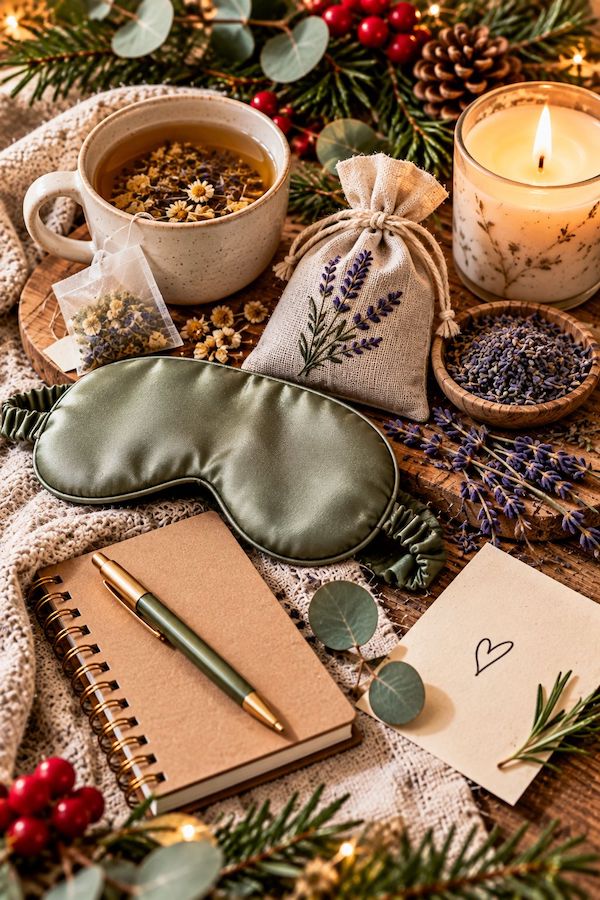
Day 19: caffeine-free herbal tea. Think peppermint or rooibos. If she’s pregnant or takes regular medication, stick to simple, familiar herbs.
Careful with chamomile. It’s a daisy-type plant, and people with ragweed or sunflower allergies are more likely to react to it, according to the Merck Manual. If you’re not sure, ask first or choose a blend without it.
Day 20: a lavender pillow sachet. Dried lavender in a small cotton bag, with a few drops of lavender essential oil if you like. The Cleveland Clinic describes the evidence for aromatherapy as mixed, with some studies suggesting it may help temporary anxiety and sleep quality. Lovely ritual, not a treatment.
Day 21: a soft eye mask. Blocking out light is one of the most reliable sleep tips there is, and it costs very little.
Day 22: a notebook and a nice pen. Self-care isn’t always a product. Space to write things down counts.
Day 23: a candle. Choose soy or coconut wax if she’s vegan, and look for a short, simple ingredient list.
Day 24: a handwritten note. The best thinking-of-you gift in the whole calendar. Two lines about why she deserves a rest will outlast any lotion.
Which of these gifts does the science actually back?
Short answer: some, a little, and a few not at all. Here’s the quick version, so you can gift honestly.
| Gift | Common claim | What the research says |
|---|---|---|
| Colloidal oatmeal | Soothes dry, itchy skin | Reasonable support. Described as soothing and anti-inflammatory, and recognised as a skin protectant in the US. |
| Scalp massager | Thicker hair | One very small study showed a slight increase in hair thickness. More research needed. |
| Epsom salts | Magnesium absorbed through skin | Evidence is weak. Enjoy it for the warm soak. |
| Lavender sachet | Calms and helps sleep | Mixed. Some studies suggest a short-term benefit. |
| Rosemary rinse | Hair growth | Traditional use. Research is limited and small. |
| Facial roller | Sculpts and firms | No solid evidence. May feel nice and ease temporary puffiness. |
| Silk scrunchie | Less breakage | Plausible because of less friction, but little formal research. |
That’s the difference between a gift guide written by someone with formulation training and one that repeats whatever sounds nice. Nothing here needs exaggerating to be a good gift.
What it costs, and which items to make yourself
Prices move around, so treat these as rough guides. Most items above sit between $3 and $10. A realistic total for the whole calendar is roughly $130 to $200, well under the $310 that “under $13 each” technically allows.
| Easy to make (no water in them) | Better to buy |
|---|---|
| Oat bath sachet (ground oats in a muslin bag) | Hand cream and foot balm (they usually contain water) |
| Epsom salt soak | Shampoo bars (soap-making needs lye and careful handling) |
| Cuticle oil | Candles (wick safety and burn behaviour matter) |
| Lavender sachet | |
| Rosemary rinse blend (dried herb only) | |
| Simple lip balm with butter, oil and wax |
A note on essential oils: if you add them, keep skin products at about 1% dilution, never apply them neat, and leave them out for babies, young children and anyone pregnant unless a healthcare professional says otherwise. Keep them sealed and out of reach of pets.
A small report worth knowing about. In 2007 the New England Journal of Medicine published a report linking repeated use of products containing lavender and tea tree oil to breast tissue growth in boys before puberty (PubMed record). It was a small case report and doesn’t prove cause. It’s still a good reason to keep these oils off children’s skin.
Frequently asked questions
Can I make this self-care advent calendar in one afternoon?
Yes, if you buy most of the items. Allow a weekend if you want to handcraft several, as sachets and balms need a little time to set.
What should I avoid putting in a calendar for someone I don’t know well?
Strongly scented products, anything with essential oils, and anything promising a medical result. Fragrance-free products with short ingredient lists are the safest choices.
Are natural products automatically safer?
No. Natural ingredients can still irritate or trigger allergies, and “chemical-free” isn’t a meaningful term, since water and oils are chemicals too. Patch test anything new first.
Do I need to worry about shelf life?
Water-free items last longest, typically six months to a year if stored cool and dry. Check the labels on anything you buy. Homemade goods have no preservative cushion if water gets in.
Does the order of the days matter?
Only for fun. Many people put the sleepier items towards the end and the bigger treats on December weekends.
A calendar worth opening
The best self-care gifts are small, kind and used. Tell her what each item is for, skip the exaggerated claims, and keep something handwritten for the last day.
Plenty of gift guides online are written by people with no formulation training, which is how a foot soak ends up sounding like medicine. A good rule of thumb: if it promises to “detox” or “cure” anything, leave it on the shelf.
References
- Kurtz ES, Wallo W. Colloidal oatmeal: history, chemistry and clinical properties. Journal of Drugs in Dermatology, 2007
- Gröber U, Werner T, Vormann J, Kisters K. Myth or reality: transdermal magnesium? Nutrients, 2017
- Koyama T, Kobayashi K, Hama T, Murakami K, Ogawa R. Standardized scalp massage results in increased hair thickness by inducing stretching forces to dermal papilla cells in the subcutaneous tissue. Eplasty, 2016
- Prepubertal gynecomastia linked to lavender and tea tree oils. New England Journal of Medicine, 2007
- Cleveland Clinic: Aromatherapy
- Merck Manual Consumer Version: Chamomile
Love, Patri xx
