
My 10 surprising castor oil hacks for that bottle gathering dust in your cupboard
Why castor oil deserves better than sitting unused
If you’ve got a bottle of castor oil tucked at the back of a cupboard, you’re not alone. Most people buy it for one specific reason, use it twice, then forget it exists.
That’s a shame, because castor oil is genuinely one of the more interesting oils in the natural beauty world. It’s thick, sticky, and unlike almost anything else in your kitchen or bathroom cabinet, which is exactly what makes it so useful.
Chemically, castor oil is unusual because it’s made up of roughly 90% ricinoleic acid, a fatty acid you won’t find in nearly any other plant oil. That’s what gives it its distinctive viscosity, its humectant (moisture-drawing) properties, and its slightly odd, almost rubbery texture.
Below are ten practical, slightly unexpected ways to put that bottle back to work, along with the honest science behind each one.
I’m Patri Hernández, a certified organic skincare formulator and dermocosmetic technician with a background in health coaching, and I spend a lot of my working life looking at what a single humble oil can actually do once you understand its chemistry.
Some of the links in this post are affiliate links, which means I may earn a small commission if you make a purchase through them, at no extra cost to you. This never affects what I recommend; I only mention products I genuinely think are worth your money.
1. A cuticle and nail treatment that actually sticks around
Most cuticle oils are thin blends that soak in (or evaporate off) within minutes. Castor oil’s thickness means it lingers on the nail bed longer, giving it more time to soften hardened cuticle tissue.
Massage a small drop into each cuticle before bed. Over time, softer cuticles mean less picking, less tearing, and fewer hangnails.
If you’re dealing with broken or peeling nails more generally, my guide on toenail health goes into the full routine.
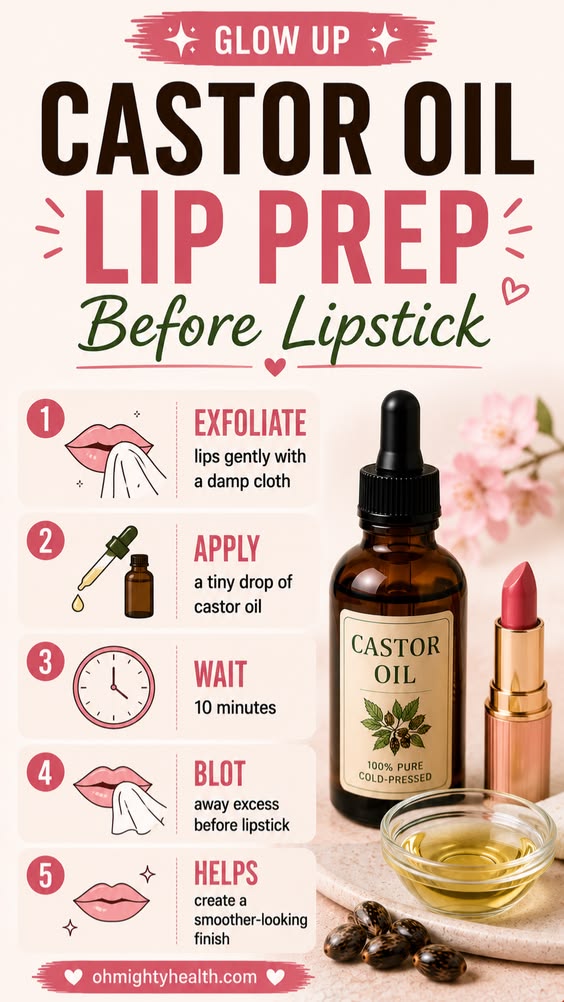
2. An overnight lip treatment for genuinely chapped lips
Because castor oil forms such an occlusive film on the skin, it’s excellent at trapping in whatever moisture is already there and slowing water loss overnight.
Dab a small amount on lips before bed. It’s thicker than most lip balms, so a little goes a long way, and you’ll wake up with noticeably softer lips.
3. A DIY brow and lash conditioning treatment
This is probably the hack castor oil is best known for, and it’s worth being precise about what the evidence actually supports.
There’s no strong clinical research proving castor oil makes eyelashes or eyebrows grow faster or longer. What it can do is condition the hairs themselves, coating each strand and making them appear glossier, thicker, and less brittle, which is often what people are actually noticing when they report “growth.”
To use it, apply a tiny amount to clean lashes and brows with a clean spoolie before bed.
Always use a fresh, clean applicator, never a used mascara wand, to avoid introducing bacteria near your eyes.
4. A pre-shampoo scalp treatment for a dry, flaky scalp
Because ricinoleic acid has some documented anti-inflammatory and antimicrobial properties in laboratory studies, castor oil is a popular traditional choice for soothing an irritated, flaky scalp.
Warm a tablespoon between your palms, massage it into the scalp, leave it for 30 minutes to an hour under a warm towel, then shampoo out thoroughly. It’s thick, so it does need proper washing out, ideally with a clarifying shampoo, or you’ll be left with residue.
This works particularly well blended with a lighter carrier oil like jojoba oil, which helps it spread more easily through the hair and rinses out more cleanly.
For a fuller routine built around ingredients like this, have a look at my pieces on natural hair growth tips and natural thick hair remedies.
5. Softening rough patches on elbows, knees, and heels
The same occlusive quality that makes castor oil good for lips makes it excellent for genuinely rough, calloused skin.
Apply it thickly to problem areas, cover with socks or an old pair of gloves, and leave overnight. You’ll wake up to noticeably softer skin, especially if you exfoliate the area first.
6. A quick fix for a squeaky hinge or sticky drawer
This one has nothing to do with skin. Castor oil’s viscosity makes it a surprisingly decent household lubricant for small squeaky hinges, sticky zips, or drawer runners.
It’s thicker and less prone to dripping than most household oils, so it stays where you put it. It’s not a substitute for proper machine oil on anything mechanical, but for small household annoyances, it does the job.
7. Reviving dry, dull leather
Old leather shoes, bags, or belts that have gone stiff and dry can benefit from a very light coating of castor oil worked in with a soft cloth.
Test on a small hidden patch first, as castor oil can darken very light or untreated leather slightly. Buff off any excess after 15 minutes so it doesn’t feel greasy.
8. A carrier oil base for DIY massage blends
On its own, castor oil is often too thick and tacky to use as a full-body massage oil, but blended at around 10 to 20% with a lighter oil, it adds slip and a lovely conditioning quality to homemade massage blends.
Combine it with sweet almond oil or grapeseed oil, and if you want fragrance, a few drops of an essential oil like lavender, properly diluted, of course.
9. A natural makeup remover for stubborn products
Oil-based makeup removers work by dissolving oil-soluble pigments and waterproof formulas, and castor oil’s thickness makes it effective at breaking down stubborn mascara and long-wear foundation without the harsh rubbing that damages the delicate eye area.
Apply with a cotton pad, let it sit for a few seconds, then wipe gently. Follow with a proper cleanser afterwards, since oil alone won’t fully remove everything.
10. Conditioning wooden kitchen tools and chopping boards
Wooden spoons and boards dry out over time and can start to crack or splinter. A very light coat of castor oil, worked in and left to absorb before wiping away the excess, helps replace lost moisture in the wood.
Only use this on decorative or lightly used wooden items, not boards used constantly for raw meat preparation, where food-safe mineral oil is the more established choice.
A few important things to know before you start
- Patch test first. Castor oil is generally well tolerated, but any oil can cause irritation or allergic reactions in some people, particularly on already compromised skin.
- Don’t take it orally without medical guidance. Oral castor oil is a stimulant laxative and shouldn’t be used casually, and it should be avoided entirely during pregnancy unless specifically directed by a healthcare provider, as it has traditionally been associated with inducing uterine contractions.
- It’s thick for a reason, so use a light hand. More isn’t better here. A little goes further than you’d expect.
- Check the type you have. Jamaican black castor oil is roasted and slightly alkaline, which some people find better for scalp use, while regular cold-pressed castor oil is paler and more neutral, better suited to skin and lips.
- Store it properly. Keep the bottle tightly closed, away from heat and direct light, to slow oxidation. Most unopened bottles last around one to two years, though it’s worth checking for any change in smell before using an old bottle.
Frequently asked questions
Can I use castor oil on my face every day?
It’s fine for most people to use occasionally, but its thickness and comedogenic rating mean it’s not ideal as a daily leave-on facial oil for those prone to congestion or breakouts. Patch test and use sparingly.
Does castor oil expire?
Yes. Like any plant oil, it will eventually oxidise and turn rancid, usually signalled by a sharper or slightly off smell. Discard it if that happens.
Is Jamaican black castor oil better than regular castor oil?
Neither is objectively “better”, they’re simply different. Jamaican black castor oil is roasted, giving it a smokier smell and slightly alkaline pH that some find suits scalp use, while regular castor oil is milder and often preferred for skin and lips.
The bottom line
Castor oil isn’t a miracle cure for anything, and it’s worth being sceptical of any claim that suggests otherwise. What it is, though, is a genuinely versatile, inexpensive oil that earns its place well beyond the one job most people bought it for. Once you start looking at it as a multi-purpose staple rather than a single-use product, that bottle stops gathering dust and actually starts pulling its weight.
Love, Patri xx
