
Fennel seed tea that actually tastes good for bloating (Herbal tea blends)
I’m Patri Hernández, a certified organic skincare formulator and dermocosmetic technician with a background in health coaching, and I’ve spent years exploring how simple plant-based remedies can support everyday wellness. Fennel seed tea has long been one of my go-to recommendations for anyone dealing with post-meal bloating.
This post contains some affiliate links, which means I may earn a small commission if you make a purchase through one, at no extra cost to you. I only recommend things I genuinely think are worth trying.
If you’ve ever finished a big meal and immediately felt your waistband tighten, you already know how uncomfortable bloating can be. Fennel seed tea is one of the oldest, gentlest remedies people reach for in this situation, and unlike a lot of “detox” teas that taste like grass clippings, a properly made cup is genuinely pleasant: warm, faintly sweet, and a little like liquorice.
The trick is in the method. Most people either steep their fennel seeds far too briefly, or they never crush the seeds at all, which means most of the beneficial aromatic oils stay locked inside and never make it into the water. Here’s how to get it right, plus everything else worth knowing before you make your first cup.
Why fennel seed tea may help with bloating
Fennel seeds contain compounds called anethole and fenchone, along with other volatile oils that give the seeds their distinctive sweet, aniseed-like scent.
Traditionally, fennel has been used across Mediterranean, Middle Eastern and South Asian cooking and folk medicine as a digestive aid, often chewed plain after meals in Indian households as a breath freshener and digestive.
There’s some scientific interest here too. Small clinical studies have looked at fennel extract for conditions like infant colic and irritable bowel syndrome symptoms, with some promising results, though the research on fennel tea specifically (rather than concentrated extracts or oil) is much thinner.
It’s worth being honest about this distinction. A cup of fennel tea is a mild, low-concentration preparation. It’s reasonable to think of it as a gentle traditional remedy that many people find soothing, rather than a scientifically proven treatment for bloating or digestive disorders.
If you have ongoing or severe bloating, it’s always worth mentioning to your doctor, since persistent bloating can occasionally point to something that needs proper investigation.
What you need
- 1 teaspoon of whole fennel seeds
- 250ml of just-boiled water
- A mortar and pestle, or the back of a spoon
- A teapot or heatproof mug with a lid, or a small plate to cover it
- A fine strainer
Whole fennel seeds work better than pre-ground fennel powder for this. Ground fennel loses its aromatic oils to oxidation much faster, so the flavour and any beneficial compounds fade quickly once it’s powdered.
How to make fennel seed tea, step by step
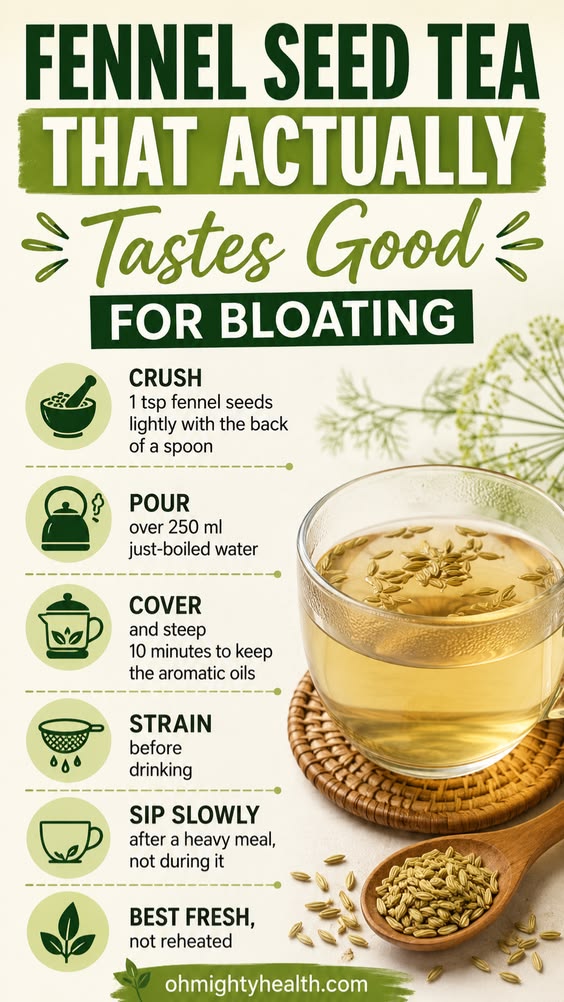
1. Lightly crush the seeds. Use a mortar and pestle, or simply press the back of a spoon against the seeds on a chopping board. You’re not trying to pulverise them into powder, just crack them open slightly. This step matters more than people realise: it’s what releases the essential oils that give the tea its flavour and aroma. Whole, uncrushed seeds barely infuse at all.
2. Pour just-boiled water over the seeds. Around 250ml, roughly one mug’s worth, poured over your teaspoon of crushed seeds.
3. Cover and steep for 10 minutes. This is the step most people skip or rush, and it’s the reason so much fennel tea ends up tasting weak and watery. Covering the cup while it steeps keeps the volatile aromatic oils from escaping into the air, which is exactly what you want trapped in your tea rather than wafting round your kitchen. Ten minutes gives the water enough time to properly draw out the flavour compounds.
4. Strain before drinking. A fine mesh strainer works well, since fennel seeds are small and slip through wider gaps.
5. Sip slowly, ideally after a meal rather than during one. Drinking it too quickly, or gulping a large amount at once, isn’t necessary and won’t make it work any faster. Warm liquid sipped gradually tends to feel more soothing on a full stomach anyway.
Expert tips for a better cup
- Use fresh seeds. Fennel seeds do lose potency over time. If yours have been sitting in the back of a cupboard for a couple of years, they’ll produce a much milder tea. Buy in smaller quantities and store them properly (see below).
- Don’t over-steep. Ten minutes is the sweet spot. Leaving the seeds in for much longer, or steeping at a rolling boil rather than just-off-the-boil water, can bring out slightly bitter, harsher notes.
- Add a squeeze of lemon or a small piece of fresh ginger if you enjoy a bit of extra brightness or warmth. Both pair naturally with fennel’s aniseed flavour.
- A pinch of crushed coriander seed is a nice variation if you want to experiment, as the two flavours complement each other well in many traditional digestive tea blends.
Common mistakes to avoid
- Using pre-ground fennel powder from the spice rack. It’s usually stale and won’t infuse the same way.
- Skipping the cover while steeping. This is where most of the flavour and aroma escapes.
- Steeping for only two or three minutes. This produces a thin, barely-there cup that tastes mostly of hot water.
- Reheating leftover tea the next day. Fennel tea is genuinely best made fresh, since the aromatic compounds degrade once the tea has cooled and been left standing.
How often to drink it
For most healthy adults, one to two cups a day, ideally after meals, is a sensible amount.
There’s no strong evidence that drinking more offers extra benefit, and very large amounts of concentrated fennel over long periods have occasionally been associated with mild hormonal effects in animal studies, since anethole has a weak oestrogen-like structure.
This isn’t a reason for alarm at normal tea-drinking levels, but it’s worth mentioning for balance rather than treating fennel as something to consume without limit.
When to be more cautious
- Pregnancy and breastfeeding: fennel in large or concentrated amounts is generally advised against during pregnancy, so if you’re pregnant, check with your midwife or doctor before making it a regular habit. Occasional tea in normal culinary amounts is generally considered low risk, but it’s genuinely worth a quick conversation with your healthcare provider first.
- Hormone-sensitive conditions: because of the mild oestrogen-like compounds mentioned above, anyone with a hormone-sensitive condition may want to check with their doctor before drinking it regularly.
- Allergies: fennel belongs to the same plant family as carrots, celery and parsley. If you have known allergies to any of these, introduce fennel tea cautiously.
- Medication interactions: as with most herbal remedies, if you’re on regular medication, it’s sensible to mention any new herbal habit to your pharmacist or doctor, just to be safe.
How to store fennel seeds
Keep whole fennel seeds in an airtight jar, away from direct light and heat. Stored this way, they’ll typically stay flavourful for around a year, sometimes longer. Once you notice the seeds have lost their strong aniseed scent when you crush a few between your fingers, it’s a sign they’ve faded and it’s time to replace them.
Frequently asked questions
Can I use fennel tea bags instead of whole seeds?
Yes, though whole seeds that you crush yourself generally produce a fresher, more aromatic cup, since pre-bagged tea often uses smaller, more processed pieces that lose potency faster.
Is fennel tea the same as anise tea?
No. They taste similar because they share some of the same aromatic compounds, but they come from different plants. Fennel has a slightly milder, sweeter profile compared with star anise or aniseed.
Can children drink fennel tea?
Diluted, mild fennel tea has traditionally been given to children in some cultures, but concentrations and appropriate ages vary, so it’s best to check with a paediatrician before giving it to a young child regularly.
Does fennel tea help with all types of bloating?
Not necessarily. Bloating has many causes, from eating too quickly to food intolerances to underlying digestive conditions. Fennel tea may offer gentle, temporary comfort after a heavy meal, but it isn’t a fix for persistent or unexplained bloating, which is worth discussing with a doctor.
Love, Patri xx
